
Flueggea leucopyrus
Flueggea leucopyrus
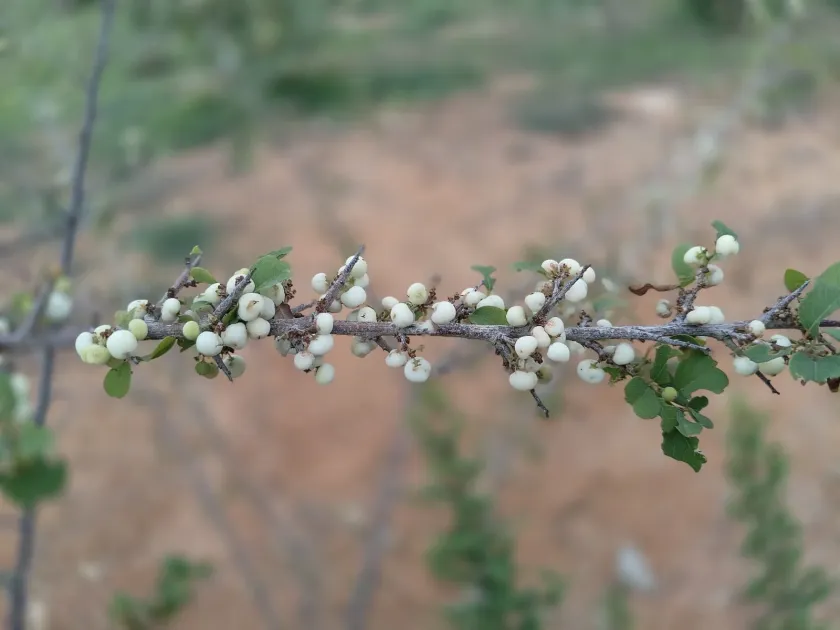
Description
Growing requirements
Flueggea leucopyrus, commonly known as the white bush or snowy-leaved bush, belongs to the Phyllanthaceae family. This hardy perennial shrub is native to the tropical and subtropical regions of South Asia, particularly thriving in India, Sri Lanka, and Pakistan.
The species is highly adapted to arid and semi-arid environments. It prefers well-drained, sandy, or rocky soils and exhibits remarkable drought tolerance, making it an excellent candidate for restoration projects in degraded lands.
Optimal growth requires full sun exposure. While the shrub is robust, it does not tolerate waterlogging, which can cause root system decay. Careful selection of site topography is essential to ensure adequate surface drainage.
Agronomically, this plant requires minimal irrigation once established. However, during the initial planting phase, consistent moisture is necessary for proper root development. The shrub possesses a complex, thorny structure that provides excellent natural protection.
Propagation is primarily achieved through seeds or stem cuttings. Seed viability can be improved through pre-sowing treatments like scarification or stratification, ensuring a more uniform germination rate in nursery environments.
Yield
The economic value of Flueggea leucopyrus is multifaceted. It is widely recognized in traditional medicine, where various parts of the plant, including leaves, roots, and bark, are utilized for their therapeutic alkaloids and antimicrobial properties.
The plant produces small, white, edible fruits that are gathered for local consumption. Although not a primary cash crop, they represent a significant resource for biodiversity-rich agricultural systems in native regions.
In agroforestry systems, the shrub is frequently employed as a living fence. Its dense, thorny branches form an impenetrable barrier that protects crops from grazing livestock, effectively reducing the need for artificial fencing materials.
Foliage serves as a supplemental forage source for goats and other small ruminants. Its ability to regenerate after pruning allows for sustainable biomass harvesting, which is crucial for livestock management in dry climates.
Furthermore, Flueggea leucopyrus is effective in soil conservation. The deep and branched root system plays a vital role in binding soil particles, significantly mitigating erosion on slopes and improving land stability.
Main diseases and pests
Flueggea leucopyrus is naturally resistant to many pests and diseases. The main threat to its health is associated with excessive soil moisture, which predisposes the plant to fungal infections such as root rot caused by various soil-borne pathogens.
Leaf-eating caterpillars and aphids are the most common insect pests encountered. While minor infestations are easily tolerated by the shrub, large outbreaks can cause significant foliage loss, particularly during the dry season.
Scale insects may occasionally colonize the stems, impacting the vigor of young branches. Monitoring for these pests is essential, and targeted mechanical removal or biological control methods are generally preferred over chemical interventions.
Powdery mildew can occur in areas with stagnant air and high humidity. Maintaining proper spacing between plants and implementing systematic thinning pruning are effective strategies for keeping the canopy healthy and well-ventilated.
By prioritizing cultural management practices—such as appropriate water application and sanitation—growers can minimize the need for synthetic pesticides and maintain the plant's natural health and productivity.