
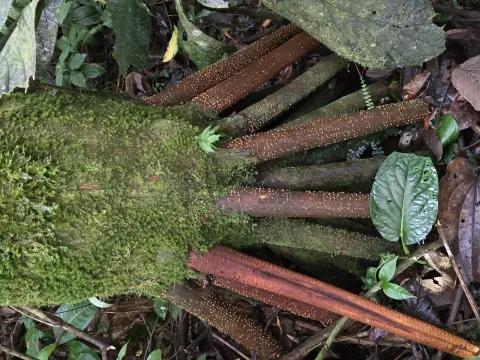
Dictyocaryum
Dictyocaryum
Dictyocaryum is a genus of flowering plants in the Arecaceae family, native to the mountainous tropical regions of South America. These palms are distinguished by their solitary, slender trunks and unique stilt root systems that support them in rugged, wet terrain.
What the section contains

Dictyocaryum
The culture thrives in high-humidity environments and requires temperatures that remain consistently warm throughout the year. They are highly adapted to the understory conditions of cloud forests, meaning they dislike intense, direct exposure to sunlight.
Regarding soil requirements, Dictyocaryum demands a well-draining, nutrient-rich substrate. A mixture of peat, loam, and coarse organic matter is ideal to provide both aeration for the roots and sufficient moisture retention.
Water management is the most critical aspect of the cultivation technique. While the plants require constant atmospheric moisture, the root zone should never be waterlogged, as this rapidly leads to root system failure and plant collapse.
Propagation is strictly through seed germination, which requires high temperatures and careful handling. Seedlings grow relatively slowly and need protection from drafts and temperature fluctuations during their first few years of development.
Root rot is the most prevalent disease affecting Dictyocaryum, typically caused by overwatering or poor drainage. Once established, this pathogen is difficult to treat, often resulting in the irreversible loss of the plant.
Common pests include spider mites and scale insects, which exploit the palm's broad leaves for feeding. These pests are particularly problematic in indoor or greenhouse settings where natural predators are absent.
Fungal leaf spots can occur when air circulation is inadequate, leading to persistent moisture on the foliage. Proper spacing and ventilation are essential strategies for mitigating the spread of these fungal infections.
Nutritional deficiencies often appear as yellowing of the leaves or stunted growth, indicating a lack of essential micronutrients. Regular, balanced fertilization is necessary to maintain the plant's health and resistance to pathogens.
The growing point of the palm, often referred to as the crown or heart, is extremely sensitive. Any physical damage or pest infestation reaching this area usually results in the death of the entire specimen.