
Ceropegia
Ceropegia L.
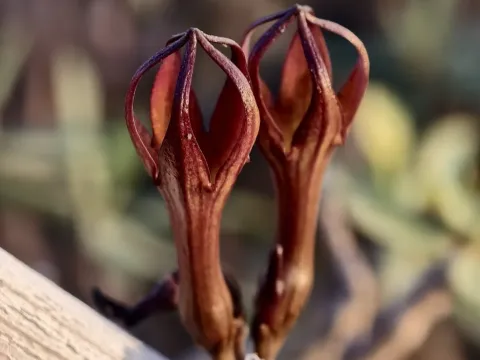
Ceropegia is a genus of perennial herbs and subshrubs belonging to the Apocynaceae family. These plants are famous for their unique, often bizarrely shaped flowers that function as insect traps. Many species are succulents, utilizing specialized tissues or tubers to store moisture in arid environments.
What the section contains

Ceropegia
The native distribution of Ceropegia spans the tropical and subtropical regions of Africa, Asia, and Australia. They typically inhabit rocky slopes or well-drained soils, where they have evolved to thrive under conditions characterized by irregular precipitation and intense sun exposure.
Successful cultivation requires a highly porous and aerated growing medium. A blend of perlite, coarse sand, and a small amount of peat or organic substrate is generally recommended to ensure effective drainage and prevent the accumulation of excess water around the delicate root system.
Climate requirements for Ceropegia include warm temperatures ranging from 20°C to 28°C during the active growing season. The plants require high levels of bright, indirect sunlight to maintain their structural integrity and healthy coloration. Dim light conditions often result in etiolation and poor flowering.
Watering practices should mimic natural drought cycles. During the active growth phase, the plant should be watered only when the growing medium has dried out completely. In winter, the plant enters a dormant phase requiring significantly reduced irrigation to prevent physiological decay and rot.
The primary threats to Ceropegia are fungal pathogens, specifically those causing root and crown rot. These diseases are almost exclusively triggered by improper watering, poor drainage, or cold and damp environmental conditions, which suffocate the plant's roots and promote fungal proliferation.
Mealybugs are the most persistent insect pests affecting Ceropegia. They cluster in the crevices of stems and leaf junctions, drawing nutrients from the plant and secreting honeydew, which serves as a substrate for the growth of unsightly sooty mold, further weakening the plant's health.
Spider mites pose a significant challenge, especially in indoor environments with low humidity. These microscopic arachnids cause stippling and yellowing of the stems and leaves by piercing the tissue. Severe infestations can result in total defoliation and the death of the main shoots.
Integrated pest management involves physical removal of visible pests using alcohol-dipped swabs and the application of systemic insecticides or miticides when outbreaks occur. Ensuring proper airflow around the plant helps to inhibit the development of both fungal diseases and mite populations.
Long-term plant health is achieved through rigorous sanitation, which includes discarding heavily infested foliage and maintaining a clean, debris-free growing area. Periodic inspections and quarantine of new stock are essential strategies for maintaining a healthy and thriving collection of Ceropegia.