
Ceropegia armandii
Ceropegia armandii
Description
Growing requirements
Ceropegia armandii is a rare succulent species belonging to the Apocynaceae family. Native to Madagascar, this plant has evolved to survive in highly specialized arid environments, making it a prized specimen for botanical collections and enthusiasts of exotic flora.
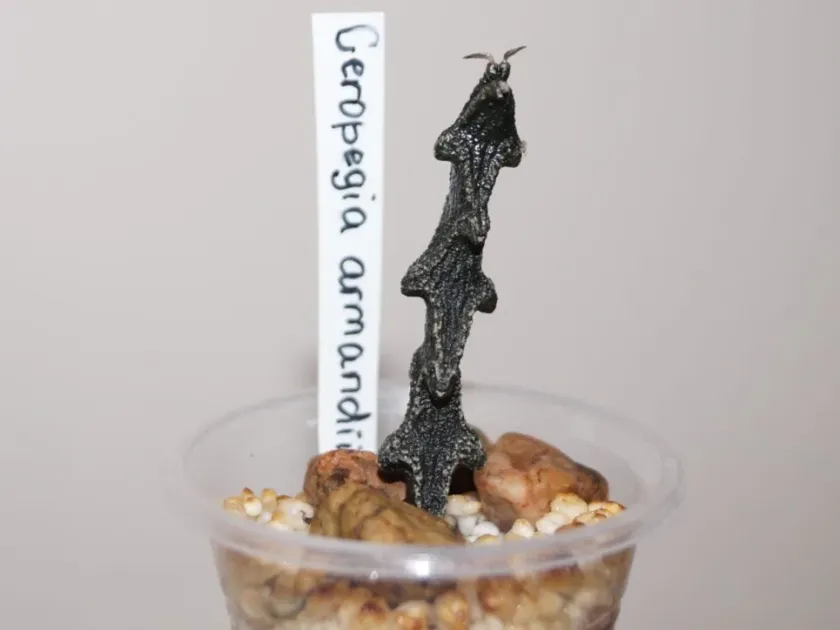
Botanically, the plant is characterized by its thickened, succulent stems that serve as water storage organs. These structures are adapted to endure long periods of drought, maintaining a compact growth habit that is typical of its restricted geographical range.
Successful cultivation requires a highly specific substrate, typically composed of coarse mineral components like pumice, perlite, and a small portion of organic potting soil. The primary goal is to ensure rapid drainage to prevent water stagnation around the root crown.
Climate requirements for this species include high solar irradiance and warmth. It thrives in well-ventilated conditions where temperatures remain consistent during the growing season, while a period of cool, dry rest is essential during the winter months.
The economic value of Ceropegia armandii is strictly ornamental. Due to its slow propagation rate and unique aesthetic appeal, it is cultivated primarily in professional greenhouses and conservatories as a collector's item rather than for large-scale agricultural output.
Main diseases and pests
The primary agricultural threat to this species is the onset of fungal or bacterial rot, usually precipitated by excess moisture and lack of air circulation. Once tissues become waterlogged, pathogens proliferate quickly, often resulting in systemic decay.
In terms of entomological threats, mealybugs and spider mites are the most significant pests. These organisms colonize the crevices of the succulent stems, draining nutrients and weakening the plant structure, which subsequently makes it susceptible to opportunistic infections.
Integrated pest management involves regular visual monitoring of the plant body. Early detection of mealybugs allows for physical removal or targeted application of specific insecticides to prevent larger infestations.
Maintaining hygiene in the growing environment is crucial. This includes using sterilized tools, clean substrates, and ensuring that no residual water remains on the stem surfaces during cooler temperature periods, which is a common trigger for fungal outbreaks.
If chemical interventions are necessary, they must be applied cautiously. Systemic insecticides are often preferred for long-term protection, provided they are compatible with the specific physiological tolerances of Ceropegia species.