
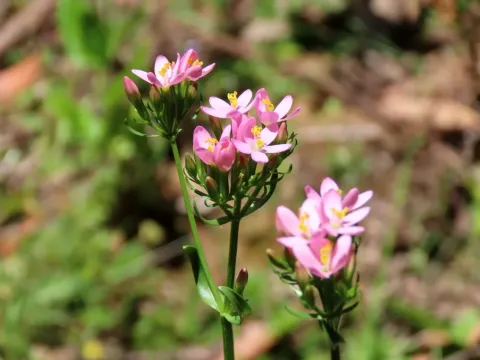
Common centaury
Centaurium Hill
Common centaury (Centaurium erythraea) is a member of the Gentianaceae family. It is a biennial or annual herb that requires careful preparation for successful cultivation.
What the section contains


Common centaury
The best time for sowing is early spring or late autumn, using surface sowing techniques as the seeds are extremely small and light-sensitive.
To achieve uniform spacing, seeds should be mixed with inert material like fine sand or vermiculite. Do not bury the seeds deep; firming them into the soil surface is sufficient.
Germination is slow, often taking up to three weeks. Consistent moisture is vital during this phase, as the small seeds will dry out quickly if conditions fluctuate.
During the first growing season, the plant develops a basal rosette of leaves, transitioning to a flowering stem in the second year of its life cycle.
This crop thrives in open, sunny locations. Insufficient sunlight drastically reduces the quality and quantity of secondary metabolites, which are essential for its medicinal value.
Well-drained soil with a neutral to slightly alkaline pH is ideal. It cannot tolerate waterlogged conditions, which often lead to rapid decay of the root system.
Loamy or sandy soil types provide the best structure for root expansion, while excessive clay should be avoided or amended to improve drainage.
Temperature-wise, it prefers moderate climates with average temperatures between 15 and 25 degrees Celsius during the active growth phase.
Regular weeding is mandatory during the first year, as the slow-growing rosette is easily overwhelmed by aggressive weeds.
The primary economic output of common centaury is the aerial part of the plant, harvested at the peak of its flowering period for medicinal use.
Yield depends heavily on soil fertility and plant density. Farmers typically expect moderate yields of dry herb, which is highly valued by the pharmaceutical industry.
Proper harvest timing—specifically when the first flowers fully open—ensures the highest concentration of bitter glycosides, which is the plant's core medicinal component.
Post-harvest handling requires gentle drying in shade with good airflow to maintain the bright color and chemical potency of the stalks.
Commercial growers should aim for standardized plant populations to facilitate mechanized or semi-mechanized harvesting processes.
The plant is relatively hardy but is susceptible to root rots if soil drainage is compromised, especially during periods of excessive rainfall.
Powdery mildew can be a persistent issue in humid environments with poor air circulation, necessitating wider spacing between rows.
While the plant's bitter compounds act as a natural deterrent against many generalist insects, localized aphid infestations can still occasionally occur.
Prevention relies on healthy soil management, proper field hygiene, and avoiding repetitive monocropping on the same plot to break disease cycles.
Monitoring the plants for fungal spots or leaf chlorosis is essential, as early intervention can prevent the spread of diseases throughout the field.