
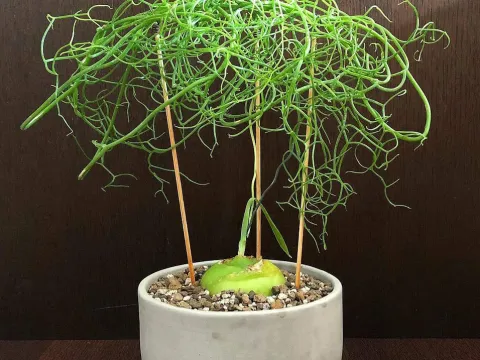
Bowiea
Bowiea
Bowiea is a genus of succulent bulbous plants in the Asparagaceae family, represented by the species Bowiea volubilis. Native to Southern Africa, this plant has adapted to rocky environments and semi-arid climates, displaying unique survival strategies.
What the section contains

Bowiea
The plant is defined by its large, above-ground bulb that serves as a water reservoir. From the center of the bulb, the plant produces a complex network of climbing, branching green stems that are photosynthetic and replace typical foliage.
Successful cultivation requires a highly porous soil mix that ensures rapid drainage. A blend of potting soil, coarse sand, and perlite is recommended to prevent water retention around the bulb, which is highly prone to rot.
The plant thrives in moderate temperatures ranging from 20°C to 25°C during its growing season. A distinct resting period is mandatory during winter, where temperatures should be reduced to 12°C–15°C, and watering must be significantly restricted.
Bowiea requires bright, indirect light to maintain the vigor of its branching stems. Exposure to intense, direct afternoon sunlight should be avoided to prevent scorching the green epidermis of the bulb and the delicate climbing stems.
Overwatering is the primary cause of plant failure, leading to bacterial rot of the bulb. It is crucial to allow the substrate to dry out almost completely before providing any additional water during the active growing phase.
Common pests include spider mites and mealybugs, which settle in the complex tangle of the stems. These pests can weaken the plant by extracting sap, eventually causing the stems to wither and drop off prematurely.
Fungal diseases are a constant threat if air circulation is poor or if moisture levels remain high for extended periods. Keeping the bulb dry and ensuring good ventilation is essential for disease prevention.
Root system health should be monitored periodically. If the roots show signs of damage or decay, they must be pruned, and the plant should be re-potted into fresh, dry substrate to facilitate recovery.
Integrated pest management is recommended, utilizing targeted biological or chemical treatments to manage infestations without damaging the sensitive surface of the plant's bulb.