
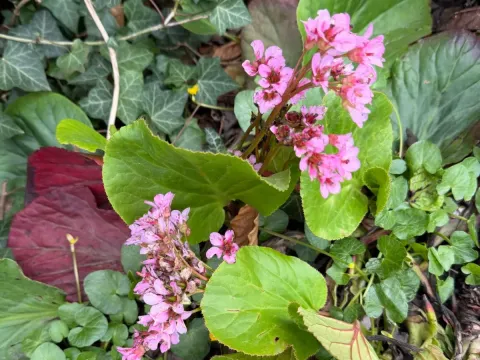
Bergenia
Bergenia Moench
Bergenia (lat. Bergenia Moench) is a genus of perennial herbaceous plants belonging to the Saxifragaceae family. Native to Central Asia and the Himalayas, these plants are renowned for their ruggedness and adaptability.
What the section contains


Bergenia
The plant features large, leathery, evergreen leaves and thick rhizomes that spread underground. This structure allows the species to survive in cold climates, protected by snow cover during winter months.
In terms of environmental requirements, Bergenia thrives in partial shade and tolerates a wide range of soil types. It is essential to ensure that the site has effective drainage, as waterlogged conditions promote root rot.
Cultivation practices involve minimal maintenance, focusing mainly on the removal of dead foliage in spring. The plant is highly competitive and effectively suppresses weeds, which reduces the need for manual weeding.
Economically, Bergenia is valued for its ornamental appeal in landscaping and for its pharmacological applications, particularly the use of fermented leaves as a source of tannins and herbal tea ingredients.
The primary diseases affecting Bergenia include leaf spot, specifically those caused by fungi such as Ramularia. These infections manifest as discolored patches that diminish the plant's decorative value.
Root rot remains the most significant threat to the plant's longevity, occurring primarily in poorly drained soils. Overwatering or persistent dampness significantly increases the risk of soil-borne pathogens.
Pest pressures are generally low, but slugs and snails can cause damage to tender new leaves in the spring. These pests thrive in moist, cool conditions associated with shaded gardening environments.
Nematodes are another potential threat, as they attack the root systems, leading to general stunted growth. Monitoring the plant's vigor is essential to detect underground infestations early.
Effective management strategies include maintaining proper spacing to ensure airflow and practicing good garden hygiene by removing debris where pests or fungal spores might overwinter.