
Bulbous saxifrage
Saxifraga bulbifera
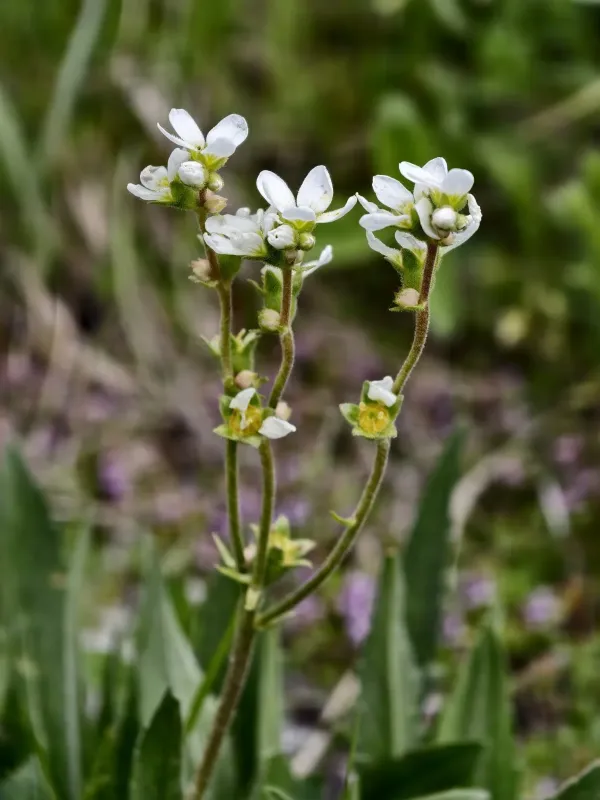
Description
Sowing dates
The primary agricultural method for propagation involves harvesting and planting the axillary bulbils formed along the stem during the vegetative phase.
Planting dates are typically scheduled for early spring, once the threat of severe ground frost has passed and the soil begins to warm.
Seeds can also be used for propagation; however, they require cold stratification to break dormancy, making autumn sowing the most effective method.
Seeds or bulbils should be planted at a shallow depth of approximately 1 cm, ensuring they remain in constant contact with moist but not waterlogged soil.
Spacing should be managed to ensure adequate ventilation, which significantly reduces the risk of fungal infections within the plant cluster.
Growing requirements
Bulbous saxifrage (Saxifraga bulbifera) is a perennial herbaceous plant belonging to the Saxifragaceae family, recognized for its unique ability to produce axillary bulbils.
The plant originates from Southern and Central Europe, naturally inhabiting rocky slopes and meadows with well-drained, mineral-rich soils.
Successful cultivation requires specific soil conditions, specifically a loose, porous medium with a neutral to slightly alkaline pH to ensure optimal drainage.
Climatic requirements involve a preference for temperate environments where excessive heat and prolonged soil saturation can be strictly avoided.
The plant is categorized as a low-maintenance crop if the fundamental drainage requirements are met, preventing root suffocation during winter dormancy.
Main diseases and pests
The crop is susceptible to various fungal pathogens, with root rot caused by stagnant water and high humidity being the primary threat to overall health.
Leaf spots caused by Septoria or Ramularia species may occur if the foliage remains wet for extended periods without sufficient airflow.
Common insect pests include aphids and mites, which tend to infest the soft tissue of the plant under conditions of heat stress or irregular irrigation.
Soil-dwelling larvae, including wireworms, can damage the underground parts of the plant, potentially leading to total loss of the bulb crop in infested fields.
Integrated pest management strategies focusing on drainage optimization and cultural practices are essential for maintaining a healthy and productive stand.