
Aretioid saxifrage
Saxifraga aretioides
Description
Growing requirements
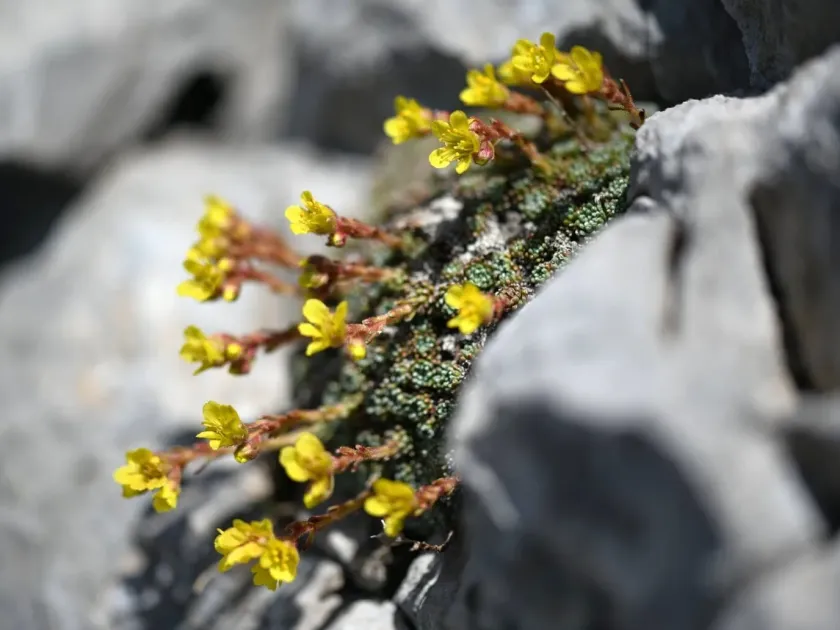
The aretioid saxifrage (Saxifraga aretioides) is a perennial herbaceous plant belonging to the Saxifragaceae family. This species originates from the high mountain ranges of the Pyrenees, where it thrives in crevice environments on limestone cliffs.
The plant is known for its distinctive dense, cushion-forming habit. Its small, leathery leaves are arranged in tight rosettes, which create a compact, mound-like structure. This slow-growing nature makes it a highly prized specimen for alpine enthusiasts and rock gardeners.
Successful cultivation depends on replicating its native environment. It requires a lean, well-draining substrate that is neutral to alkaline and rich in lime. Proper drainage is the most critical factor, as moisture accumulation around the crown often causes rapid plant decay.
In terms of climate, the species prefers cool temperatures and high solar exposure. However, it requires protection from intense midday heat, which can scorch the foliage. Adequate ventilation is essential to mimic the breezy conditions of high-altitude mountain slopes.
Its primary use is in specialized landscape projects, such as scree gardens, trough gardens, and traditional alpine rockeries. It is valued not only for its delicate flowers but for the year-round structural interest provided by its dense, evergreen foliage.
Main diseases and pests
Root rot is the most significant threat to the health of the aretioid saxifrage. It is primarily caused by excessive soil moisture and poor air circulation. To prevent this, growers should ensure a high percentage of inorganic grit in the soil mix.
Spider mites represent a major pest risk, especially in low-humidity environments or during hot summer months. Regular monitoring of the foliage rosettes and the use of targeted acaricides are effective strategies for managing these outbreaks.
Aphids may infest the plant during the spring flowering season, damaging the developing inflorescences. Applying systematic insecticides or insecticidal soaps is usually sufficient to mitigate the damage without harming the sensitive, compact rosettes.
Fungal diseases, such as leaf spots, can occur if the foliage remains wet for extended periods. Improving overall airflow and maintaining a clean growing area by removing decaying plant matter helps significantly in reducing disease pressure.
Invasive weeds can easily overwhelm these slow-growing plants. Hand-weeding is the only recommended method, as chemical herbicides are generally too harsh and may lead to the total loss of the fragile saxifrage cushions.