
Purple saxifrage
Bergenia purpurascens (Hook. f. & Thomson) Engl.
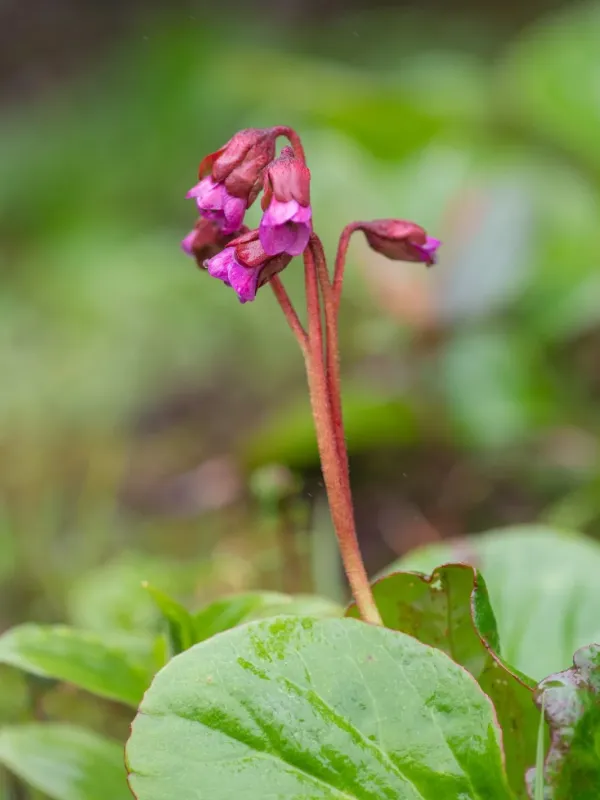
Description
Sowing dates
Bergenia purpurascens is typically propagated via vegetative division of the rhizomes, which is the most reliable method for maintaining consistent plant quality.
The ideal time for division is either in early spring before the new growth starts or in late summer once the active growing season draws to a close.
Propagation by seeds is possible but requires patience, as the germination process and subsequent development of the seedlings can be quite slow.
For seed sowing, stratification in a cold environment for several weeks is highly recommended to improve the overall germination rate significantly.
Seeds should be sown on the surface of well-drained, moist potting mix and placed in a location with moderate indirect light until they are established.
Growing requirements
As a member of the Saxifragaceae family, this plant is native to the high-altitude regions of the Himalayas and thrives in rocky mountain terrains.
The plant requires consistently moist soil but is extremely sensitive to waterlogging; therefore, excellent drainage is critical for successful cultivation.
While Bergenia purpurascens can tolerate full sun in cooler climates, it generally prefers partial shade to protect its leaves from scorching temperatures.
It performs best in rich, organic, and slightly acidic to neutral soils that provide enough nutrients for its robust perennial growth habit.
This species is well-adapted to mountain winters and exhibits significant cold hardiness, making it suitable for alpine gardens and exposed landscapes.
Main diseases and pests
High humidity and poor air circulation are the primary drivers for fungal diseases, such as leaf spot, which can damage the decorative foliage.
Root rot is a common issue when the plants are grown in poorly drained soil, leading to the rapid decay of the fleshy, creeping rhizomes.
Nematodes are known to attack the root system, causing general decline and stunted growth, which is often difficult to reverse without soil treatment.
Slugs and snails are occasional pests that favor the succulent leaves during periods of rainy weather, often leaving unsightly ragged edges on the foliage.
- Ensure adequate spacing between plants to allow for airflow.
- Apply organic mulch to maintain soil health while avoiding contact with the crown.
- Monitor regularly for leaf damage and treat with appropriate organic pesticides if needed.
Harvesting
In various cultural traditions, the leaves and rhizomes of Bergenia purpurascens are harvested for their therapeutic and medicinal properties.
The most sought-after material is the overwintered foliage, which naturally ferments under snow cover, gaining unique chemical profiles before spring.
These harvested leaves are carefully dried in well-ventilated areas to prevent mold, preserving the active compounds for infusions and herbal remedies.
Rhizomes are typically harvested in the autumn when the plant has finished its major growth cycle and concentrations of tannins are at their peak.
Sustainable harvesting practices are essential to ensure the longevity of the plant colony, as it is a slow-growing perennial in many garden settings.