
Adscending saxifrage
Saxifraga adscendens
Description
Growing requirements
The Adscending saxifrage (Saxifraga adscendens) is an herbaceous perennial plant classified within the family Saxifragaceae. It is primarily native to the mountainous regions of Europe and North America, where it thrives in niches such as limestone debris and rocky crevices.
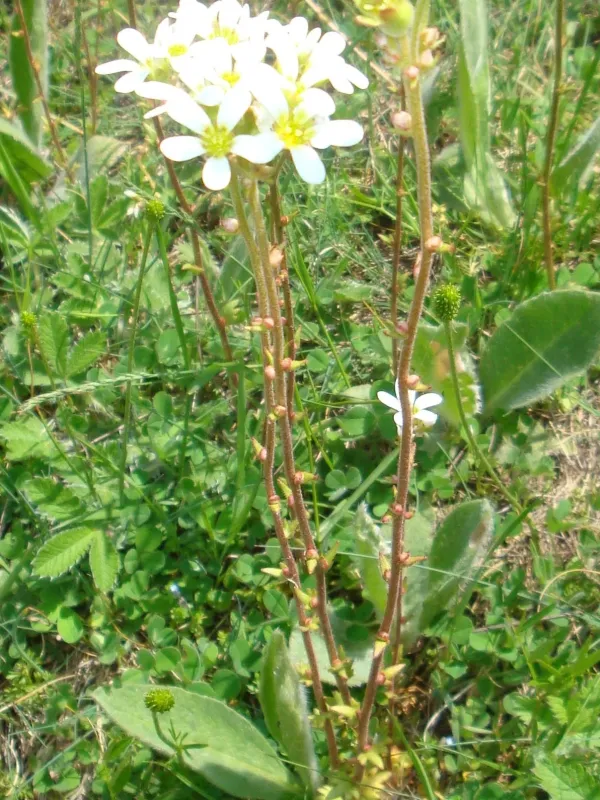
The plant exhibits distinct botanical characteristics, featuring compact rosettes of glandular-pubescent leaves. Its inflorescences consist of ascending stalks carrying small white or cream-colored flowers, which are typical for its genus adapted to harsh alpine conditions.
Agricultural and gardening requirements focus on well-drained, porous soils that mimic natural rocky screes. The plant necessitates a neutral or slightly alkaline pH and cannot tolerate waterlogged conditions, which are critical factors for preventing root decay in cultivation.
In terms of climate, the species prefers temperate, cool conditions with high exposure to ambient light. However, in low-altitude garden settings, protection from intense midday heat is often required to maintain plant vigor and prevent stress during the peak summer months.
The primary horticultural application for this species is in rock gardening and alpine landscaping. It serves as an effective ground cover for narrow spaces and stone walls, providing ecological value while functioning as an ornamental feature in specialized garden designs.
Main diseases and pests
The species is particularly susceptible to fungal pathogens like Botrytis or various types of root rot, especially when air circulation is poor or substrate moisture is excessive. Regular inspection and maintaining the correct irrigation frequency are essential for preserving plant health.