
Badan
Bergenia crassifolia (L.) Fritsch
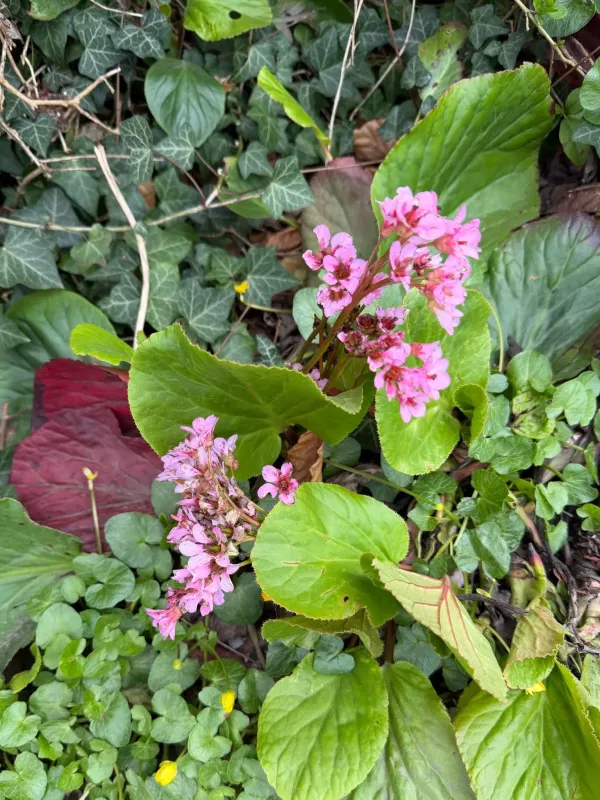
Description
Sowing dates
Badan (Bergenia crassifolia) is primarily propagated through vegetative division of the rhizomes. This method ensures that the offspring retain the parent plant's characteristics and establishes a robust crop more rapidly than through seed propagation, which is slower and less predictable.
The best time to divide the rhizomes is in early spring before growth restarts, or in late summer after flowering concludes. Each segment must contain a viable growth bud to ensure successful rooting in the new location, as the plant relies on these buds to expand its colony.
Seed sowing requires specific attention to stratification. Seeds are typically sown in early spring in well-drained, sterile media. Because seedlings grow slowly in the first year, nurseries often maintain them in containers until they reach a sufficient size for transplanting into the field.
When transplanting into the main production area, space the plants about 30 to 40 centimeters apart. This spacing allows the thick rhizomes to spread effectively while minimizing competition for nutrients, which is essential for maintaining the health of the entire plantation.
As a member of the Saxifragaceae family, this plant is well-known for its resilience. In agricultural settings, it is often treated as a long-term perennial crop, capable of remaining productive in the same field for many years with minimal intervention.
Growing requirements
Badan thrives in partial shade, mimicking its natural habitat in rocky, wooded slopes. It requires loose, humus-rich soil that offers excellent drainage to prevent root rot, which is the most common cause of failure in poorly managed agricultural settings.
While the plant is incredibly hardy regarding temperature, tolerating extreme cold, it is sensitive to soil waterlogging. Farmers should avoid planting in areas where snowmelt or heavy rainfall pools, as the fleshy rhizomes are prone to bacterial decay under these conditions.
The climate requirements for Bergenia crassifolia are broad, as it is adapted to the harsh conditions of Siberian and Altai mountain regions. It handles temperature fluctuations well and does not require extra protection against winter frosts, making it a low-input crop.
During the growing season, moderate moisture is sufficient. However, establishing the plantation on a slight slope can be beneficial for natural drainage, which enhances the quality of the rhizomes and prevents disease outbreaks related to excess humidity.
Regular weeding is essential only during the first two years. Once the dense, leathery leaves of the Badan create a canopy over the ground, they naturally suppress most competing weeds, significantly reducing the labor costs associated with maintenance.
Yield
The economic value of Badan lies in its rhizomes, which are rich in tannins, and its overwintered leaves, often referred to as Siberian tea. Yields depend heavily on the age of the crop, with the harvest reaching peak efficiency between the fourth and sixth years.
For industrial production, an average yield of 3 to 5 tons of raw rhizome per hectare is standard. Harvesting earlier than the 4-year cycle results in a product with lower concentrations of active medicinal compounds, which negatively impacts the market price.
Leaf collection is an annual activity conducted in the spring. Farmers selectively pick only the old, naturally fermented leaves that have darkened on the plant, as these provide the characteristic flavor and nutritional profile required for high-quality tea production.
The plantation's yield can be sustained for over a decade with proper soil management. Organic fertilization, applied annually in early spring, helps maintain the soil's structure and nutrient levels, ensuring consistent growth rates year over year.
Standardizing the harvest process ensures that the final product meets pharmaceutical quality standards. Proper sorting and cleaning are essential steps, as any impurities or soil debris can compromise the purity of the final extract or tea product.
Main diseases and pests
The primary concern for Badan growers is fungal leaf spot, caused by pathogens like Ramularia. This is more common in stagnant air conditions, highlighting the importance of planting density and good field ventilation to prevent the spread of spores.
Root-knot nematodes and certain soil insects can pose a threat to the subterranean parts of the plant. Using clean, pathogen-free starting material and practicing a strict crop rotation schedule are the best defenses against these persistent soil-borne issues.
Bacterial soft rot can occur if rhizomes are damaged during cultivation or harvesting. Any physical damage provides an entry point for bacteria, so careful handling and sanitizing equipment after use are vital for preventing localized outbreaks from destroying entire sections.
Although the plant is frost-tolerant, extreme temperature swings in early spring can occasionally damage the emerging floral stalks. While this does not usually kill the plant, it can impact the aesthetic quality of the crop if it is also sold for ornamental purposes.
Regular scouting of the field is necessary. If symptoms of infection appear, immediate isolation and removal of the affected plants, combined with the application of appropriate biological fungicides, can contain the threat without widespread chemical usage.
Harvesting
The harvest of rhizomes occurs in late autumn, once the plant has entered dormancy. Using mechanical diggers or manual labor, the rhizomes are extracted, carefully washed to remove all soil, and trimmed of fibrous lateral roots before being processed.
Drying must be immediate and carefully controlled. Maintaining a temperature range between 50 and 60 degrees Celsius ensures the removal of excess moisture while preserving the delicate active ingredients. The final moisture content should be kept under 14% for storage.
Leaf harvesting is done by hand, focusing exclusively on darkened, overwintered leaves. These are spread out to dry in well-ventilated, shaded areas. Protection from direct sunlight is crucial, as UV rays can degrade the essential compounds within the leaves.
Storage requires cool, dry conditions and airtight containers. Because the dried products are hygroscopic, they can absorb moisture from the air, which can lead to rapid deterioration or mold growth, rendering the batch unsuitable for retail.
Market preparation involves a final quality inspection, where the product is checked for size, cleanliness, and moisture levels. Reliable, high-quality Badan supplies are highly valued in the herbal industry, provided they are harvested and dried according to strict protocols.