
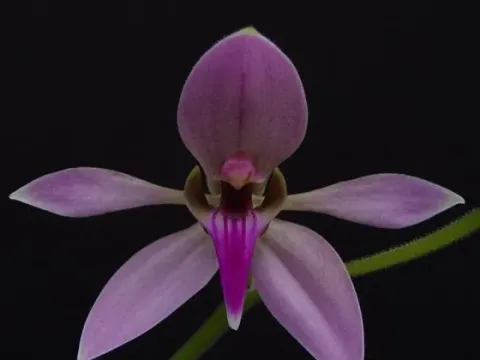
Ancistrochilus
Ancistrochilus
Ancistrochilus is a genus of small-sized epiphytic orchids belonging to the Orchidaceae family. These plants are native to the tropical regions of West and Central Africa, where they grow in high-humidity forests, typically found on tree trunks and shaded branches.
What the section contains

Ancistrochilus
The morphology of the plant includes clustered, conic-shaped pseudobulbs that support thin, pleated leaves. The inflorescences emerge from the base of the pseudobulbs, producing distinct, hook-shaped flowers that are highly valued by orchid enthusiasts and botanical collectors.
To successfully cultivate Ancistrochilus, one must maintain an environment that mimics its natural habitat. This includes a high relative humidity level, ideally between 70% and 85%, and excellent ventilation to prevent stagnant air, which can lead to rapid fungal decay.
Regarding temperature requirements, the plant prefers warm to moderate conditions. Temperatures should generally range from 20°C to 26°C during the day, with a slight drop of 5–7 degrees at night to stimulate healthy metabolic activity and flower development.
The choice of medium is crucial for this epiphyte; it requires a very airy, well-draining substrate. High-quality pine bark mixed with perlite or charcoal is the standard choice, allowing the roots to dry partially between waterings to prevent root rot.
The most common threat to Ancistrochilus is root rot caused by overwatering or using a medium that retains too much moisture. If the pseudobulbs become soft or discolored, it is a sign that the root system is failing and immediate repotting may be necessary.
Pests such as scale insects and mealybugs are frequently encountered in indoor collections. These pests colonize the base of the leaves and pseudobulbs, draining nutrients from the plant; frequent inspection and manual removal are recommended as primary control measures.
Spider mites can become a problem if the ambient humidity is too low for an extended period. These microscopic pests thrive in dry conditions and can cause the leaves to lose their vitality and turn yellow, requiring a prompt increase in moisture and potential acaricide treatment.
Fungal pathogens often manifest as black spots on the foliage. To mitigate this risk, it is important to avoid getting water inside the leaf axils during irrigation and to ensure that the plant dries off completely before nightfall, especially during cooler months.
General hygiene is the best defense against pests and diseases. Always use sterilized pots and fresh substrate when repotting, and keep the Ancistrochilus separate from new, unquarantined plants to ensure the long-term health of your collection.