
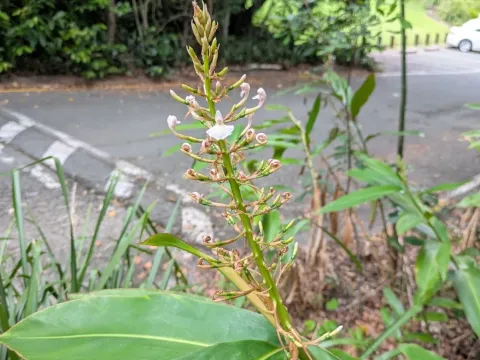
Alpinia
Alpinia Roxb.
Alpinia is a perennial herbaceous plant belonging to the Zingiberaceae family. Native to tropical and subtropical regions of Asia, the plant requires specific environmental conditions to reach its full agricultural potential.
What the section contains
 Alpinia hainanensis
 K. Schum.
Alpinia hainanensis
Alpinia hainanensis K. Schum.
 Alpinia officinarum
 Hance
Alpinia officinarum
Alpinia officinarum Hance
 Alpinia rugosa
 S. J. Chen & Z. Y. Chen
Alpinia rugosa
Alpinia rugosa S. J. Chen & Z. Y. Chen
 Alpinia zerumbet
 (Pers.) B. L. Burtt & R. M. Sm.
Alpinia zerumbet
Alpinia zerumbet (Pers.) B. L. Burtt & R. M. Sm.
 Red ginger
Alpinia purpurata (Vieill.) K. Schum.
Red ginger
Alpinia purpurata (Vieill.) K. Schum.
 Shell Ginger
Alpinia zerumbet x Alpinia hainanensis
Shell Ginger
Alpinia zerumbet x Alpinia hainanensis
Alpinia
The crop thrives in fertile, well-draining soils with a neutral or slightly acidic pH balance. A loose soil structure is crucial to allow the rhizomes to expand freely and to prevent waterlogging, which is detrimental to root health.
Temperature requirements are strictly tropical, necessitating consistent warmth. The plant grows best in temperatures between 20°C and 30°C and requires a high ambient humidity level to prevent foliage stress.
While Alpinia loves light, it performs best under dappled shade. Exposure to intense, direct sunlight often causes leaf scorch, reducing the overall vigor and quality of the crop during the growing season.
Proper nutrient management is essential, with a focus on balanced NPK applications to support both the lush foliage and the development of the rhizomes, which are the primary economic part of the plant.
The primary threats to Alpinia cultivation are soil-borne fungal pathogens such as Pythium and Fusarium, which target the rhizomes, especially when irrigation is not carefully controlled.
Insect pests, including spider mites and scale insects, frequently pose a challenge by colonizing the underside of leaves and draining the plant's essential nutrients.
Effective management strategies involve integrating cultural practices such as crop rotation, use of disease-free propagation material, and careful water monitoring.
Chemical intervention should be considered a last resort, focusing instead on biological controls and maintaining sanitary field conditions to prevent the spread of infestations.
Regular scouting for early signs of distress, such as leaf discoloration or stunted growth, is vital for maintaining high productivity in commercial settings.
Harvesting Alpinia typically occurs 18 to 24 months after planting, once the leaves have turned yellow and the plant has entered a state of natural senescence.
Rhizomes are carefully excavated to avoid bruising or damaging the surface, as cuts can serve as entry points for pathogens and lead to rapid post-harvest decay.
Once harvested, the rhizomes are cleaned, trimmed of roots and stalks, and sorted by size and quality before being processed for market distribution.
Drying is a critical step in post-harvest processing, usually performed in temperature-controlled environments to preserve the volatile oils responsible for the plant's unique aroma.
The final product is widely used in culinary applications as a spice, as well as in the pharmacological industry for its documented medicinal properties.