
Alpinia rugosa
Alpinia rugosa S. J. Chen & Z. Y. Chen
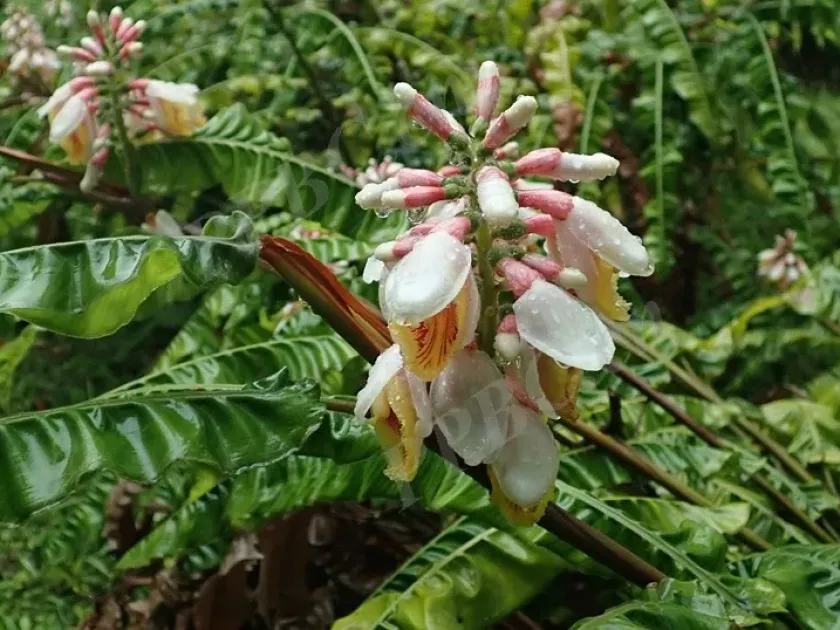
Description
Growing requirements
Alpinia rugosa is a notable perennial herbaceous species belonging to the ginger family, Zingiberaceae. It is characterized by its robust rhizomatous growth habit, which supports vertical leafy stems typical of the genus.
The native distribution of this species is centered in the tropical forests of Southeast Asia. It thrives in humid, shaded environments, where it occupies the understory layer, adapting to specific light intensity levels found beneath the forest canopy.
Successful cultivation requires a climate that mimics tropical conditions. The ideal ambient temperature ranges from 22 to 30 degrees Celsius. Protecting the plants from cold drafts and winter frost is essential for maintaining their physiological integrity and decorative foliage quality.
The substrate requirement for Alpinia rugosa is a well-draining, nutrient-rich potting mix. A combination of coco coir, bark, and decomposed leaf mold ensures the necessary aeration and water retention, preventing the roots from suffocation while keeping the plant hydrated.
Water management is a key factor in its agronomy. While the plant prefers consistent moisture, the root zone must not remain waterlogged. Providing high atmospheric humidity through artificial misting systems is recommended to prevent the leaf tips from drying and browning.