
Alpinia hainanensis
Alpinia hainanensis K. Schum.
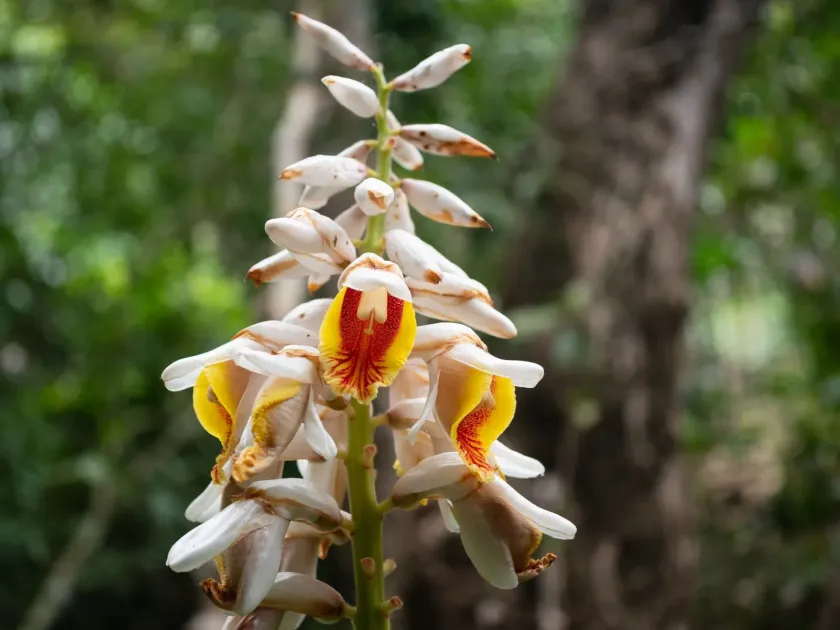
Description
Growing requirements
Alpinia hainanensis (K. Schum.) is a prominent member of the Zingiberaceae family. This perennial herb originates from the lush, tropical forests of Hainan and other southern regions of China.
The plant is characterized by thick, aromatic rhizomes and large, lanceolate leaves. It thrives in high-humidity environments where temperatures remain consistently warm, between 22°C and 30°C throughout the growing season.
For optimal growth, it requires deep, nutrient-rich soil with excellent drainage properties. While the plant loves water, it is strictly intolerant to waterlogging, which can cause significant damage to its underground root system.
In a farm setting, Alpinia hainanensis requires partial shade. Excessive exposure to direct tropical sunlight can cause physiological stress, leaf scorching, and diminished oil production in the rhizomes.
Regular fertilization with well-decomposed organic matter is highly recommended to maintain the vigour of the plant. Proper spacing is essential to ensure adequate airflow and prevent the development of fungal pathogens.
Harvesting
The harvest of Alpinia hainanensis focuses on its mature rhizomes. These are gathered after the aerial parts of the plant begin to naturally wither, indicating that the plant has entered dormancy.
Harvesting is labor-intensive and is typically performed manually. Growers carefully remove the soil and cut the rhizomes into segments to facilitate uniform drying and further processing for market.
Post-harvest treatment is critical; the rhizomes must be cleaned and dried immediately to prevent mold growth. High-quality production aims to preserve the essential oils, which define the market value of the crop.
Economically, the crop is valued primarily for its medicinal properties. Extracts are commonly utilized in traditional pharmaceutical practices to alleviate digestive issues and as a potent anti-inflammatory agent.
Global interest in this species is increasing due to its potential as a natural supplement. Efficient post-harvest logistics are vital to maintaining the integrity of the bioactive components found in the root.