
Red ginger
Alpinia purpurata (Vieill.) K. Schum.
Description
Sowing dates
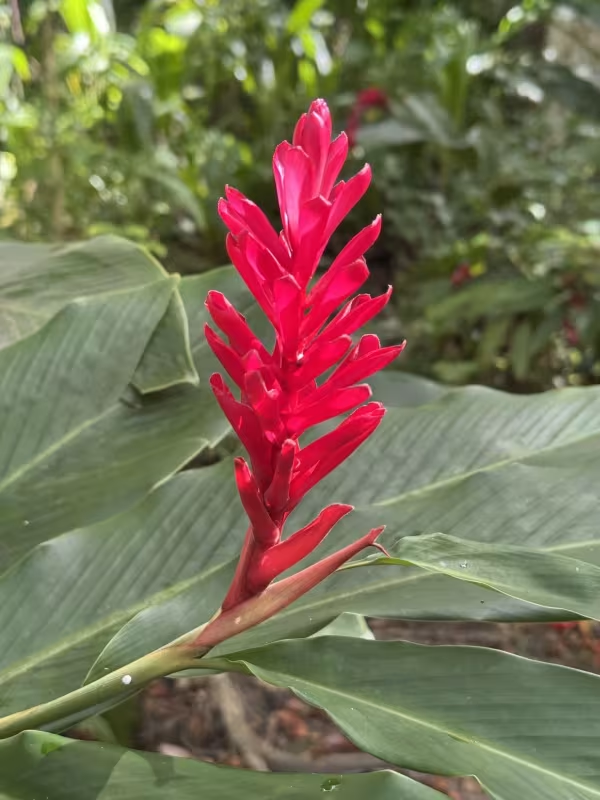
Red ginger (Alpinia purpurata) is a robust perennial herb belonging to the Zingiberaceae family. In commercial production, it is typically propagated vegetatively by dividing rhizomes or utilizing the small plantlets (bulbils) that develop on the inflorescences.
For planting, it is crucial to select sites with well-draining soil rich in organic matter. In tropical regions, the best time to establish a plantation is at the onset of the rainy season, which ensures high survival rates and rapid establishment of the root system due to sufficient soil moisture.
Planting material must be healthy, exhibiting well-developed roots and at least two active growth points. Proper spacing is essential to ensure adequate airflow between plants, which significantly reduces the risk of fungal outbreaks in the dense foliage.
The crop grows vigorously, with stems reaching heights of two to three meters. This growth habit must be considered during site layout to allow sufficient space for maintenance operations, harvesting equipment, and personnel movement.
While seed propagation is possible, it is rarely used commercially due to the prolonged time required to reach the flowering stage compared to rhizome division. If seeds are used, a constant temperature of 25–28 degrees Celsius is necessary for successful germination.
Growing requirements
As a true tropical plant, red ginger has strict temperature requirements. It thrives in temperatures ranging from 22 to 30 degrees Celsius and cannot tolerate frost; even exposure to temperatures below 10 degrees Celsius can cause severe physiological stress.
High humidity is essential for optimal growth and development. If the ambient air is too dry, the edges of the leaves may brown, and the development of the showy inflorescences may be stunted or irregular, reducing the commercial value of the crop.
The soil should be slightly acidic to neutral with high organic content. Excellent drainage is paramount, as the plant requires constant moisture but is highly susceptible to root rot if the soil becomes waterlogged or overly compacted.
Light management is a critical factor in flower production. Although red ginger can tolerate partial shade, the highest productivity of high-quality inflorescences is achieved under bright, indirect light, often provided by using 30–50% shade cloth in high-sunlight regions.
A consistent fertility program is required. The crop benefits from balanced NPK fertilizers supplemented with micronutrients, particularly potassium, to enhance inflorescence strength and color intensity, as well as regular applications of compost to maintain soil structure.
Yield
The primary commercial product is the inflorescence, which consists of vibrant, colorful bracts that are highly sought after in the cut flower industry. Yield depends on the plantation age and the intensity of horticultural management practices applied.
A mature, well-managed clump can produce between 10 and 20 quality stems per season. Productive life span for a single stand is typically 5 to 7 years before declining output necessitates replanting the plot with younger rhizome divisions.
Harvesting should be done when the lower bracts are fully colored, but the small, true flowers in the center of the inflorescence remain closed. This stage ensures the best vase life and transport durability for the export market.
Yield metrics improve significantly with the use of precision drip irrigation and fertigation systems. Providing water and nutrients directly to the root zone allows the plant to recover faster and initiate new shoot growth immediately after harvesting.
Varietal selection is key, with different cultivars offering varied shades of red, pink, or white bracts. Choosing the right cultivar based on market demand is essential for maximizing profitability in commercial floriculture.
Main diseases and pests
Red ginger is susceptible to several pests, most notably the spider mite, which flourishes in low-humidity environments. These pests feed on the undersides of leaves, causing yellowing, webbing, and general decline if not managed with appropriate miticides.
Aphids and mealybugs can colonize the base of the stems and the inflorescence, drawing sap and weakening the plant. Integrated pest management, including the use of systemic insecticides and beneficial predatory insects, is recommended for effective control.
Fungal diseases, such as leaf spot and root rot, are common problems caused by excessive moisture, poor drainage, or inadequate spacing. These infections can lead to leaf lesions and, in severe cases, the collapse of the entire clump.
Preventative measures, including regular field inspections, removal of dead or infected plant parts, and ensuring good air circulation, are the best defenses against disease. Fungicides should be applied strictly at the first sign of infection to prevent spreading.
Sanitation practices are vital. Cleaning tools between rows and removing plant debris from the field significantly lowers the pathogen load and helps maintain a healthy, productive plantation environment over the long term.
Harvesting
Harvesting is labor-intensive and must be done by hand. Stems are cut with sharp, sterilized shears as close to the base as possible without damaging the remaining rhizome or the younger, developing shoots nearby.
After harvesting, stems must be placed immediately in buckets of clean water to maintain turgor pressure. In hot climates, stems should be moved to a pre-cooling area to remove field heat, which is essential for maximizing post-harvest longevity.
Grading is based on stem length, inflorescence size, and bract color intensity. Only stems without mechanical bruises, insect damage, or disease spots are selected for premium markets, ensuring high quality for floral arrangements.
Optimal storage temperature for cut stems is between 10 and 15 degrees Celsius. Exposing the stems to temperatures below 10 degrees Celsius for an extended period can lead to cold injury, which causes browning and rapid degradation of the colorful bracts.
The frequency of harvesting depends on the growing conditions, but in a healthy plantation, the stems are usually picked every 2 to 3 days. Consistent harvesting encourages the plant to allocate energy into producing new floral stems throughout the season.