
Shell Ginger
Alpinia zerumbet x Alpinia hainanensis
Description
Growing requirements
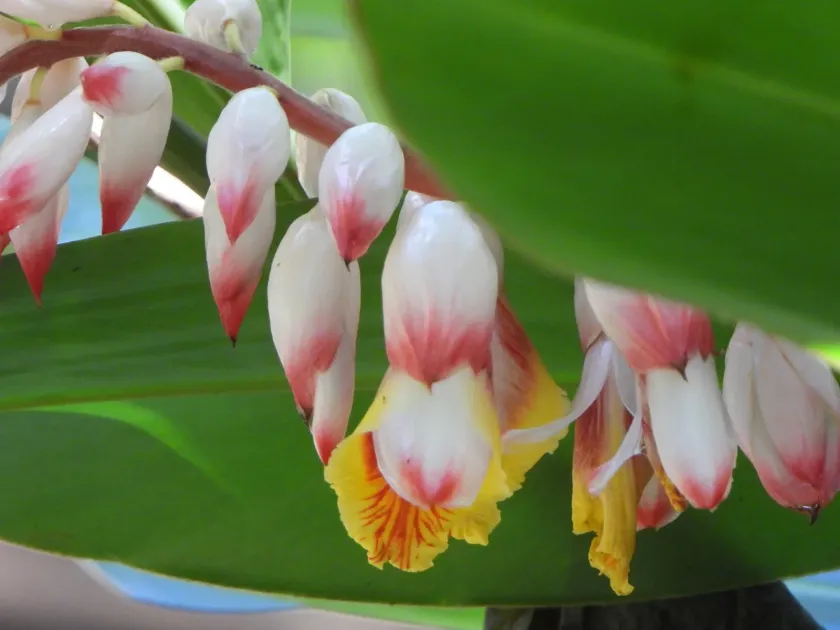
Shell Ginger, scientifically known as Alpinia zerumbet, is a robust member of the Zingiberaceae family. Native to East Asia, this plant is characterized by its long, lance-shaped leaves and pendant clusters of white-pink flowers that resemble seashells.
The plant thrives in warm, humid climates and is highly sensitive to frost. It requires a stable temperature range, ideally between 20°C and 30°C. In regions with cooler winters, Shell Ginger must be cultivated indoors or in climate-controlled greenhouses to prevent tissue damage.
Soil composition is critical for the success of this crop. A rich, well-draining potting mix that retains some moisture without becoming waterlogged is essential. Integrating organic matter, such as compost or peat, helps in sustaining the required nutrient levels for vigorous growth.
Light requirements are moderate to bright. While the plant appreciates morning sunlight, afternoon shade is highly recommended to protect the delicate foliage from scorching. Consistent humidity levels are also vital, often requiring regular misting if kept indoors.
Propagation is primarily performed through the division of rhizomes. This process should ideally occur in the spring, allowing the plants to establish themselves before the onset of the peak growing season. Proper spacing is necessary to allow for the significant spread of the root system.
Main diseases and pests
The most significant threat to Alpinia zerumbet is root rot, typically caused by excessive irrigation and poor soil aeration. Preventing water from pooling around the base of the stems is the primary method of controlling this fungal issue.
Spider mites are common pests that thrive in dry environments. They often colonize the underside of leaves, leading to yellowing and premature leaf drop. Frequent monitoring and increasing ambient humidity are effective preventative measures.
Mealybugs can also infest the stems and leaf axils. If detected early, these can be managed by using cotton swabs dipped in rubbing alcohol or applying systemic insecticides suitable for ornamental plants.
Leaf spot diseases can manifest in humid, stagnant conditions. To mitigate this risk, it is recommended to water the plant at the base, avoiding getting moisture on the leaves, and to ensure adequate air circulation around the canopy.
Ultimately, a healthy specimen with strong natural immunity is achieved through a combination of consistent maintenance, balanced fertilization, and quick action against environmental stressors or occasional pest outbreaks.