

Picador
ТОВ «Фабрика агрохімікатів», Черкаси, Україна
Herbicides
0
0
·
1.5K
8 offers
5.49 €per 1 l
Buy
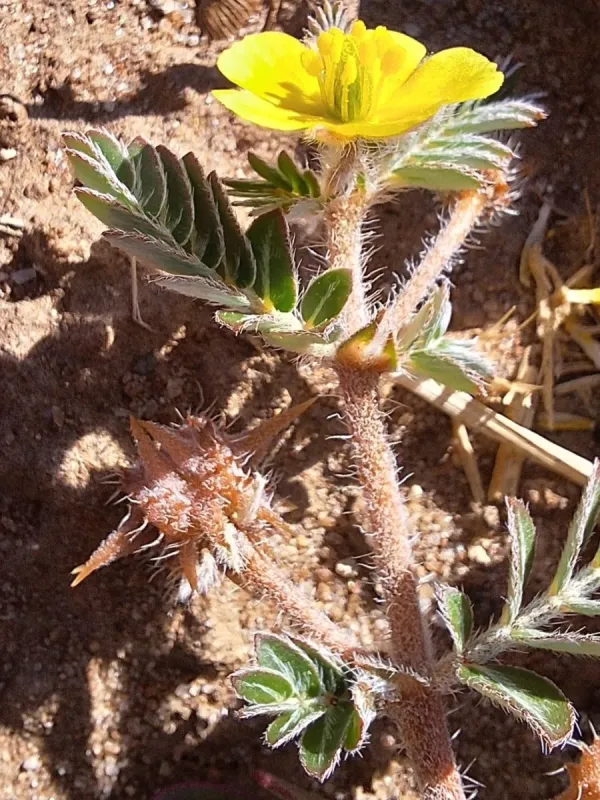
Puncturevine (Tribulus terrestris) is an annual plant in the Zygophyllaceae family, known for its prostrate growth habit and stems that branch out from a central crown.
The plant is easily identified by its characteristic fruits, which are woody burs equipped with sharp, needle-like spines that can easily puncture rubber tires or animal skin.
Its leaves are pinnately compound and opposite, providing a dense mat that can shade out emerging seedlings of desirable crops in the early stages of growth.
Yellow flowers bloom throughout the summer, producing seeds that are encased in a hardened structure, ensuring high durability and survival in various soil environments.
The plant possesses a deep taproot that reaches significant moisture levels, allowing it to flourish even during intense summer droughts when other vegetation suffers.
Puncturevine thrives in disturbed areas such as roadsides, fallow fields, pastures, and sandy soils where competition from other plant species is minimal.
In agricultural settings, it is a persistent pest in open-row crops like maize, cotton, and various vegetables that require frequent cultivation and irrigation.
The weed prefers well-drained, sandy, or stony soils and is highly adapted to the high temperatures characteristic of semi-arid agricultural regions.
It often exploits bare soil after harvest, quickly colonizing the area and producing seeds within a few weeks before the arrival of cold weather.
The distribution of the weed is primarily assisted by humans, as the sharp spines latch onto agricultural equipment, tractor tires, and the coats of livestock.
Puncturevine acts as a potent competitor for water and nutrients, which significantly reduces the growth rates and overall yield of affected commercial crops.
The sharp burs are a significant hazard to livestock, often causing injury to the mouth, tongue, and digestive tracts when present in forage or hay crops.
The weed contains saponins that can cause photosensitization and liver damage in sheep and other grazing animals, posing a risk to the health of the livestock.
Its presence in fields complicates manual labor and maintenance, as the sharp spines can easily pierce through clothing and protective gear used by workers.
Persistent infestations result in a massive accumulation of seeds in the soil seed bank, necessitating long-term management strategies to reclaim the land.
Effective cultural control includes deep tillage to bury seeds at depths from which they cannot emerge, as well as proper crop rotation to break the weed's life cycle.
Mechanical control, such as manual pulling or hoeing before the plants produce seed pods, is effective for smaller patches and prevents spread.
Chemical control involving pre-emergence and post-emergence herbicides is a common practice in intensive agriculture to target the weed during its vulnerable stages.
Maintaining a healthy, dense canopy of competitive crops helps suppress Puncturevine growth by depriving it of the direct sunlight it requires.


