
Tribulus zeyheri
Tribulus zeyheri
Description
How to tell it apart
Tribulus zeyheri is an annual herbaceous plant belonging to the Zygophyllaceae family, known for its prostrate growth habit and hardy nature.
The stems spread across the ground, forming dense mats that can effectively cover significant areas of topsoil if left unchecked.
The leaves are opposite and pinnately compound, providing a distinct appearance that helps distinguish this species from similar weeds.
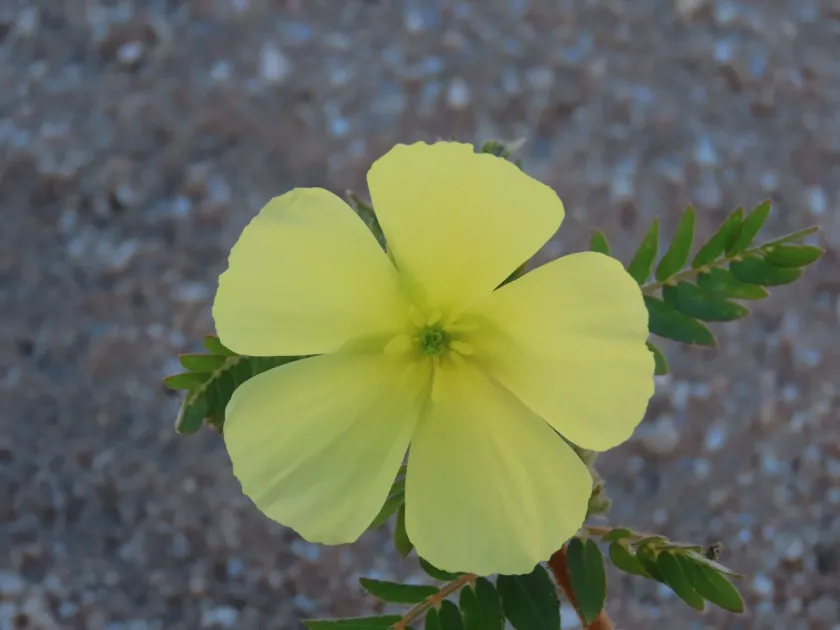
Yellow flowers bloom in the leaf axils; these are typical for the genus and appear periodically during the growing season under optimal conditions.
The fruit is a schizocarp that separates into spiny segments, which are highly effective at dispersing seeds via animals and machinery.
Where it grows
This weed thrives in arid and semi-arid climates, preferring well-drained, sandy, or rocky soils with plenty of sun exposure.
It is commonly found in disturbed sites, roadsides, pastures, and within agricultural fields such as row crops and orchards.
The plant demonstrates remarkable drought tolerance, allowing it to dominate in regions where other vegetation struggles due to water scarcity.
It frequently colonizes areas where the natural vegetation cover has been compromised by overgrazing or poor management practices.
Seeds are highly persistent in the soil, allowing the plant to re-emerge for many seasons after the initial infestation occurs.
Harm it causes
Tribulus zeyheri competes aggressively with crops for essential soil nutrients and water, often leading to significant yield losses in affected areas.
The spiny fruits pose a significant threat to livestock, causing physical injuries to hooves and oral cavities during grazing.
Agricultural harvest becomes more difficult and costly due to the contamination of produce with sharp, invasive burrs.
The plant may harbor pests or pathogens that serve as a bridge for infestations of nearby crop species, further complicating protection efforts.
Allelopathic effects have been observed, where the plant releases compounds into the soil that inhibit the growth of surrounding vegetation.
How to control
Effective management begins with mechanical control, such as pre-sowing tillage, which destroys seedlings before they become established.
Maintaining high crop density through proper seeding rates helps shade out the weed and prevents it from finding the space required to grow.
Integrated chemical control using selective herbicides is often necessary for larger infestations, especially during the early growth stages.
- Use of systemic herbicides during the active growth phase of the weed for maximum efficiency.
- Implementation of crop rotation cycles to disrupt the weed's life cycle.
- Manual removal of small patches before fruit maturation to prevent soil seed bank accumulation.
Consistent monitoring and early intervention are crucial to prevent this hardy species from spreading across valuable agricultural lands.
Taxonomy
- Latin name
- Tribulus zeyheri
- Family
- Парнолистниковые
- EPPO code
- TRBZE