
Zygophyllum apiculatum
Zygophyllum apiculatum
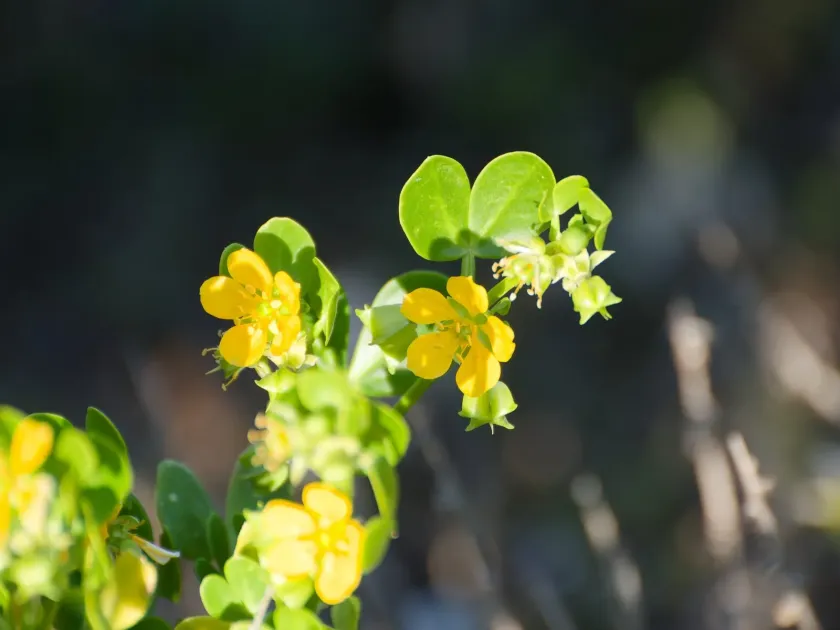
Description
How to tell it apart
Zygophyllum apiculatum is a perennial herbaceous plant belonging to the Zygophyllaceae family. It is well-adapted to arid environments, featuring a robust root system capable of accessing deep soil moisture during dry seasons.
The plant is characterized by branched stems and opposite, pinnate leaves with distinctly pointed tips, from which the specific epithet apiculatum is derived. This structural adaptation helps the plant manage transpiration in heat.
The flowers are typically solitary, regular, and display five petals, usually white or yellowish. The flowering period is prolonged, which facilitates persistent seed production throughout the growing season.
The fruit consists of a multi-locular capsule that releases seeds as it dries and cracks. These seeds are highly durable and can remain dormant in the soil for several years, making long-term control challenging.
The plant's overall architecture makes it a formidable competitor in agricultural fields, as it quickly establishes itself in sparse crops or disturbed soil conditions.
Where it grows
Zygophyllum apiculatum is primarily found in arid and semi-arid regions. It thrives in saline, sandy, or clay-heavy soils, often outcompeting other vegetation in areas where moisture is the limiting factor for plant growth.
It frequently colonizes fallow lands, pastures, and poorly managed grain fields. In recent years, its presence in irrigated agricultural systems has increased, likely due to monocultural practices and inadequate weed suppression strategies.
The weed often migrates from field margins and roadsides into production areas. Once established, it can form dense patches that disrupt the uniform growth of the primary crop, especially in row crops like sunflowers or cotton.
Seed dispersal is facilitated by both wind (anemochory) and human activity, as agricultural machinery can easily transport seeds or root fragments across different sections of a farm during tillage and harvest.
Because it tolerates soil salinity, it is particularly difficult to eliminate in lands that have undergone partial degradation or in regions where salinity is an emerging environmental concern.
Harm it causes
The primary impact of Zygophyllum apiculatum is its extreme competition for water. In dryland farming, even a moderate infestation can significantly reduce crop yields by depleting moisture that is critical during the vegetative growth phase.
The root system aggressively extracts essential soil nutrients, leaving little for the crop. Furthermore, there is evidence suggesting that the plant may exhibit allelopathic tendencies, releasing chemicals into the soil that inhibit the germination or growth of neighboring crop plants.
Presence of this weed in fields adds mechanical complexity to harvesting operations. The woody stems can clog combine harvesters, leading to equipment downtime, increased fuel consumption, and higher maintenance costs.
The plant may also have toxic properties if consumed by livestock, which reduces the grazing quality of affected pastures and limits the utility of crop residues for forage purposes.
Persistent infestations lead to long-term degradation of soil quality, as the weed depletes deep soil moisture and nutrients that are difficult to replenish without intensive soil management practices.
How to control
Controlling Zygophyllum apiculatum requires a multi-faceted approach centered on cultural practices and targeted herbicide application. Deep tillage is the most effective mechanical method for disrupting the root system.
Integrating diverse crop rotations that include dense-canopy cover crops can help shade out the weed. This prevents the necessary sunlight from reaching the seedlings and limits their establishment early in the season.
- Deep plowing (over 25 cm) to sever and desiccate root crowns.
- Regular fallow field management using systematic cultivation.
- Strategic application of systemic herbicides (like glyphosate) on fallow land.
- Using high-quality, weed-free seeds to prevent introduction.
- Optimizing crop density to maximize competition against weed growth.
Chemical control is often difficult due to the plant's resilience. The most effective results are achieved using broad-spectrum systemic herbicides applied during the plant's active vegetative growth phase, specifically before the flowering cycle begins.
Continued monitoring of field edges and non-crop areas is essential to prevent the spread of seeds into the main production fields, ensuring that the initial source of infestation is eliminated.
Taxonomy
- Latin name
- Zygophyllum apiculatum
- Family
- Парнолистниковые
- EPPO code
- ZYGAP