
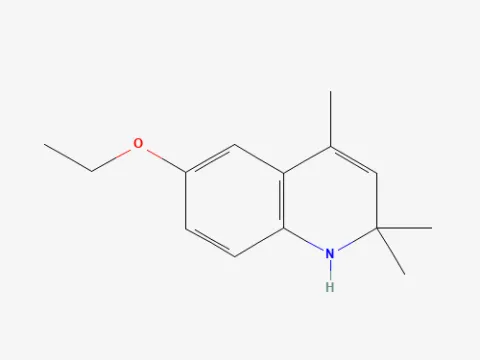
Ethoxyquin
Ethoxyquin is a synthetic chemical compound belonging to the quinoline class, widely recognized and utilized primarily as a highly effective antioxidant in agricultural and industrial sectors.
What the section contains
Ethoxyquin
The primary mechanism of action involves inhibiting the oxidation of fats and other oxygen-sensitive components. Ethoxyquin acts as a free radical scavenger, effectively breaking the chain reaction of oxidation at the molecular level.
Due to its high lipophilicity, the substance readily integrates into the lipid phase of the product, providing long-term stabilization against rancidity. This preservation process ensures the maintenance of nutritional and energy values.
Unlike herbicides or insecticides, this compound does not exhibit direct toxicity to plants or pests. Its role is essentially technical, focusing on the preservation and stabilization of organic resources during storage.
It also serves a critical function by preventing the degradation of fat-soluble vitamins (such as A and E) and carotenoids, which are vital for the quality of livestock feed and various grain-based products.
The main application of Ethoxyquin is in the long-term storage of agricultural commodities, specifically grains, oilseeds, and high-energy feed mixtures, preventing quality loss over time.
It is extensively used in the feed industry to protect premixes and complete feeds from oxidation. This helps in maintaining the stability of the feed throughout its shelf life, ensuring reliable animal nutrition.
In pomology, it is applied during the post-harvest period for apples and pears. Its function is to prevent superficial scald, a physiological disorder caused by oxidative stress during cold storage.
The substance is also utilized in the pesticide industry as a stabilizer for various technical formulations, extending their expiration dates and protecting active ingredients from environmental degradation.
Additionally, it may be used in the processing of fishmeal and other marine-based proteins, where high fat content makes the material particularly susceptible to rapid oxidation and spontaneous heating.
Application rates for Ethoxyquin are strictly determined by regulatory standards and vary depending on the target commodity and the required storage duration to maintain product integrity.
For grain and feed additives, typical dosages range from 100 to 500 grams per ton of product, calculated based on the total fat content and environmental storage conditions.
In fruit treatment, aqueous solutions are applied via spraying or dipping. The goal is to achieve an even coating on the surface of the fruit to protect the skin from oxidative browning.
Proper mixing and application technology are crucial to ensure that the antioxidant is evenly distributed. Failure to achieve uniform coverage can lead to localized oxidative spots, undermining the entire preservation process.
Adherence to pre-harvest intervals and maximum residue limits (MRLs) is mandatory for any product intended for food consumption, requiring rigorous quality control at every stage of processing.
Ethoxyquin usage is subject to stringent international regulations, with specific maximum residue limits established to protect human health and ensure consumer safety.
Personnel handling the concentrate must wear appropriate personal protective equipment, including respirators, gloves, and eye protection, to avoid irritation or potential systemic exposure.
The chemical must be stored in original, tightly sealed containers in a cool, dark, and well-ventilated area, as it is sensitive to light and heat, which can diminish its protective capabilities.
Safe disposal protocols must be strictly followed to prevent contamination of waterways and soil. Accidental release into the environment poses a risk to aquatic life and ecological health.
Compliance with safety data sheets (SDS) and local agricultural regulations is necessary to ensure responsible and lawful application of the chemical in agricultural settings.