
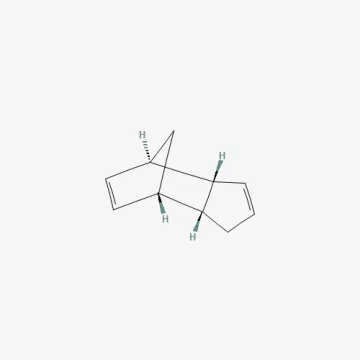
Dicyclopentadiene
Description
Mode of action
Dicyclopentadiene is a dimer of cyclopentadiene widely recognized as a key intermediate in the chemical synthesis industry. While it is rarely used as a standalone pesticide, it serves as an essential building block for creating highly effective active ingredients for crop protection.
Its main role in agriculture involves complex chemical synthesis to form specific cyclic structures. These structures are integrated into the molecules of fungicides or insecticides to confer target-specific biological activity against agricultural threats.
The high reactivity of the double bonds in dicyclopentadiene allows for Diels-Alder reactions, which are fundamental in constructing sophisticated molecules. These derivatives can disrupt the metabolic pathways or enzyme functions of harmful organisms.
Once synthesized into a commercial pesticide, these compounds provide reliable control by targeting the development cycles of pests. This specific mode of action ensures high efficacy while maintaining the stability of the active ingredient under field conditions.
Technology based on this compound allows for the development of stable formulations that resist degradation by environmental factors such as UV radiation and high temperatures, ensuring long-lasting protection of crops.
What it targets
Derivative compounds of dicyclopentadiene are used to manage a wide range of agricultural pests and plant pathogens. They are particularly effective in protecting cereals, vegetables, and fruit crops from heavy infestations.
The primary targets include various lepidopteran, coleopteran, and hemipteran insects. By disrupting the feeding patterns and growth of these pests, the derivatives ensure healthy crop development and improved yield quality.
In the field of fungicides, these chemical building blocks help control diseases such as powdery mildew, leaf rust, and various fungal spot diseases. They are essential tools for maintaining phytosanitary standards in large-scale farming.
These active ingredients are often favored in Integrated Pest Management (IPM) strategies. They provide a versatile alternative to traditional pesticides, helping to mitigate the risk of resistance buildup in pathogen populations.
Many derivatives also exhibit antifeedant effects, effectively discouraging insects from feeding on foliage, which significantly reduces physical damage even before the pest is completely eliminated.
Rates and timing
Application rates for dicyclopentadiene-based derivatives are determined by the specific formulation and the target organism. Agronomists must always follow the guidelines provided by the product manufacturer to ensure efficacy and environmental safety.
The timing of applications is linked to the pest population dynamics and the growth stage of the crop. Precise timing ensures that the active ingredient reaches the pest during its most vulnerable developmental phase.
Typically, the frequency of application is limited to a few treatments per season. This precautionary measure helps maintain ecological balance and prevents the accumulation of chemical residues in the soil and final harvest.
Working solutions must be prepared immediately before application to ensure optimal chemical performance. Modern spraying equipment is suitable for these substances, provided that nozzles are correctly calibrated for thorough coverage.
Adjuvants are often added to the tank mix to enhance the spreading and retention of the spray droplets on the leaves, which improves the overall success of the treatment in variable weather conditions.
Restrictions
Handling dicyclopentadiene and its synthetic derivatives requires strict adherence to safety protocols. Personal protective equipment, including skin and respiratory protection, is mandatory for handlers to prevent exposure.
Storage facilities must be dry, well-ventilated, and kept away from open flames or heat sources. The compound is flammable, and its derivatives require careful management to ensure chemical stability during storage.
Specific pre-harvest intervals must be respected to guarantee that no harmful residues remain on the harvested produce. During this period, field entry is strictly prohibited for unauthorized personnel.
Disposal of waste, empty containers, and unused solutions must be performed in accordance with local environmental regulations. Preventing runoff into water bodies is a top priority for sustainable agriculture.
- Use only authorized and correctly labeled products.
- Maintain a buffer zone near water sources and bee-friendly areas.
- Do not apply during high wind speeds to prevent spray drift.
Status in the European Union
Not approved in the EU
- CAS number
- 1755-01-7
- Category (EU)
- PG - Plant growth regulator
EU status is for reference only and does not replace national registration in your country.