
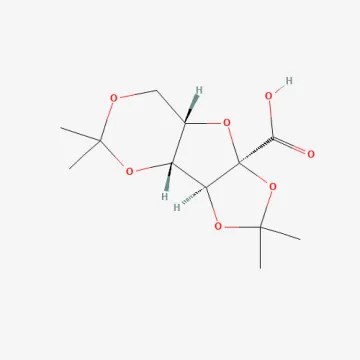
Dikegulac
Description
Mode of action
Dikegulac (usually applied as its sodium salt) is a synthetic plant growth regulator classified as a growth retardant. Its primary mode of action involves interfering with the synthesis and transport of auxins, which are the hormones responsible for apical growth in plants.
By suppressing the activity of the apical bud, dikegulac effectively breaks apical dominance. This physiological shift causes the plant to redistribute nutrients and growth energy into lateral buds, which stimulates side branching and leads to a denser, more compact foliage structure.
The substance exhibits systemic properties, meaning it is absorbed by leaves and stems and translocated through the phloem to actively growing tissues. This systemic movement ensures that the growth-regulating effect is distributed consistently throughout the treated canopy.
On a cellular level, dikegulac temporarily inhibits cell division in the meristematic tissues. This process leads to shortened internodes and firmer stems, which contributes to the overall compact habit of the plant without permanently damaging its genetic potential.
The effects of dikegulac are generally reversible. As the chemical is metabolized and cleared from the plant tissues, the plant gradually resumes its normal growth patterns, making it a flexible tool for seasonal aesthetic maintenance in professional horticulture.
What it targets
This growth regulator is primarily utilized on ornamental crops, including woody shrubs, hedge plants, and certain flower species. It serves as a labor-saving alternative to mechanical pruning, maintaining the desired size and shape of vegetation in parks and gardens.
Dikegulac is highly effective at preventing excessive elongation of shoots, which often occurs in greenhouse conditions or under low-light regimes. By managing growth, it improves the structural integrity of ornamental plants, making them more resilient and aesthetically pleasing.
In nursery production, the chemical is used to promote branching in young seedlings and shrubs. This creates high-quality, bushier planting material that is more attractive to buyers and requires less manual pinching or shearing during the early stages of growth.
The regulator is also employed in landscape design for maintaining complex shapes and formal hedge designs that require long-term retention of specific dimensions. This reduces the frequency of maintenance cycles required in urban landscaping projects.
Research also explores its potential in specific crop management scenarios where energy diversion from vertical growth to reproductive or side-branch development can improve yield quality or architectural consistency of the plants involved.
Rates and timing
Application rates for dikegulac are strictly dependent on the plant species, its growth stage, and the desired degree of height suppression. The product is typically applied as a foliar spray during periods of active vegetative growth.
Precision in calculating the concentration is vital, as excessive application rates can lead to phytotoxic effects, such as leaf deformity, chlorosis, or severe growth stunting. Always follow the manufacturer’s labels and recommended concentrations for each specific type of crop.
The timing of the application should align with the plant’s physiological state. Optimal results are typically achieved when the treatment is performed in the early morning or late afternoon, ensuring maximum absorption and minimizing evaporation loss.
Depending on the required outcome, a single application may suffice or a scheduled series of treatments might be necessary. Intervals should be determined based on the rate of recovery of the plant species under local climatic conditions.
Before applying to a large collection of plants, it is highly recommended to perform a spot test on a few specimens to gauge their sensitivity. This precaution helps to ensure the efficacy of the product and prevents unwanted damage to high-value ornamental stock.
Restrictions
Users must adhere to standard safety protocols when handling dikegulac, including the use of personal protective equipment like gloves, eye protection, and respirators. This prevents skin irritation and potential inhalation risks during the mixing and spraying process.
To prevent drift, applications should not be conducted during windy conditions, as unintended contact with sensitive nearby plants can cause significant damage. Furthermore, buffer zones must be maintained near water bodies and wildlife habitats to avoid contamination.
The product should be stored in its original, sealed container in a cool, dry place, away from direct sunlight and out of reach of children or unauthorized personnel. Improper storage can compromise the chemical stability of the regulator.
Disposal of unused chemical solution and containers must strictly follow local environmental regulations. Never dispose of residues in domestic sewage systems or natural water sources, as this can negatively impact the local ecosystem.
In the event of accidental exposure, immediately flush the affected area with plenty of water and seek medical attention if symptoms develop. Keep the product label or safety data sheet available to provide professionals with accurate information in an emergency.
Status in the European Union
Not approved in the EU
- CAS number
- 18467-77-1
- Category (EU)
- PG - Plant growth regulator
EU status is for reference only and does not replace national registration in your country.