
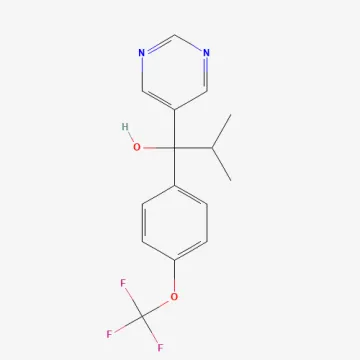
Flurprimidol
Description
Mode of action
Flurprimidol belongs to the pyrimidinyl carbinol class and acts as a highly effective plant growth regulator, functioning as a retardant. Its primary role is to inhibit the biosynthesis of gibberellins within plant tissues.
The mode of action is based on blocking the oxidation of ent-kaurene to ent-kaurenoic acid. A reduction in gibberellin levels leads to shortened internodes, resulting in stronger and more compact stems.
Unlike many other growth regulators, flurprimidol exhibits high systemic activity and can move within the plant both acropetally and basipetally.
The substance is effectively absorbed both through the root system when applied via soil drench and through green tissues when applied as a foliar spray, offering flexibility in application methods.
The result of the treatment is a more compact and aesthetic plant form, increased foliage color intensity, and improved resistance to lodging.
What it targets
The product is primarily used for ornamental flowering and potted plants grown in greenhouses and controlled environments.
It is essential for the production of bulbous plants, such as lilies and tulips, allowing for the precise control of flower stem height before marketing.
Flurprimidol effectively suppresses excessive vegetative growth in chrysanthemums, poinsettias, and various other popular indoor plants.
It is used in nurseries to enhance the quality of nursery stock and improve the market appearance of woody and shrubby ornamental species.
- Lilies
- Tulips
- Chrysanthemums
- Poinsettias
- Ornamental shrubs
Rates and timing
Dosage rates directly depend on the crop species, the desired degree of compactness, and the chosen application method. The solution concentration should be determined individually through pilot testing.
Soil drenching typically requires lower rates as the substance is directly assimilated by the root system, providing a prolonged growth control effect.
Foliar spraying requires more precise timing, as the effect manifests faster but may be less durable compared to soil applications.
Timing of the application is linked to growth stages: for most crops, the optimal time is the initiation of active shoot growth or the appearance of flower buds.
It is important to avoid applications during periods of plant stress, such as drought, waterlogging, or extreme temperatures, to prevent tissue deformation.
Restrictions
Working with flurprimidol requires compliance with standard safety measures adopted for handling pesticides and growth regulators in agriculture.
Personal protective equipment, including gloves, goggles, and respirators, must be used to prevent skin, eye, or respiratory tract contact with the chemical.
Applications near water bodies are prohibited, as the compound's high systemic activity may negatively impact non-target aquatic vegetation.
The product must be stored in its original packaging in a cool, dry place, out of the reach of children, pets, and away from direct sunlight.
After use, all equipment must be thoroughly cleaned to prevent residue accumulation and damage to sensitive crops during future operations.
Status in the European Union
Not approved in the EU
- CAS number
- 56425-91-3
- Category (EU)
- PG - Plant growth regulator
- ADI
- 0.003 mg/kg bw/day
- ARfD
- 0.09 mg/kg bw
- AOEL
- 0.003 mg/kg bw/day
EU status is for reference only and does not replace national registration in your country.