
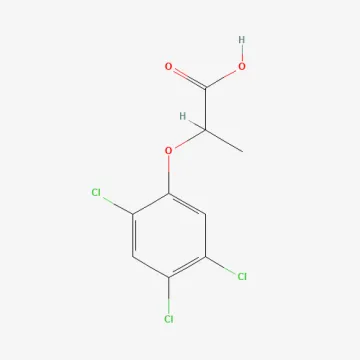
Fenoprop
Description
Mode of action
Fenoprop belongs to the class of phenoxycarboxylic acid derivatives. It functions as a systemic herbicide that acts as a synthetic auxin—a plant hormone regulating growth.
Upon application, the active ingredient is absorbed by leaves and roots, moving rapidly through the vascular system to the growing points. This triggers uncontrolled cell division, tissue deformation, and death.
The disruption of metabolic pathways prevents the plant from absorbing essential nutrients and water. Eventually, the weed experiences chlorosis and structural failure, leading to total destruction.
Products based on fenoprop are highly selective, though their efficacy depends strictly on the weed growth stage. Young, actively growing weeds are the most susceptible.
Due to its high biological activity, the substance exhausts perennial weeds by forcing them to deplete their energy reserves through abnormal growth patterns.
What it targets
The herbicide is primarily used to control a wide range of broadleaf weeds. It is effective against many annual and perennial herbaceous species.
In agricultural practice, it is often utilized to manage weeds from the Asteraceae, Polygonaceae, and Fabaceae families, which compete with crops for resources.
Fenoprop is particularly significant for controlling woody brush, shrubs, and vines that threaten pastures, rangelands, or non-cropped industrial areas.
The product also shows results against weeds that have developed resistance to other herbicide classes due to its specific hormone-based mechanism.
- Weed species sensitive to auxin-type herbicides.
- Woody growth and shrubs in agricultural fields.
- Persistent perennial weeds with deep root systems.
Rates and timing
Application timing depends on the growth stage of the target weeds. Treatments are most effective during periods of intense growth when uptake is maximized.
Dosage rates vary based on weed composition and crop development stage. It is crucial to strictly adhere to the concentration guidelines provided by the manufacturer.
When used in tank mixes, a compatibility test must be performed. Fenoprop is frequently combined with other herbicides to broaden the control spectrum.
Temperature conditions significantly impact performance. Stable, warm weather promotes faster internal movement and metabolism of the herbicide within the plant.
Strict waiting periods must be observed after application before commencing mechanical operations or allowing livestock to graze on treated lands.
Restrictions
Fenoprop is known for its volatility, necessitating extreme caution when applying it near sensitive vegetation such as vineyards, orchards, or vegetable crops.
Application should be avoided during high winds or if rainfall is expected immediately after, as this increases the risk of drift and environmental contamination.
Personal Protective Equipment (PPE) for respiratory, skin, and eye protection is mandatory to ensure operator safety during mixing and spraying.
The product must be prevented from entering water bodies, as it poses risks to aquatic organisms and disrupts the local ecological balance.
Storage must be in specialized facilities, away from food and feed, and under conditions that prevent the degradation of the active ingredient.
Status in the European Union
Not approved in the EU
- CAS number
- 93-72-1
- Category (EU)
- PG - Plant growth regulator
EU status is for reference only and does not replace national registration in your country.