
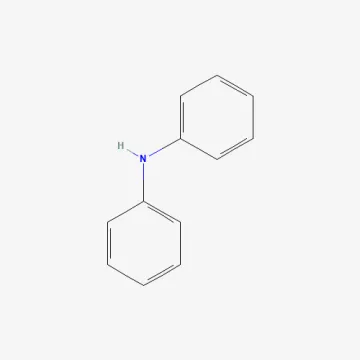
Diphenylamine
Description
Mode of action
Diphenylamine belongs to the aromatic amines group and is classified in agronomy primarily as a plant growth regulator and antioxidant for post-harvest fruit treatment.
The main mechanism of action is the substance's ability to slow down the oxidation of lipids and phenolic compounds in fruit tissues. This significantly reduces the respiration rate of fruits after harvest.
By stabilizing cell membranes, the substance prevents the development of physiological disorders that occur during prolonged storage.
The substance acts as an effective inhibitor of ethylene metabolism, allowing to delay fruit aging and maintain their marketability over a long period.
Unlike fungicides, diphenylamine does not directly kill pathogens but creates conditions that prevent their entry into tissues weakened by physiological stress.
What it targets
The main area of diphenylamine application is the protection of pome crops, in particular apples and pears, during storage.
Preparations based on this substance are used to control physiological disorders such as superficial scald of the fruit skin.
Also, the agent effectively reduces the risk of flesh browning associated with over-ripening or unfavorable conditions in cold storage units.
In some cases, it is used as an auxiliary component to prevent the development of secondary infections penetrating through microcracks in the skin.
- Superficial scald
- Flesh browning
- Premature fruit aging
- Storage losses
Rates and timing
The application of the product is carried out by dipping the fruits into the working solution or by spraying them directly on sorting lines.
The concentration of the active ingredient in the working solution is strictly regulated by the manufacturer and typically ranges from 1000 to 2000 mg/l.
An important requirement is the uniformity of application: fruits must be completely covered with the solution to ensure comprehensive protection of the entire surface.
Treatment should be carried out as quickly as possible after harvest to prevent the onset of irreversible tissue aging processes.
Maintaining the temperature regime in the storage facility after treatment is a critical factor for the manifestation of diphenylamine's protective properties.
Restrictions
The use of diphenylamine is limited by strict sanitary standards, as excessive residual levels in agricultural products are unacceptable.
Working with the substance requires the use of personal protective equipment for skin, respiratory organs, and eyes due to its potential irritant effect.
It is necessary to strictly observe the waiting periods between treatment and fruit sale as established by the legislation of the manufacturing country.
The use of the preparation near open water bodies and drinking water sources is prohibited due to moderate toxicity to aquatic organisms.
After the storage cycle is completed, spent solutions must be disposed of in accordance with environmental safety requirements.
Status in the European Union
Not approved in the EU
- CAS number
- 122-39-4
- Category (EU)
- PG - Plant growth regulator
- ADI
- 0.075 mg/kg bw/day
- ARfD
- Not appl.
- AOEL
- 0.1 mg/kg bw/day
EU status is for reference only and does not replace national registration in your country.