
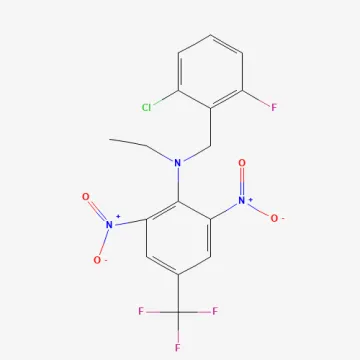
Flumetralin
Description
Mode of action
Flumetralin belongs to the dinitroaniline chemical class. It functions as a contact-type plant growth regulator that specifically inhibits cell division in meristematic tissues.
The primary mechanism of action is the disruption of microtubule formation, which effectively blocks mitosis. This process prevents the development of axillary buds, stopping them from growing into vegetative suckers.
As a contact agent, flumetralin has negligible systemic mobility within the plant. Consequently, it requires precise application to ensure the chemical reaches the target axillary areas of the plant.
By forming a protective layer upon contact, it halts cellular growth locally. This specific action allows for the effective management of plant architecture without affecting the physiological processes of the main stems or leaves.
This compound is favored in professional crop management because it provides a reliable and selective way to stop unwanted growth while maintaining the overall health and vigor of the primary crop.
What it targets
Flumetralin is primarily utilized as a chemical sucker control agent in tobacco production. It is highly effective in preventing the development of axillary suckers that compete for nutrients.
By controlling the growth of these lateral shoots, the chemical ensures that the plant diverts its energy towards the production of high-quality tobacco leaves rather than vegetative biomass.
Beyond its core use in tobacco, it can suppress certain weed species in the inter-row areas if direct application occurs, providing a secondary benefit for field hygiene.
The use of flumetralin significantly reduces the demand for manual labor, which is traditionally required for mechanical sucker removal in large-scale tobacco farming operations.
Implementing this growth regulator results in more uniform leaf maturation, which is crucial for achieving consistent quality during harvesting and subsequent leaf processing.
Rates and timing
The application rates for flumetralin depend on the specific crop variety and the stage of sucker development. It is typically applied via directed spraying to ensure the solution penetrates the leaf axils.
Timing is critical for optimal results. Applications are generally performed during the early flowering phase or when the leaf canopy is fully developed but before suckers become too large to inhibit.
Environmental conditions, such as temperature and humidity, play a significant role. Applications should be avoided during extreme heat to prevent the rapid evaporation of the carrier solution.
Precision in dosing is essential to avoid localized leaf scorching. Farmers must ensure proper calibration of spraying equipment to maintain uniform coverage across the entire crop field.
Dry weather conditions are preferred for application. Rainfall shortly after treatment can wash off the product, drastically reducing its efficacy and necessitating a repeat application.
Restrictions
Strict adherence to safety protocols is mandatory when handling flumetralin. Operators must use appropriate personal protective equipment (PPE) to avoid skin, eye, and respiratory exposure.
Environmental protection is paramount. Flumetralin must not enter waterways, as it can be toxic to aquatic organisms; proper disposal of leftover solution and containers is required by law.
Storage must be maintained in a dry, cool, and well-ventilated facility away from direct sunlight. Compliance with chemical compatibility charts is necessary when preparing tank mixes.
Regular inspection of storage containers is advised to prevent leaks. The chemical should be stored in original packaging to ensure stability and prevent degradation over time.
Post-application equipment cleaning is vital. Thoroughly flushing sprayers with appropriate cleaning agents prevents cross-contamination of sensitive crops during subsequent field operations.
Status in the European Union
Not approved in the EU
- CAS number
- 62924-70-3
- Category (EU)
- PG - Plant growth regulator
- Approved from
- 11.12.2015
- Approval until
- 15.01.2025
- ADI
- 0.015 mg/kg bw/day
- ARfD
- 0.1 mg/kg bw
- AOEL
- 0.03 mg/kg bw/day
EU status is for reference only and does not replace national registration in your country.