
Retithrips
Retithrips
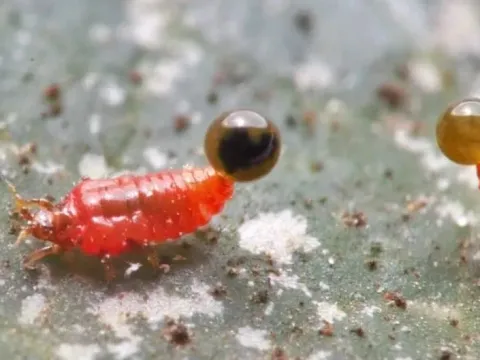
Retithrips (Retithrips syriacus) belongs to the Thripidae family and is characterized by a unique reticulated (net-like) body structure, which makes it distinct under microscopic examination.
What the section contains
Retithrips
Adult insects are tiny, measuring approximately 1 to 1.5 millimeters in length, with a dark brown to black coloration that helps them blend into the leaf surface.
Larvae are pale-yellow or white and are highly mobile, typically clustering on the undersides of leaves where they feed and develop in protected microenvironments.
Field identification requires close inspection of the underside of leaves using a hand lens, as the insects are often hidden among the leaf veins or in folded leaf margins.
The population reproduces rapidly through a combination of sexual reproduction and parthenogenesis, allowing the species to maintain high numbers even in variable environmental conditions.
Retithrips is a known polyphagous pest that causes significant economic damage to vineyards, citrus orchards, and various ornamental greenhouse plants worldwide.
The primary impact involves the removal of sap from leaf tissues, which inhibits the plant's photosynthetic ability and leads to overall physiological stress.
Host plants commonly affected by this pest include:
- grapevine (Vitis vinifera);
- citrus trees;
- cotton crops;
- hibiscus and other ornamental shrubs;
- tropical fruit species.
Young nursery stock is especially vulnerable; heavy infestation can cause stunted growth, reduced foliage quality, and poor development of new shoots.
Repeated feeding over multiple seasons weakens the host plants, making them more susceptible to secondary environmental stresses like drought or winter damage.
The seasonal activity of Retithrips typically begins in late spring, as temperatures consistently exceed 18-20 degrees Celsius, which signals the emergence from overwintering sites.
The pest thrives in warm, dry weather conditions, which accelerate its life cycle and allow for multiple generations to occur throughout the peak summer months.
As summer temperatures peak, the reproductive rate reaches its maximum, often leading to rapid colonization of previously healthy plant tissue in gardens and farms.
During the onset of autumn and cooling temperatures, the adults seek protected areas such as soil crevices, leaf litter, or tree bark to enter a state of diapause.
This overwintering strategy ensures the survival of the population through cold winters, allowing for re-infestation of crops when favorable conditions return the following year.
Initial infestation signs include small chlorotic spots or "silvery" patches on the upper leaf surface, resulting from the destruction of mesophyll cells by the pest's feeding.
Presence of the pest is confirmed by dark, shiny black droplets of excrement on the leaf undersides, along with shed larval skins (exuviae) left behind after molting.
Severe infestations lead to the curling and yellowing of leaves, which may eventually turn necrotic and cause premature leaf drop if the population density remains high.
In addition to foliage damage, heavy feeding near fruit clusters can lead to aesthetic defects or surface scarring, reducing the market value of the harvested produce.
Visual decline of the plant, including reduced vigor and yellowish foliage, is a common indicator that the pest population has reached an economically damaging threshold.
Cultural control is a primary management strategy, involving the removal of weeds and debris that serve as alternative hosts or overwintering refuges for the thrips.
Biological control agents, such as predatory mites and pirate bugs (Orius species), can be introduced to manage Retithrips populations in greenhouse or orchard settings.
Chemical control via systemic insecticides is effective but should be used judiciously, ensuring thorough coverage of the leaf undersides where the insects hide.
It is crucial to practice resistance management by rotating insecticide classes to prevent the development of pesticide resistance, which is common in thrips species.
Regular monitoring using sticky traps and periodic field scouting allows farmers to detect early infestations and intervene before the population reaches an uncontrollable level.