
Scirtothrips bispinosus
Scirtothrips bispinosus
Description
How to identify
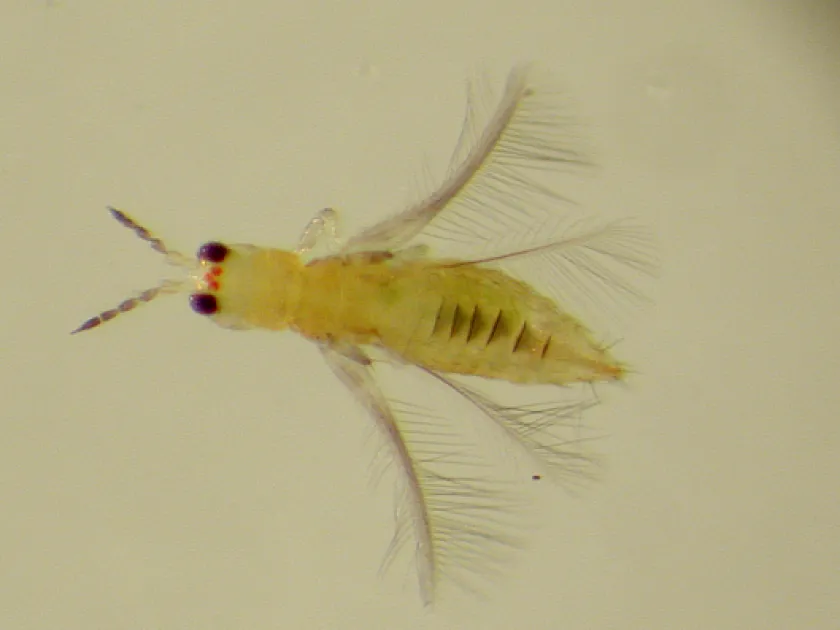
Scirtothrips bispinosus is a significant pest belonging to the order Thysanoptera and the family Thripidae. These are tiny insects, typically measuring about 1 millimeter in length, characterized by a yellowish-brown body and fringed wings.
Due to their minute size, these insects are difficult to detect with the naked eye. Identification usually requires the use of magnification tools or expert entomological analysis of specific body features, such as the arrangement of setae on the abdominal segments.
The life cycle of the pest involves several stages: egg, two larval instars, prepupa, pupa, and adult. The entire development process is highly dependent on ambient temperature, progressing rapidly in warm and humid environments.
Females insert their eggs into the soft tissue of leaves and buds. This oviposition behavior protects the offspring from external threats, including direct contact with pesticide sprays, making early detection and timing critical for management.
Under optimal conditions, multiple overlapping generations can occur within a single season, leading to rapid population explosions that can overwhelm host plants if not managed proactively.
What it damages
This species is a polyphagous pest, meaning it attacks a wide variety of agricultural and horticultural crops. Major hosts include tea, mango, grapevines, and numerous ornamental plants grown in greenhouse conditions.
The damage is caused by both adults and larvae feeding on the cell contents of young leaves, growing tips, and flower buds. This extraction of plant sap disrupts the physiological functions of the host, leading to stunted growth.
Visible damage manifests as necrotic spots, silvering of leaf surfaces, and severe tissue deformation. In sensitive crops, the feeding activity often results in the abscission of flowers and young fruit, causing substantial economic losses.
Beyond direct feeding damage, these thrips are known to be potential vectors for various plant viruses. The transmission of these pathogens can cause even more devastating impacts on crop yield and quality than the direct feeding alone.
Persistent infestations often result in reduced photosynthesis, rendering the plant more susceptible to secondary fungal infections and decreasing its overall market value significantly.
Signs of infestation
Early symptoms of an infestation often include a silver-like sheen on the underside of young leaves, which is caused by the air entering the empty cells that have been drained of their contents.
Growth retardation is a common sign, with affected plants appearing less vigorous than healthy ones. As the population increases, terminal shoots may start to curl and harden prematurely, hindering normal development.
- Silvering or bronzing of leaf surfaces.
- Leaf curling and distorted shoot growth.
- Premature bud drop and fruit scarring.
- Presence of tiny black fecal specks on foliage.
- General loss of plant vigor and reduced blossom production.
The use of colored sticky cards is the standard monitoring practice for early detection. Blue cards are generally more effective at attracting various thrips species, providing a warning before a full-blown infestation occurs.
Control measures
Effective management requires an Integrated Pest Management (IPM) approach, combining cultural practices, biological control, and targeted chemical applications to suppress the pest population efficiently.
Chemical control should prioritize systemic insecticides that can reach the thrips hiding in protected crevices like leaf axils. It is vital to implement a resistance management program by rotating insecticides with different modes of action.
Biological control agents, such as predatory mites (e.g., Amblyseius spp.) or predatory bugs like Orius species, can be highly effective in greenhouse environments, significantly reducing the reliance on synthetic chemicals.
Cultural methods include regular weeding of the surrounding area to eliminate alternative host plants and maintaining proper irrigation to reduce plant stress, which otherwise makes them more susceptible to pest attacks.
Sanitation practices after harvesting are essential. Removing and destroying infested plant debris prevents the pest from overwintering in the soil or protected structures, thereby breaking the life cycle for the following season.
Taxonomy
- Latin name
- Scirtothrips bispinosus
- Order
- Thrips
- Family
- Thripidae
- EPPO code
- SCITBI
Discussion
No discussions yet — be the first.