
Rice thrips
Stenchaetothrips biformis
Description
How to identify
The rice thrips (Stenchaetothrips biformis) belongs to the order Thysanoptera, family Thripidae. Adult thrips are tiny, slender insects, typically measuring about 1–1.5 mm in length, with a dark brown to black coloration.
Larvae are pale yellow or white when young, gradually turning orange or reddish as they mature. They are wingless and tend to hide within the tightly rolled leaf sheaths of rice plants.
The life cycle encompasses several stages: egg, two larval instars, prepupa, pupa, and adult. The development rate is highly dependent on ambient temperature and humidity.
Reproduction can be sexual or parthenogenic, allowing for rapid population growth during favorable environmental conditions in rice-growing regions.
Adult thrips possess well-developed eyes and rasping-sucking mouthparts, which they use to feed on the tender tissues of young host plants.
What it damages
The primary host for this pest is rice (Oryza sativa). While it shows a strong preference for rice, it can also infest various wild grasses that serve as alternative hosts.
Damage is most severe during the early vegetative growth stages, specifically from germination to the tillering phase, as younger plants are highly susceptible to sap depletion.
By feeding on plant sap, the thrips interfere with the plant's physiological processes, reducing chlorophyll content and impairing photosynthesis, which leads to stunted growth.
Severe infestations can lead to substantial yield losses, as the damage causes leaves to wither and may result in the death of entire tillers if the pressure is high enough.
Furthermore, Stenchaetothrips biformis has been implicated in the transmission of certain plant viruses, which can cause significant systemic disease issues in rice fields.
When it appears
Thrips activity is strictly linked to temperature regimes. Adults typically emerge and begin colonizing rice fields as soon as the seedlings emerge or are transplanted.
The life cycle is relatively short, often completing in 15–20 days under optimal warm conditions, enabling the pest to produce multiple generations within a single cropping season.
The population tends to peak during periods of dry, warm weather, which favor both the reproduction and movement of the insects between host plants.
Water stress in rice fields often exacerbates the infestation levels. Drought conditions or low water levels in the paddies create a more favorable environment for the thrips.
During the off-season or following harvest, the insects often overwinter in the soil or within the debris of host weeds found on field margins.
Signs of infestation
The most distinctive sign of infestation is the characteristic curling of leaf edges, which creates a protective shelter for the developing larvae.
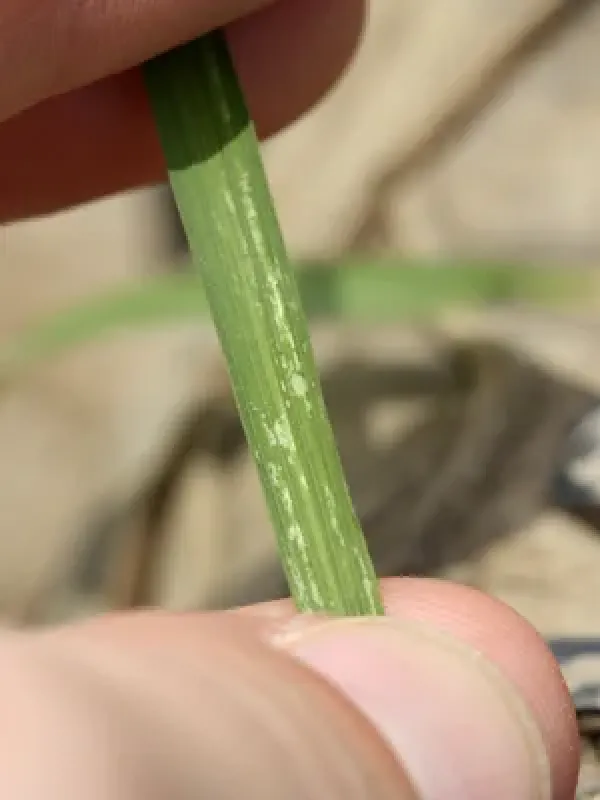
Initial feeding causes silvery or pale white streaks and patches on the leaves. As damage progresses, these areas turn necrotic and brown, causing the leaves to wither from the tip downwards.
Infested seedlings appear "burnt" or yellowed. In severe cases, the entire plant becomes pale and exhibits a significant delay in development compared to healthy plants.
- Curled, tubular-shaped young leaves.
- Silvery streaking and mottling on the leaf surfaces.
- Presence of tiny black fecal spots on the leaves.
- Overall chlorosis or yellowish appearance of the crop.
- Reduced vigor and inhibited growth of rice tillers.
Careful inspection of the rolled leaves will reveal the presence of small, active thrips, confirming the diagnosis.
Control measures
Water management is a cornerstone of cultural control. Keeping fields flooded can drown larvae and limit the ability of the pest to thrive in the plant canopy.
Sanitation practices, such as removing wild grasses and weeds from the field bunds, are crucial to reducing the primary inoculum source for the next season.
The use of balanced fertilization, particularly avoiding excessive nitrogen, can help ensure the plants are less attractive to the pest and more resilient to damage.
Chemical control involves the application of systemic insecticides at the onset of symptoms or when population thresholds are exceeded to stop feeding.
Integrated Pest Management (IPM) strategies emphasize the conservation of natural predators and the judicious use of pesticides to prevent the development of insecticide resistance.
Taxonomy
- Latin name
- Stenchaetothrips biformis
- Order
- Thrips
- Family
- Thripidae
- EPPO code
- THRIOR
Discussion
No discussions yet — be the first.