
Scirtothrips
Scirtothrips
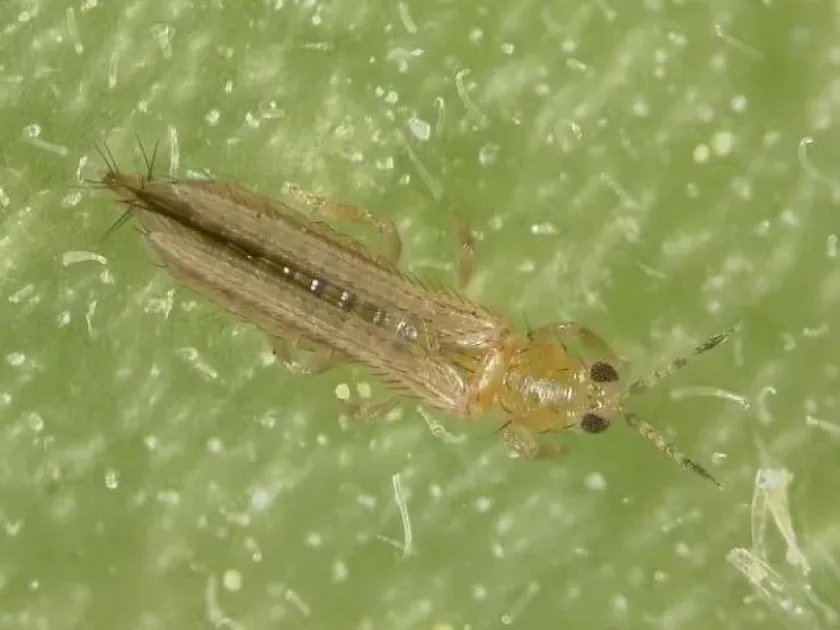
Description
How to identify
Scirtothrips is a genus of insects belonging to the family Thripidae, known for causing significant economic losses in various agricultural sectors.
These insects are minute, typically measuring between 0.8 and 1.5 mm in length, and generally possess a pale yellow or orange-brown appearance.
They are characterized by narrow, fringed wings and a delicate body structure, which makes them highly mobile and capable of spreading via wind currents.
Their life cycle includes egg, two larval instars, prepupa, pupa, and adult stages, with the entire cycle often completed in less than three weeks under warm conditions.
Proper identification usually requires taxonomic expertise, as distinguishing between species within the genus involves observing microscopic morphological features.
What it damages
Scirtothrips species are highly polyphagous, targeting a vast array of crops including citrus, grapes, cotton, tea, and various greenhouse-grown vegetables.
The damage is caused by the adults and larvae feeding on the cell contents of young leaves, flower buds, and developing fruit through a piercing-sucking mechanism.
This feeding activity destroys epidermal cells, leading to localized scarring, leaf curling, and overall stunted growth of the plant tissues.
In addition to direct physical damage, these pests are known vectors for various plant viruses, significantly increasing their threat to crop security.
In fruit crops, feeding creates a characteristic leathery or corky ring, often referred to as "silvering" or "scabbing," which degrades the market value of the produce.
When it appears
The activity and population growth of Scirtothrips are strongly correlated with temperature, with peak activity occurring during warm, dry weather conditions.
Greenhouse environments offer an ideal year-round habitat, allowing populations to persist and multiply continuously regardless of the external climate.
Outdoors, the pest typically emerges in late spring and remains active throughout the summer, often declining with the arrival of cooler autumn weather.
Prolonged heat waves combined with low humidity are known to accelerate their development, often leading to rapid population explosions.
During colder months, they may overwinter in the soil or protected niches on host plants, re-emerging when temperatures reach favorable levels.
Signs of infestation
The most diagnostic signs of infestation are silver or bronze-colored scarred areas on the undersides of leaves and on developing fruits.
Affected plants often show inhibited growth, distorted foliage, and early leaf drop, which can lead to severe stress for the plant.
- Presence of silver or greyish necrotic patches on leaves.
- Distorted, twisted, or stunted new shoots and buds.
- Corky or scabby scars on fruit surfaces.
- Tiny black spots of frass (excrement) visible on leaf surfaces.
- Reduced yield due to floral abortion and impaired fruit development.
Visual confirmation can be achieved by tapping foliage over a white sheet of paper to dislodge the tiny, fast-moving insects for closer inspection.
Control measures
Integrated Pest Management (IPM) is essential for controlling Scirtothrips, as these pests are notorious for developing resistance to common insecticides.
Blue sticky traps are widely used for monitoring populations and detecting the first arrivals of the pest in both field and greenhouse settings.
Chemical control should rely on a rotation of different insecticide classes to prevent the selection of resistant individuals within the population.
Biological control agents, such as predatory mites (e.g., Amblyseius species) and pirate bugs (Orius), are effective tools for suppressing thrips populations.
Cultural practices, including the removal of infested plant debris and effective weed control around the crop, are critical to reducing the pest's reservoir.
Taxonomy
- Latin name
- Scirtothrips
- Order
- Thrips
- Family
- Thripidae
- EPPO code
- SCITSP
Discussion
No discussions yet — be the first.