
Rye thrips
Limothrips denticornis
Description
How to identify
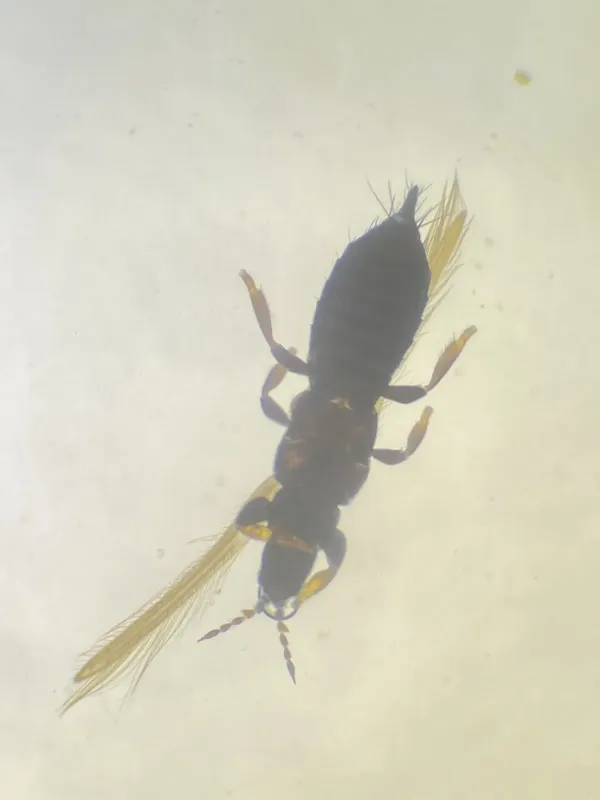
Rye thrips (Limothrips denticornis) is a small insect belonging to the order Thysanoptera and the family Thripidae. The adult is an elongated insect measuring approximately 1.3–1.6 mm in length, with a dark brown to black coloration.
The species is distinguished by specific tooth-like projections on the second antennal segment of females. Males are rare, significantly smaller than females, and can be distinguished by their lighter color and well-developed wings.
The larvae are typically whitish-yellow and highly active. Their life cycle includes stages of egg, larva, nymph, and adult. They are often found in secluded places like leaf sheaths or inside the spikes of grain plants.
Due to their microscopic size and preference for hidden parts of plants, they are difficult to detect during the early stages of crop development. Their presence is often identified only by the damage they cause.
Adults overwinter in plant debris, under tree bark, or in the upper soil layers. In early spring, when temperatures rise, they emerge to search for host plants to begin their reproductive cycle.
What it damages
The primary hosts for rye thrips are cereal crops such as rye, barley, and wheat. Oats and various wild grasses may also be infested when primary crops are unavailable.
The most severe damage occurs during the stem elongation and heading phases. Both adults and larvae pierce the plant tissues to feed on cell sap, which leads to physiological stress and reduced growth.
Damage to the flag leaf and stem significantly reduces the plant's photosynthetic capacity. This causes the plant to weaken and delays the development of the grain-bearing head, ultimately leading to yield loss.
Feeding on the spikes during the flowering phase is particularly destructive. It causes the grains to become shriveled, malformed, and underweight, which drastically decreases the quality and quantity of the harvest.
In cases of high infestation, the pest can cause significant yield reductions, reaching up to 20-30%. The destruction of spike tissues often results in empty or white heads, making the damage economically critical.
When it appears
Adults emerge from hibernation in mid-spring as soon as temperatures exceed 10-12 degrees Celsius. This timing aligns with the early vegetative growth phase of winter cereal crops.
There are typically 1 to 2 generations per year, depending on the climatic region. Hot, dry weather conditions accelerate the development cycle, leading to rapid population growth during the summer months.
A full life cycle from egg to adult takes approximately 20 to 35 days under optimal conditions. During peak season, dozens of thrips can be found on a single plant, causing extensive localized damage.
As the cereal crops mature, the population migrates to alternative wild grass hosts. These weeds provide the necessary food source for the insects to prepare for the upcoming autumn and winter.
As autumn temperatures drop, the insects move to sheltered locations to enter diapause. They successfully overwinter in these protected sites, waiting for the return of favorable temperatures in the following season.
Signs of infestation
Early signs of infestation appear as small silver or white spots on the leaves. Over time, these spots merge into large discolored streaks, indicating the destruction of chlorophyll due to feeding activity.
Deformed, twisted, or stunted spikes are clear indicators of rye thrips presence. If a spike fails to emerge properly from the flag leaf sheath, it is a strong sign that the insect has damaged the developing tissues.
Larvae can be found by inspecting the base of the flag leaves or the spikelets. Their presence is often accompanied by tiny black dots, which are the excrement of the insects deposited on the plant surface.
The "white head" phenomenon is a common sign of severe infestation. It occurs when the feeding prevents nutrients from reaching the spike, causing it to turn white and remain empty while the rest of the plant is still green.
Careful observation during the heading stage is necessary to identify the pest. Looking closely at the base of the spikes or inside the folded leaves often reveals clusters of active larvae.
Control measures
Crop rotation is the most effective long-term agricultural measure. By alternating cereals with non-host crops, farmers can disrupt the pest's life cycle and significantly reduce its population density.
Deep autumn plowing immediately after harvest is essential for burying plant residues. This practice destroys the primary overwintering sites of the adults, reducing the number of survivors for the next spring.
Weed control along field edges and buffer zones is a vital preventive strategy. Eliminating wild grass reservoirs reduces the migration of thrips into the main cultivated field during the early growth stages.
If monitoring shows that the infestation exceeds the economic threshold (usually >10-15 individuals per stem during tillering), insecticide application is necessary. Pyrethroids or organophosphates are typically used.
Timing the insecticide application is crucial. Treating the crop during the stem elongation phase ensures that the chemicals reach the insects hidden within the leaf sheaths, providing effective protection for the developing grain.
Taxonomy
- Latin name
- Limothrips denticornis
- Order
- Thrips
- Family
- Thripidae
- EPPO code
- LIMTDE
Discussion
No discussions yet — be the first.