

Pest · Hemiptera (bugs, aphids, leafhoppers) · affects Winter wheat, Fodder beet, Apple
Especially harmful
Bean aphid
Aphis fabae
Description
How to identify
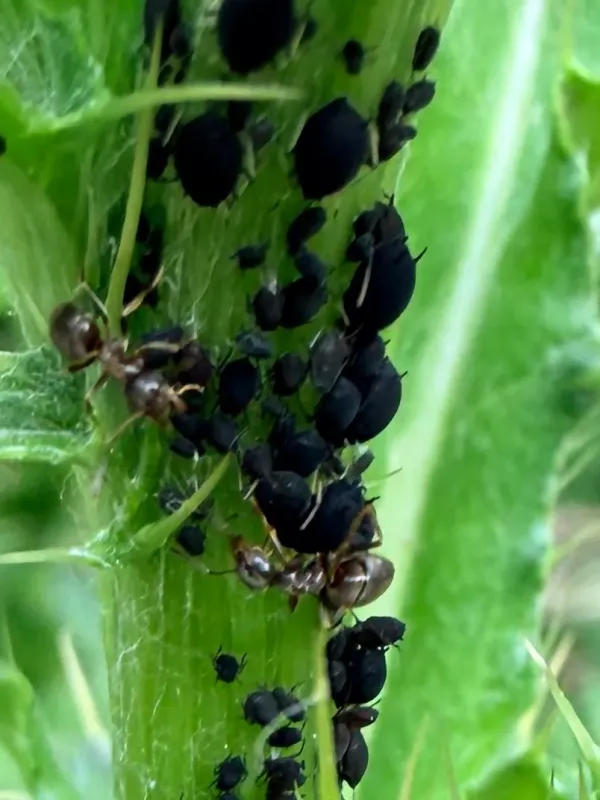
The bean aphid (Aphis fabae) is a small insect belonging to the family Aphididae, order Hemiptera. Adult wingless specimens are characterized by an oval body, typically matte black or dark olive in color.
Winged forms possess distinct pigmentation and are equipped for flight, allowing them to migrate over long distances to colonize new host plants during the growing season.
Immature stages, or nymphs, resemble the adults in morphology but are smaller and often exhibit lighter body tones, developing through several instars.
The species exhibits a complex lifecycle, utilizing primary woody hosts such as spindle trees or jasmine for overwintering, followed by migration to herbaceous secondary hosts.
Reproduction is highly efficient, utilizing both asexual parthenogenesis during the spring and summer and sexual reproduction before wintering.
What it damages
The bean aphid is a highly polyphagous pest that significantly damages a wide range of economically important crops including fodder beet and oilseed rape.
Cruciferous crops like cabbage are frequent targets, where aphids suck sap from tender shoots, causing significant plant growth retardation.
Cannabis and vegetable pepper plants can suffer severe yield losses due to aphid colonies, which extract essential nutrients and dehydrate the plant tissue.
Sunflowers are also common targets for infestations, where aphids congregate on leaves and flower heads, weakening the overall plant structure.
In addition to direct feeding, Aphis fabae is a major vector for several plant viruses, which often cause more economic damage than the aphids' direct sap consumption.
When it appears
The lifecycle begins in early spring when eggs hatch on primary woody hosts, producing the first generation of stem mothers.
During late spring and early summer, winged individuals migrate to their secondary herbaceous hosts, where they establish large, rapidly multiplying colonies.
The peak population density usually occurs in mid-to-late summer, coinciding with favorable warm temperatures and the availability of succulent plant tissues.
As day length decreases in autumn, the population produces sexual forms that migrate back to the primary hosts to lay winter-hardy eggs.
Multiple generations occur throughout the season, with the potential for rapid population explosions under optimal climatic conditions.
Signs of infestation
Early symptoms include leaf curling, yellowing, and stunted growth of the terminal shoots where the aphids are primarily feeding.
The presence of sticky honeydew on foliage is a classic sign of infestation, which frequently leads to the development of black sooty mold on the plant surface.
Increased ant activity around plants is common, as ants feed on the honeydew secreted by the aphid colonies, protecting them from predators.
In cases of heavy infestation, plants may exhibit signs of wilting and premature senescence due to the significant loss of internal sap and nutrients.
Viral infection symptoms, such as mosaic patterns on the leaves, indicate that the aphids have successfully introduced pathogens into the crop's vascular system.
Control measures
Cultural control strategies include the removal of weed hosts in and around fields to prevent the early buildup of aphid populations.
Encouraging biological control agents, such as ladybird beetles, lacewings, and hoverflies, is a sustainable way to suppress aphid numbers naturally.
Chemical control involving systemic insecticides is recommended when population densities reach or exceed established economic injury levels for the specific crop.
Effective spray application must ensure thorough coverage of the underside of leaves, as this is where the majority of aphid colonies reside.
Integrating chemical control with resistant plant varieties and monitoring with yellow sticky traps helps to manage the pest effectively throughout the season.
In brief
18
Damages crops
Content graph
Damages crops · 18
Content graph
Connections · Bean aphid
Most often together:
Marketplace
Products · 12


Biology
Taxonomy
- Latin name
- Aphis fabae
- Order
- Hemiptera (bugs, aphids, leafhoppers)
- Family
- Aphididae
- EPPO code
- APHIFA
Community
Discussion
No discussions yet — be the first.