

Description
How to identify
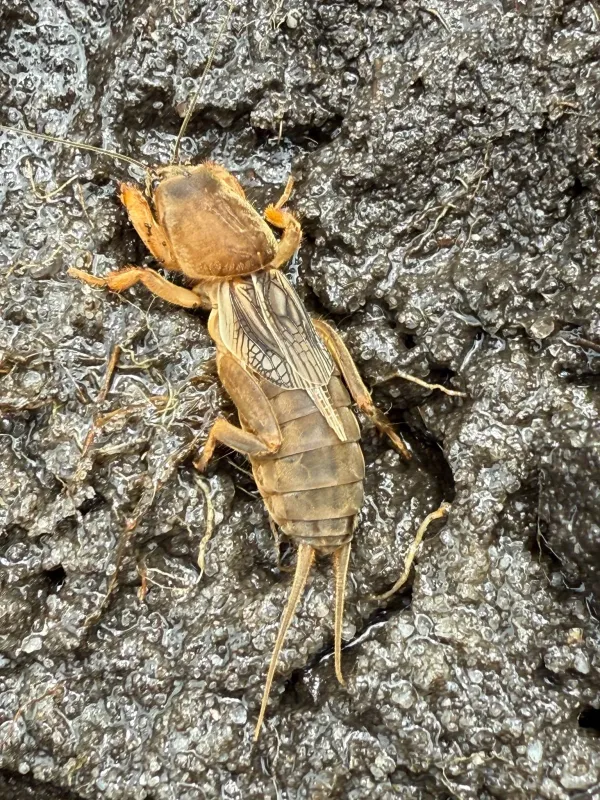
The mole cricket (Neocurtilla hexadactyla) is a member of the Gryllotalpidae family, known for its specialized body structure evolved for a subterranean lifestyle.
Measuring between 5 and 8 centimeters in length, the insect is characterized by a robust, brown, velvety body and powerful, shovel-like forelimbs specifically adapted for digging tunnels.
Adults possess wings and are capable of flight, which facilitates their migration between fields and residential gardens during the warmer months.
They prefer loose, moist, and nutrient-rich soils, often concentrating in areas where compost, manure, or organic mulching are heavily utilized.
Mole crickets are nocturnal, and their presence can often be identified by the rhythmic chirping songs of males seeking mates during the spring and early summer.
What it damages
Mole crickets are notorious polyphagous pests that cause extensive damage to a wide range of horticultural crops, including vegetables, grains, and ornamental plants.
The primary damage occurs when they gnaw through the roots and stems of young seedlings, leading to immediate wilting and death of the plant shortly after transplanting.
Root crops such as potatoes, carrots, and beets are frequently targeted, as the insects excavate large tunnels within the fleshy tissues, rendering the produce unmarketable.
By constantly burrowing through the soil, they disrupt the root architecture of shrubs and young trees, depriving them of essential water and nutrients.
In turf management, mole crickets cause significant aesthetic and structural damage by creating extensive tunnel systems that cause the grass to dry out and turn brown.
When it appears
Activity commences in early spring as soil temperatures rise, prompting the insects to emerge from their deeper hibernation chambers to feed and mate.
The peak activity period occurs from late spring through mid-summer, when the females deposit eggs in underground chambers, often located in warm, moist, and protected soil environments.
During the late summer and early autumn, both nymphs and adults are highly active, feeding voraciously to build up sufficient energy reserves for the upcoming winter.
As soil temperatures drop below critical thresholds, the insects move deep into the soil profile, often reaching depths of up to one meter to avoid freezing temperatures.
The life cycle varies depending on climate, often taking from one to two years to complete, which makes continuous management a necessity for gardeners.
Signs of infestation
The most prominent sign of a mole cricket infestation is the sudden death or wilting of seedlings, often occurring overnight due to root severance.
Gardeners may observe irregular, raised ridges of soil on the surface, which indicate shallow tunnels constructed by the insects while searching for food.
Small, circular entry holes in the soil, measuring roughly 1 to 2 centimeters in diameter, are a clear indicator of a subsurface network of tunnels.
In greenhouses, the presence of specific soil mounds and disrupted soil structure often suggests that a colony has established itself under the bedding or near container bases.
When harvesting root vegetables, the presence of large, cavernous holes in the tubers or roots is a direct consequence of mole cricket feeding activity.
Control measures
Effective control requires an integrated approach that targets the insect at various stages of its lifecycle through physical, biological, and chemical means.
- Performing deep autumn tillage to expose and destroy overwintering sites and nests.
- Using organic traps, such as manure piles, which attract insects that can then be manually removed.
- Applying granular or liquid insecticides specifically formulated for soil-dwelling pests according to local regulations.
- Implementing mechanical barriers around the base of individual plants to prevent damage during the critical early growth stage.
- Maintaining proper moisture levels and avoiding excessive application of fresh manure, which serves as an attractant for egg-laying females.
Content graph
Connections · Mole cricket
Most often together:
Weeds
1 contact
Marketplace
Products · 1
Biology
Taxonomy
- Latin name
- Neocurtilla
- Order
- Orthoptera (locusts)
- Family
- Gryllotalpidae
- EPPO code
- NCURSP
Community
Discussion
No discussions yet — be the first.