
African mole cricket
Gryllotalpa africana
Description
How to identify
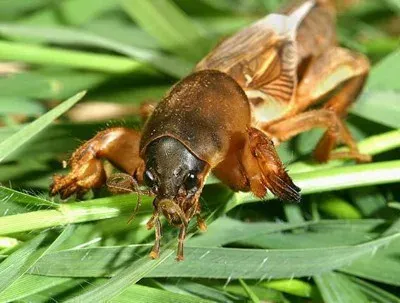
The African mole cricket (Gryllotalpa africana) is a member of the Orthoptera order and the Gryllotalpidae family. These insects typically measure 25 to 35 mm in length and are covered in fine, brown, velvety hair.
The most distinctive feature is their specialized, powerful forelegs designed for digging. These limbs are heavily chitinized and serrated, functioning like shovels to move soil effectively while the insect travels underground.
They lead a primarily fossorial lifestyle but are capable of short flights and can swim if necessary. Their strong, mandibulate mouthparts are adapted for chewing through thick roots and plant stems with ease.
The life cycle involves hemimetabolous metamorphosis, passing through egg, nymph, and adult stages. In warm climates, they can remain active year-round, while in cooler regions, they overwinter deep within the soil profile.
Females construct underground brooding chambers where they protect their egg clutches from environmental stressors and predators, ensuring a high survival rate for the emerging nymphs.
What it damages
As a polyphagous pest, the African mole cricket targets a wide variety of agricultural crops. Vegetables, root crops, cereals, and ornamental plants are all highly susceptible to their feeding habits.
Young seedlings and transplants are particularly at risk, as the insect often severs the underground part of the stem, causing the plant to collapse and die almost instantly upon being attacked.
Potatoes, carrots, and beetroots are common targets for damage, as the crickets feed directly on the tubers and fleshy roots, rendering the harvest unmarketable due to unsightly holes and tunnels.
In nurseries, they can cause extensive damage by chewing through the primary root systems of young trees and shrubs, which can lead to delayed growth or the eventual death of the entire plant.
Beyond direct feeding, mole crickets disrupt soil structure, creating air pockets that cause roots to dry out. This indirect damage often leads to uneven crop stands and significant economic losses.
Signs of infestation
The presence of raised, winding ridges of loose soil on the surface, especially following rain or irrigation, is the primary indicator of mole cricket tunneling activity near the surface.
Sudden wilting of healthy plants without any signs of foliar disease is a strong indicator of subterranean feeding. When pulled, these plants often come away easily with severed root systems.
Small, circular entry holes roughly 1.5 cm in diameter appearing on the soil surface suggest the insects are emerging at night for mating or localized migration across the landscape.
Distinctive, repetitive chirping sounds heard during the twilight hours indicate the presence of male crickets calling for mates, which often helps locate infested areas of a farm or garden.
Clusters of damaged plants forming a trail or patch are clear evidence of a localized infestation. Checking the top 10 cm of soil in these areas will often reveal nymphs or adults.
Control measures
Deep tillage and soil cultivation in early spring or autumn help destroy nesting sites and disrupt the life cycle, significantly reducing the population density in the soil.
The use of toxic baits, such as grain-based mixtures treated with appropriate insecticides, is a highly effective method for managing mole cricket populations in larger agricultural settings.
Biological control agents, particularly entomopathogenic fungi like Beauveria bassiana, can be applied to the soil to infect and reduce the population of mole crickets naturally.
Chemical control involving the application of granular insecticides or soil drenches during planting time provides a barrier that protects vulnerable seedlings from early-season damage.
Cultural practices, including maintaining a clean garden free of debris and planting repellant species like marigolds, can make the environment less hospitable for the crickets to establish colonies.
Taxonomy
- Latin name
- Gryllotalpa africana
- Order
- Orthoptera (locusts)
- Family
- Gryllotalpidae
- EPPO code
- GRYTAF
Discussion
No discussions yet — be the first.