
European mole cricket
Gryllotalpa
Description
How to identify
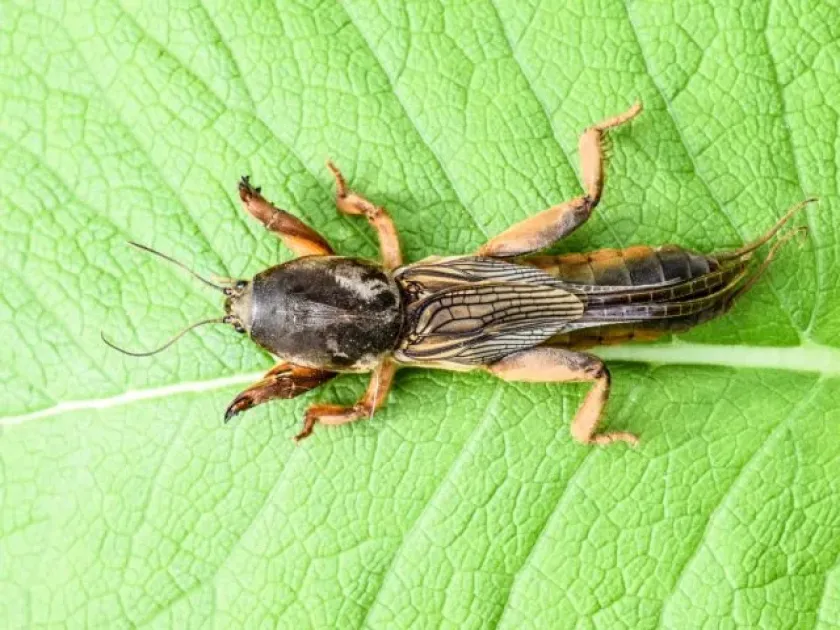
The European mole cricket (Gryllotalpa gryllotalpa) is a large insect from the order Orthoptera, known for its specialized underground lifestyle and unique morphological adaptations.
Adult insects reach 35 to 50 mm in length. Their bodies are covered in dense, velvety hair, and they possess a dark-brown coloration that helps them blend into the soil environment.
Their most striking feature is the pair of shovel-like, powerful forelegs, which are perfectly adapted for digging through dense soil. These limbs allow the insect to move rapidly and efficiently underground.
While adults have fully developed wings and are capable of flight, they rarely take to the air, usually only during the mating season to relocate to more suitable breeding grounds.
The life cycle of this species typically lasts between one and two years, during which they spend the vast majority of their time in complex burrow systems within the soil.
What it damages
This pest is a major polyphage, causing significant destruction to various vegetables, including tomatoes, cucumbers, potatoes, and young seedlings in nurseries or orchards.
The primary damage occurs when the insect cuts through the root systems of young plants, causing them to wilt and die rapidly. In many cases, the entire plant is consumed or killed within a single night.
In addition to destroying roots, they cause significant losses by hollowing out tubers and root vegetables, such as carrots, beets, and potatoes, rendering the entire harvest unsellable.
The tunneling activity itself leads to soil drying and destabilization of the root zone. This mechanical destruction disrupts the plant's ability to take up nutrients and moisture efficiently.
High population densities can be devastating, especially in greenhouse conditions where a single mole cricket can wipe out entire rows of tender seedlings in a very short period.
When it appears
Activity starts in early spring when the soil temperature rises above 10–12°C. At this point, the insects move from their deeper overwintering burrows toward the upper soil layers.
The peak period for reproduction and egg-laying is during late spring and early summer. During these months, females are particularly aggressive in defending their subterranean nests.
Throughout the summer, the insects remain highly active in their quest for food. Warm, moist weather conditions after rain trigger increased surface movement, which is when they are most vulnerable.
As autumn progresses and soil temperatures drop, the insects begin their transition into deep hibernation. They can burrow up to one meter deep to escape the freezing temperatures of winter.
The insects are predominantly nocturnal, rarely seen during the day. Nighttime is when they are most likely to be active on the surface or engaged in mating calls.
Signs of infestation
The most visible sign of an infestation is the presence of winding, raised ridges on the soil surface, which represent the underground tunnels created by the insects during their foraging.
Plants wilting suddenly without any outward signs of disease are a strong indicator of mole cricket presence. Often, the soil around the affected plant feels loose or hollowed out.
Small, circular entrance holes in the ground, usually 1 to 2 cm in diameter, are clear evidence of entry and exit points for these burrowing pests.
- Abrupt loss of young plant stands in garden beds.
- Hollowed-out cavities in harvested root vegetables.
- The sound of distinct, low-frequency chirping at night during the breeding season.
In greenhouses, the soil often appears disturbed with numerous small mounds, indicating high activity of multiple individuals throughout the entire area.
Control measures
Cultural control is highly effective, including deep cultivation of the soil in late autumn. This practice exposes larvae and eggs to frost and natural predators, significantly reducing populations.
Trapping techniques, such as burying containers filled with beer or molasses level with the soil surface, can attract and trap a large number of adults effectively.
Chemical control involves the use of specialized granular baits containing active ingredients like fipronil, which should be applied directly into the soil along the rows of susceptible crops.
Biological control using entomopathogenic fungi, specifically Beauveria bassiana, has shown great promise in suppressing populations without harming beneficial soil fauna.
Planting repellent crops, such as marigolds (Tagetes) or garlic, around the perimeter of garden beds can serve as a natural barrier to discourage these insects from settling in the area.
Taxonomy
- Latin name
- Gryllotalpa
- Order
- Orthoptera (locusts)
- Family
- Gryllotalpidae
- EPPO code
- GRYTSP
Discussion
No discussions yet — be the first.