
One-spined mole cricket
Gryllotalpa unispina
Description
How to identify
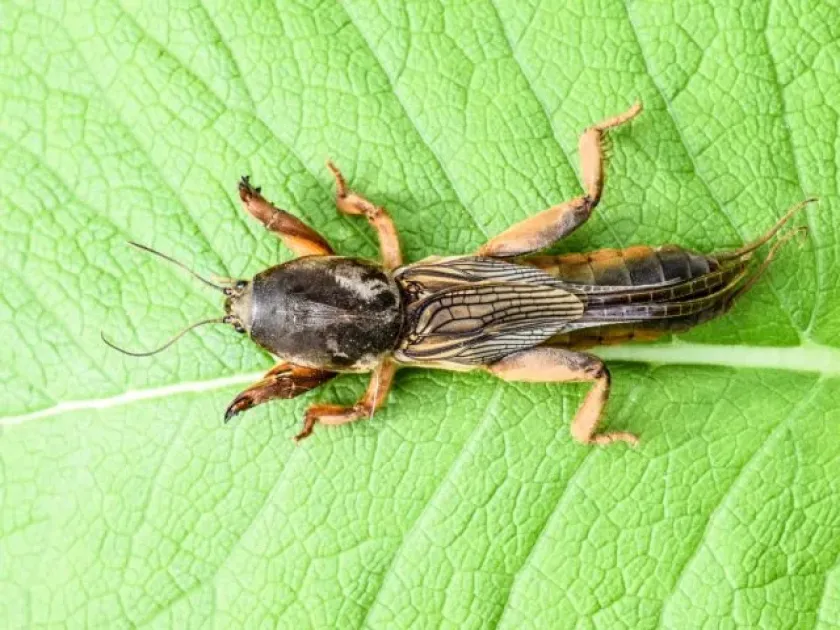
The one-spined mole cricket (Gryllotalpa unispina) is a significant insect pest belonging to the Gryllotalpidae family. It is easily identified by the specific morphology of its forelegs, which feature a single prominent spur, a distinct characteristic compared to other species in the genus.
These insects are robust, typically brown or dark brown in color, and possess a thick exoskeleton. Their forelimbs are highly specialized for digging through soil, featuring powerful claws that allow them to tunnel effectively at varying depths.
The species prefers regions with specific climatic conditions and is highly sensitive to soil moisture levels. They lead an almost exclusively fossorial lifestyle, venturing above ground primarily during the night for mating or dispersal.
Like other mole crickets, they undergo incomplete metamorphosis. Their development from egg to nymph and eventually adult involves multiple molting stages, which can take a year or more depending on environmental temperatures.
In academic or agronomic studies, specialists often use precise measurements of the head and tibial spurs to distinguish this species from the more common Gryllotalpa gryllotalpa, as their outward appearance can be deceptively similar to an untrained eye.
What it damages
The one-spined mole cricket acts as a polyphagous pest, causing extensive damage to various agricultural and horticultural crops. Their feeding habits are particularly devastating during the early stages of plant development.
Root crops like potatoes, carrots, and sugar beets are frequently attacked. The cricket gnaws through tubers and roots, creating large cavities that lead to the rapid decline or death of the affected plant.
Seedlings in both open fields and greenhouses are highly vulnerable. A single mole cricket can destroy an entire row of young vegetable starts overnight by undermining their root systems and severing stems.
The tunneling activity itself causes secondary damage by creating air pockets in the soil, which leads to the drying out of roots and inhibits nutrient uptake. This is especially harmful in sandy or loose soils.
Damage is typically more severe in fertile soil with high organic matter content, which naturally attracts these insects. In cases of high infestation, they can cause total crop failure, necessitating immediate intervention.
When it appears
The pest becomes active in early spring when soil temperatures reach roughly 10–12 degrees Celsius. During this time, they emerge from their overwintering depths to move into the upper soil layers.
May and June are peak periods for damage, coinciding with the mating season and the hatching of nymphs. The insects are most voracious during these months as they seek food to support their rapid growth.
In the heat of summer, if the soil becomes too dry, they retreat to deeper, moister layers. Another period of increased activity often occurs in early autumn when seasonal rains stimulate their movement.
Overwintering occurs deep within the soil profile, often up to one meter below the surface, which ensures their survival even during cold winters. In greenhouses, they may remain active year-round if the climate is controlled.
Monitoring should focus on signs of surface activity, especially following irrigation or rainfall. These events bring the insects closer to the surface, making their tunnels more visible to farmers and gardeners.
Signs of infestation
Visible surface signs include winding ridges of disturbed soil that appear on garden beds. These tracks are most prominent after watering, as the crickets push soil up while tunneling just beneath the surface.
The sudden wilting of previously healthy plants is a primary indicator. When a plant collapses without any signs of foliar disease, it is likely that the root system has been destroyed by a mole cricket.
Small, circular entry and exit holes, roughly 1–2 cm in diameter, scattered across the ground, signal the presence of the pest. These holes serve as portals for their nocturnal movements above ground.
During the mating season, a distinct, rhythmic chirping sound can be heard at night. This is a sure sign of a large population density and indicates that breeding is underway in the immediate vicinity.
Localized patches of missing or dead seedlings are common signs of an established colony. Because they are highly mobile, a cluster of damaged plants often indicates the proximity of a central nest.
Control measures
Agronomic management is the first line of defense. Deep autumn plowing disrupts tunnels and exposes eggs and overwintering nymphs to extreme cold and natural predators, significantly reducing population numbers.
Baiting is widely considered the most effective control method. Using grain or bran mixed with an appropriate insecticide, farmers create bait that attracts the crickets and provides a lethal dose upon ingestion.
Biological controls, such as the use of entomopathogenic fungi, are increasingly popular. These fungi infect the crickets naturally, providing a safe way to suppress populations without contaminating the surrounding soil or crops.
Light traps can be utilized during the flight period to capture adult insects, particularly in the evening. This helps to reduce the number of breeding adults, thereby preventing future generations from colonizing the field.
Chemical applications should be reserved for severe infestations and applied strictly according to label guidelines. Soil-applied insecticides are effective, but growers must respect the pre-harvest intervals to ensure safety.
Taxonomy
- Latin name
- Gryllotalpa unispina
- Order
- Orthoptera (locusts)
- Family
- Gryllotalpidae
- EPPO code
- GRYTUN
Discussion
No discussions yet — be the first.