

Pest · Lepidoptera (butterflies) · affects Apple, Potato, Winter wheat
Especially harmful
Codling moth
Cydia pomonella
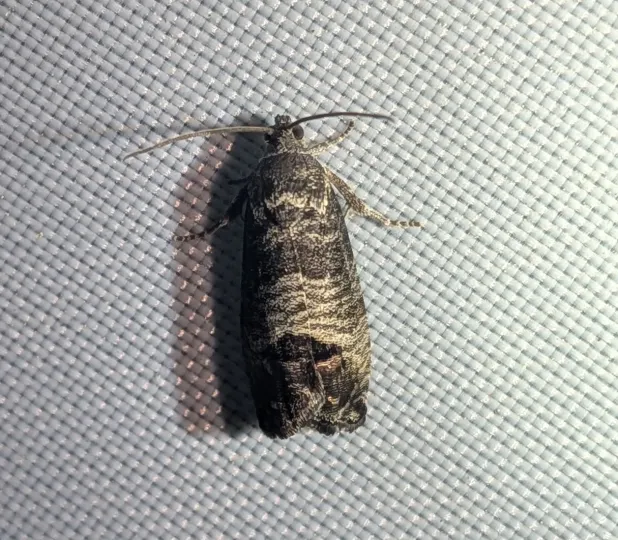
Description
How to identify
The codling moth (Cydia pomonella) is a moth of the Tortricidae family. It is a major agricultural pest known for the damage its larvae cause to pome fruits, particularly apples and pears.
Adult moths have a wingspan of approximately 18-20 mm. Their forewings are grey with a distinctive copper-colored patch at the tips, which provides excellent camouflage against tree bark.
The larvae are typically creamy-white to pinkish with a dark brown head capsule. They are the stage that causes economic damage by feeding inside the fruit.
Codling moths usually complete one to three generations per year, depending on the climate. They overwinter as mature larvae in silken cocoons found in bark crevices or soil.
As a global pest, this insect is highly adaptable and requires a comprehensive management strategy to minimize the significant crop losses it can cause in commercial orchards.
What it damages
The primary hosts are apples, pears, walnuts, and some stone fruits. It is important to note that this pest does not infest crops such as rapeseed, cabbage, cucumbers, sunflowers, barley, or hops.
Larvae bore into the fruit to reach the seeds, which are their preferred food source. This tunneling behavior renders the fruit unmarketable and often leads to premature fruit drop.
A single larva can damage multiple fruits by moving from one to another, especially when fruits are touching each other on the tree branch.
Entry holes are often marked by a small amount of frass (excrement) pushed out of the fruit. These openings also serve as entry points for secondary infections like fungal rots.
The economic impact is severe, as even a small infestation can result in total rejection of fruit batches, leading to significant financial loss for orchardists.
When it appears
Adult moths begin to emerge in the spring, typically two to three weeks after the apple blossoms have finished. The timing is strongly influenced by temperature patterns.
Mating and egg-laying occur during warm evenings. Eggs are laid singly on leaves near developing fruits or directly onto the young fruit surface.
The egg stage lasts between 1 to 2 weeks. Once hatched, the neonate larvae seek out the fruit to begin their destructive boring process within a few hours.
Multiple generations throughout the summer can result in overlapping lifecycles, making the pest present in the orchard from late spring until the harvest season.
Monitoring the flight patterns of adult moths is critical for timing control applications effectively during the vulnerable periods of larval emergence.
Signs of infestation
The most obvious sign of an infestation is the presence of small entry holes on the fruit surface, often surrounded by small deposits of brown frass.
Darkened or sunken areas around the entry point on the fruit skin are common indicators that a larva has successfully penetrated the fruit.
Premature ripening and dropping of fruits are classic indicators of codling moth activity, as the larvae disrupt the fruit's internal development.
Cutting open an infested fruit reveals characteristic tunneling towards the core, with the interior tissue often showing significant damage and decay caused by the larva.
Webbing found between touching fruits or near the calyx end is another visual clue that larvae are present and actively feeding in the vicinity.
Control measures
Cultural practices include thinning fruits to prevent them from touching, which reduces the sites where larvae can move between fruits, and regularly removing fallen fruit.
Sanitation efforts, such as scraping loose bark or using corrugated cardboard traps on tree trunks, help capture larvae seeking a place to pupate.
Chemical control focuses on applying insecticides during the peak periods of egg-hatching, based on accurate monitoring with pheromone traps.
Biological control methods involve the use of granulosis virus formulations or the release of Trichogramma wasps, which parasitize and destroy codling moth eggs.
Mating disruption using pheromone dispensers is a highly effective, environmentally friendly strategy used in commercial orchards to prevent adult moths from locating mates.
In brief
16
Damages crops
Content graph
Damages crops · 16
Content graph
Connections · Codling moth
Most often together:
Marketplace
Products · 193
All 193
Insecticides, Acaricides 180
Apple 3
Plant Growth Regulator 3
Biological Products 3
Rapeseed 2
Walnut 1
Herbicides, Desiccants 1

Marshal 25, EC, (Carbosulfuron, 250 g/l)
Ф.ФМСі, Джексонвіль,США.
Insecticides
0
0
·
61
3 offers
8.31 €per 1 l
Buy


Douglas EC, (dimefox, 400 g/l)
China Chemical Industrial & Rice Co. Ltd
Insecticides
0
0
·
57
1 offer
8.2 €per 1 l
Buy


KARATE ZEON 050 CS
Сингента Лімітед, Великобританія
Insecticides
0
0
·
56
11 offers
16.9 €per 1 l
Buy


Nuprid 200, c.s., (imidacloprid, 200 g/l)
Нуфарм Австралія Лтд. , Австралія (місце виробництва: Чілі
Insecticides
0
0
·
56
1 offer
30.9 €per 1 l
Buy

Opercot z.p., (lambda-cyhalotrin, 50 g/kg)
Санрайз Кемікалз Ко. Лтд., Шанхай, Китай
Insecticides
0
0
·
56
9 offers
8.53 €per 1 l
Buy


Dimilin
Кемарк КФТ, Угорщи (на замовлення Кемтура Корпорейшн, США)на
Insecticides
0
0
·
56
1 offer
0.88 €per 1 l
Buy


Lightning k.e.
Тейл Експортс ПВТ Лімітед, Ченнай, Індія
Insecticides
0
0
·
53
9 offers
58 €per 1 l
Buy

Fortran, k.e., (dichlorvos, 400 g/l)
Санрайз Кемікалз Ко. Лтд., Шанхай, Китай
Insecticides
0
0
·
53
1 offer
69.35 €per pack
Buy

Antigusin k.e.
«Ред Сан Груп Корпорейшн, Лтд.,Китай
Insecticides
0
0
·
53
7 offers
5.29 €per 1 l
Buy

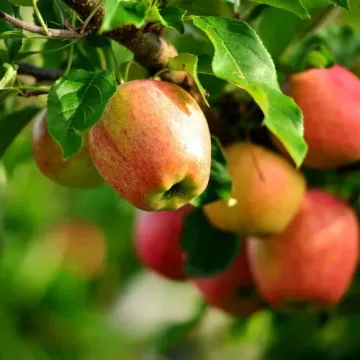


Espada
ДВА Кемікалс Ко. Лтд., Китай (DVAChemicalsCo.Ltd.),China;
Insecticides
0
0
·
52
1 offer
38.12 €per 1 l
Buy


Altex 100 i.u., (alpha-cypermethrin, 100 g/l)
China Chemical Industrial & Rice Co. Ltd
Insecticides
0
0
·
51
2 offers
0.01 €per 1 l
Buy


BIOLEP (LEPIDOCID)
ТОВ ВО «СІББІОФАРМ», Російська Федерація
Insecticides
0
0
·
51
1 offer
0.56 €per pack
Buy


VAMP 200 VP
Фадер Альянс Лтд., Великобританія (Fader Alliance Ltd., England) на заводах Нідерландів, Польщі
Insecticides
0
0
·
49
4 offers
17.96 €per 1 l
Buy
Biology
Taxonomy
- Latin name
- Cydia pomonella
- Order
- Lepidoptera (butterflies)
- Family
- Tortricidae
- EPPO code
- CARPPO
Community
Discussion
No discussions yet — be the first.