

Description
How to identify
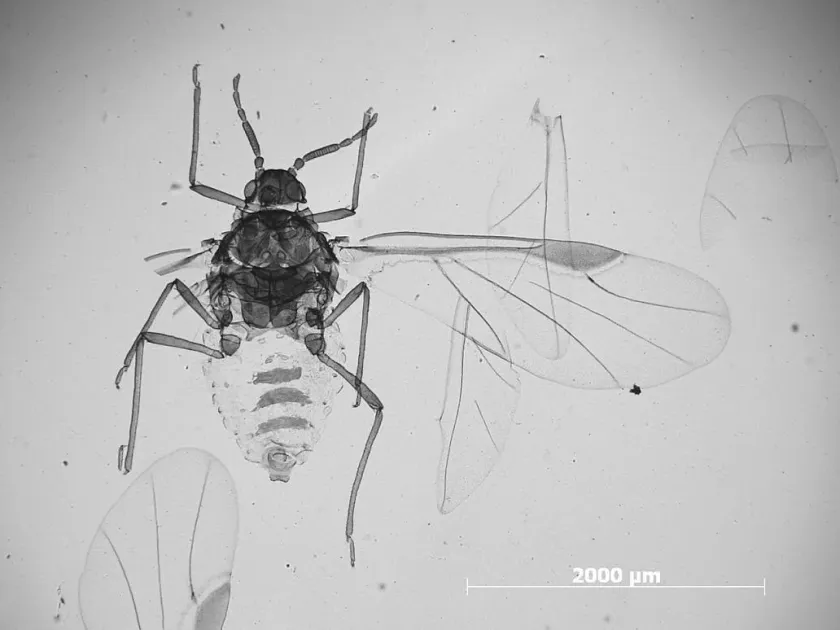
The root aphid of the genus Geopemphigus is a specialized insect belonging to the Pemphigidae family (order Hemiptera). These pests live almost exclusively underground, feeding on the root systems of various plant species.
They are characterized by their small, pale appearance and a protective wax-like secretion that prevents them from drowning in soil moisture. Most adults are wingless, concentrating their energy on colonization of roots.
The biology of Geopemphigus is highly adaptive to soil environments. They exploit soil pores and cracks to move between plant roots, creating underground colonies that are often difficult to detect until severe damage occurs.
Reproduction is primarily parthenogenetic, allowing for rapid population growth. A single aphid can colonize an entire root system within weeks, leading to significant physiological stress for the host plant.
These aphids maintain a mutualistic relationship with ants, which provide protection and aid in dispersal. Monitoring ant activity around the plant base is a critical step in identifying a hidden aphid infestation.
What it damages
Root aphids affect a broad range of agricultural and horticultural crops, including lettuce, carrots, and various ornamental plants. Seedlings and young plants are the most susceptible to irreversible damage.
By feeding on the root sap, the aphids disrupt the plant's ability to take up nutrients and water. This manifests as stunted growth, general chlorosis, and reduced vigor in the above-ground portions of the plant.
The feeding sites create entry points for soil-borne pathogens. Bacterial and fungal infections often follow, leading to root rot and systemic plant failure that is often mistaken for simple drought stress.
Severe infestations result in the destruction of the fine root hairs, which are essential for mineral uptake. Consequently, plants lose their ability to recover, even with optimal irrigation and fertilization.
In commercial crop production, the presence of these aphids leads to uneven growth, yield losses, and market rejection due to the poor quality of the root-based produce.
When it appears
Activity of Geopemphigus typically commences in late spring as soil temperatures rise. The ideal environment is warm and dry soil, which facilitates the movement of the aphids between plants.
Summer months represent the peak of their life cycle. During this period, the population density increases exponentially if the soil conditions remain favorable and the host plants are abundant.
In temperate climates, the aphids descend into deeper soil layers as temperatures drop in the autumn. However, in greenhouses or climate-controlled facilities, their life cycle remains uninterrupted throughout the year.
Proactive monitoring should be constant, particularly during the early growth stages of a crop. Once a colony is established, it can easily persist through multiple generations until environmental conditions become harsh.
The number of annual generations depends on climate and soil temperature. In ideal greenhouse conditions, a new generation can emerge every few weeks, requiring strict preventative management.
Signs of infestation
The primary symptom is unexpected wilting that persists despite adequate irrigation. This indicates that the root system is physically unable to transport water to the leaves.
Upon inspecting the root ball, one may observe white, fluffy colonies. These represent the waxy secretions of the aphids and are the most reliable indicator of a current infestation.
Foliar yellowing and premature leaf drop are common responses to the loss of root function. Plants often look sickly and fail to respond to standard fertilizer treatments.
The presence of ant mounds or trails at the base of the plant is a strong indicator of root aphid activity, as ants cultivate the aphids for their honeydew secretions.
In advanced cases, the roots will appear withered, discolored, or decayed. The total destruction of the root architecture makes the plant susceptible to being pulled out of the soil with minimal effort.
Control measures
Cultural control involves thorough soil cultivation to disrupt the aphid galleries. Maintaining consistent soil moisture can also help limit the movement of these pests.
Crop rotation is essential for breaking the pest's cycle. Avoiding host plants in previously infested fields for several seasons significantly reduces the local population.
Chemical control focuses on systemic insecticides applied via drenching or drip irrigation. These reach the root zone directly and ensure the plant becomes toxic to the aphids.
Biological control, such as the use of entomopathogenic fungi (like Beauveria bassiana) or beneficial nematodes, offers a sustainable way to manage populations without harmful chemical residues.
- Sanitize soil and pots in greenhouse settings.
- Use certified pest-free seedlings for planting.
- Control ant populations to stop the spread of aphids.
- Remove and destroy severely infested crop residues.
Content graph
Connections · Root aphid
Most often together:
Marketplace
Products · 7


Biology
Taxonomy
- Latin name
- Geopemphigus
- Order
- Hemiptera (bugs, aphids, leafhoppers)
- Family
- Aphididae
- EPPO code
- GEOESP
Community
Discussion
No discussions yet — be the first.