

PLANT GROWTH REGULATOR BEREZHNYA
Agrochemical Factory, LLC
Plant Growth Regulator
0
0
·
47
3 offers
4 €per 1 l
Buy
Pieris brassicae
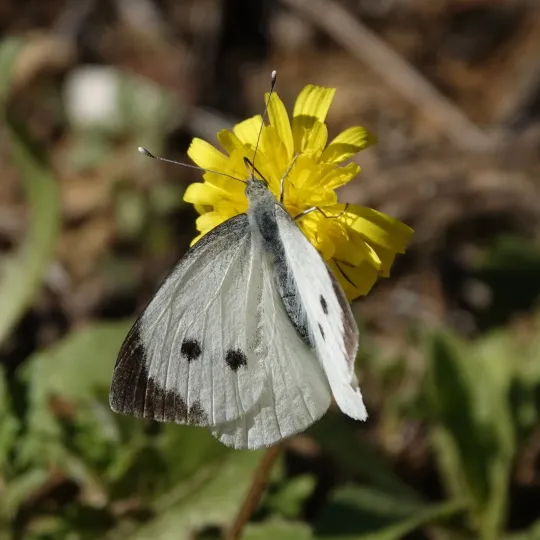
The Large White (Pieris brassicae), also known as the cabbage butterfly, is a butterfly in the family Pieridae, order Lepidoptera. Adults feature white wings with distinct black tips on the forewings.
Caterpillars can reach up to 40 mm in length. They are yellowish-green with black spots and fine hairs, typically living in groups during their early developmental stages.
The pupae are angular in shape, ranging from green to grey, often found attached to vertical surfaces like fences, walls, or tree trunks to overwinter.
The life cycle undergoes complete metamorphosis, including egg, larva, pupa, and adult stages. Usually, two to three generations occur annually depending on the climate.
While adults feed on flower nectar, the larvae are voracious defoliators, causing significant damage to host plants in the Brassicaceae family.
The primary hosts are members of the Brassicaceae family, including cabbage, kale, oilseed rape, radish, and mustard. These plants are the most susceptible to infestation.
Occasionally, larvae may affect other crops such as onions, beets, hemp, melons, and cucumbers, particularly if these plants are growing in close proximity to heavily infested cabbage beds.
Early-stage larvae feed in groups, skeletonizing the leaves by consuming leaf tissue and leaving only the veins. Mature larvae spread out and consume entire leaves.
Defoliation leads to stunted plant growth, loss of marketability, and reduced yields. In severe cases, the entire harvest may be destroyed by a large population.
Feeding damage also introduces pathways for bacterial and fungal pathogens, potentially leading to soft rot in cabbage heads.
The first generation of adults emerges in spring, typically between April and May, as temperatures become consistently favorable for activity.
Females deposit eggs in large, conspicuous batches on the underside of host leaves. The incubation period lasts between one and two weeks depending on the temperature.
The second generation is most active during mid-summer, specifically July and August, coinciding with the rapid growth phase of many vegetable crops.
In warmer regions, a third generation may develop, feeding until late autumn and posing a threat to late-harvest varieties of brassicas.
Environmental factors like temperature and humidity significantly influence the speed of development, with warmer summers often leading to larger pest populations.
The first signs are yellow, clustered eggs laid on the undersides of leaves, which are easily visible upon close inspection of the garden beds.
Leaf skeletonization or large, irregular holes in the foliage are classic indicators of larval feeding activity by the Large White butterfly.
The presence of dark green or brownish frass (caterpillar droppings) on leaves or between cabbage leaves is a clear indicator of a significant infestation.
Seeing groups of larvae moving across the leaf surface is a direct sign that immediate intervention is required to prevent widespread damage.
Adult butterflies flying actively over the garden during sunny days are a warning that egg-laying is occurring and proactive monitoring should begin.
Effective control starts with visual monitoring and manual removal of egg batches and small groups of larvae to prevent population explosions.
Biological insecticides containing Bacillus thuringiensis are highly effective against young larvae and represent an environmentally friendly control option.
Chemical control using pyrethroids or organophosphates may be necessary for large-scale infestations, provided safety regulations and harvest intervals are followed.
Cultural management includes fall soil cultivation, weed control (especially of wild crucifers), and crop rotation to disrupt the pest's life cycle.
No discussions yet — be the first.