
Orange tip
Anthocharis
Description
How to identify
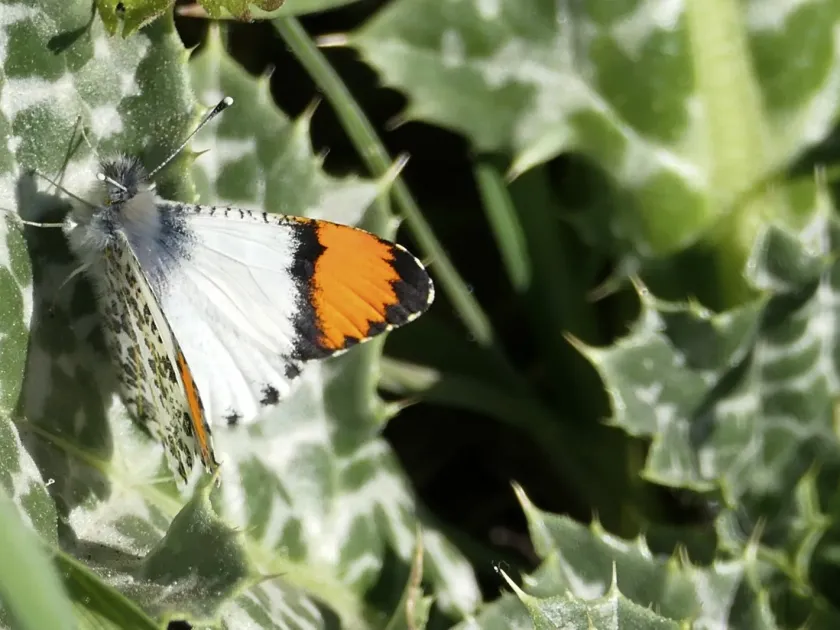
The Orange tip (Anthocharis cardamines) is a butterfly belonging to the Pieridae family, recognizable by the orange wing-tips of the males.
The larvae are green with tiny white dots, providing excellent camouflage against the stems and flower buds of host plants.
The pupa has a distinctive elongated, thorn-like shape, which allows it to blend into its environment during its long overwintering stage.
The lifecycle follows complete metamorphosis: egg, larva, pupa, and adult, typically producing one generation per year.
Overwintering occurs in the pupal stage, usually attached to stems, ensuring survival during the colder months.
What it damages
The larvae feed primarily on plants within the Brassicaceae (mustard) family, which includes many important agricultural crops.
While they naturally feed on wildflowers, they can infest cultivated crops like cabbage, radish, and other crucifers when present.
The damage is focused on the reproductive parts of the plant, specifically eating flowers and developing pods.
In high populations, these larvae can significantly reduce seed yields by destroying the floral structures before fruit set.
Although rarely reaching epidemic levels in large fields, their presence can be problematic in seed production plots or organic gardens.
When it appears
Adults emerge early in the spring, typically from April to May, coinciding with the flowering of early crucifers.
Females lay eggs singly on the flower stalks, providing immediate food for the newly hatched larvae.
Larval development takes place throughout late spring, matching the plant's peak reproductive activity.
Pupation begins by mid-summer, after which the insect enters diapause until the following spring season.
The activity period is relatively short, synchronized with the rapid vegetative growth of their host plants.
Signs of infestation
Visible signs of infestation include consumed flower buds and damaged floral stalks on cruciferous plants.
Larvae can be spotted by careful inspection of the upper flower clusters, where their color mimics the plant's texture.
Characteristic signs include irregular holes in the petals or entirely missing flowers, which prevent the formation of seed pods.
Premature wilting of the floral stalks often indicates that a larva is actively feeding nearby.
Small quantities of frass (larval droppings) left on the flower head are clear indicators of recent feeding activity.
Control measures
Manual removal of larvae is the most recommended approach for home gardeners, as populations are typically manageable.
Maintaining a weed-free area by removing wild cruciferous weeds helps reduce the attractiveness of the garden to egg-laying females.
Biological insecticides, specifically those containing microbial agents, can be used if larval density warrants intervention.
Avoid broad-spectrum chemical insecticides, especially during the bloom period, to prevent harming bees and other essential pollinators.
Encouraging natural predators, such as parasitic wasps and predatory beetles, is a sustainable way to manage the butterfly's population.
Taxonomy
- Latin name
- Anthocharis
- Order
- Lepidoptera (butterflies)
- Family
- Pieridae
- EPPO code
- ANTQSP
Discussion
No discussions yet — be the first.