
Small white
Artogeia
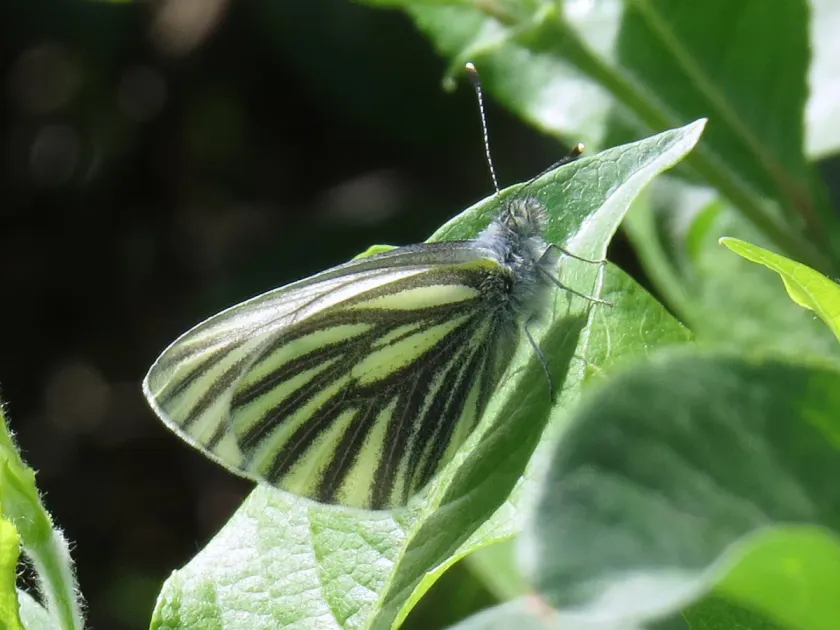
Description
How to identify
The Small white butterfly (Pieris rapae), formerly known as Artogeia rapae, is a butterfly of the Pieridae family. Its wingspan typically measures between 40 and 50 mm.
The wings are white with a distinctive black tip on the forewings. Females also have two black spots on the forewings, while males possess only one.
The larvae, or caterpillars, reach 20–25 mm in length. They have a velvety green appearance with a thin yellow line running along the back and small black dots on the sides.
The pupae are angular in shape and colored in shades of green or brown, allowing them to blend perfectly with plant stems, fences, or garden structures.
Eggs are lemon-yellow and cone-shaped. Females typically lay them singly on the undersides of the leaves of host plants.
What it damages
This pest primarily attacks plants in the Brassicaceae family, including cabbage, broccoli, cauliflower, radishes, turnips, and mustard plants.
Young caterpillars tend to feed in groups, eating the leaf tissue while leaving the veins intact. As they mature, they spread out over the plant.
Mature caterpillars consume large portions of the leaves, resulting in irregular holes. Under high infestation rates, they can completely defoliate the crop.
The damage is most severe during the rosette and head formation stages, as it stunts plant growth and reduces overall crop yield significantly.
In head-forming vegetables, the larvae can burrow into the center, contaminating the edible parts with frass and promoting bacterial soft rot.
When it appears
The first generation of adults emerges in the spring, usually between April and May, depending on regional temperatures and soil warmth.
The life cycle from egg to adult lasts approximately 30 to 45 days. In temperate climates, the species can complete two to four generations per year.
Population peaks are generally observed in the second half of summer, coinciding with the rapid growth phase of late-season cabbage and other brassicas.
Hot and dry weather conditions accelerate the larval development, which often results in significant outbreaks on both commercial farms and small gardens.
Butterflies are active during sunny days, whereas on rainy or cloudy days, they seek shelter within dense foliage to protect themselves.
Signs of infestation
The initial sign of infestation is the presence of white butterflies fluttering over the crops, searching for egg-laying sites on host leaves.
Careful inspection of the undersides of leaves will reveal the characteristic yellow, cone-shaped eggs, which are a warning to start control measures.
The most obvious damage signs are ragged, irregular holes in the leaves. Small, dark pellets of caterpillar frass are usually visible near these damaged areas.
Caterpillars can be difficult to spot due to their camouflage color, which matches the leaf tissue, especially along the leaf veins.
Severe infestations cause leaves to yellow and wilt. If the core of the plant is attacked, it may lead to the total loss of marketable crop quality.
Control measures
Regular monitoring and manual removal of egg clusters and young larvae are recommended for small-scale garden settings to keep populations in check.
Agricultural practices should focus on removing weeds that belong to the Brassicaceae family, as they serve as host reservoirs for the pest.
Biological control using Bacillus thuringiensis sprays is highly effective against early-instar larvae while remaining safe for beneficial insects.
If chemical intervention becomes necessary, use appropriate insecticides in accordance with local regulations, always respecting the pre-harvest interval.
- Implement proper crop rotation schedules.
- Use protective mesh covers on vegetable beds.
- Encourage natural predators such as parasitic wasps (Trichogramma).
Taxonomy
- Latin name
- Artogeia
- Order
- Lepidoptera (butterflies)
- Family
- Pieridae
- EPPO code
- ARTGSP
Discussion
No discussions yet — be the first.