
Orange tip
Anthocharis cardamines
Description
How to identify
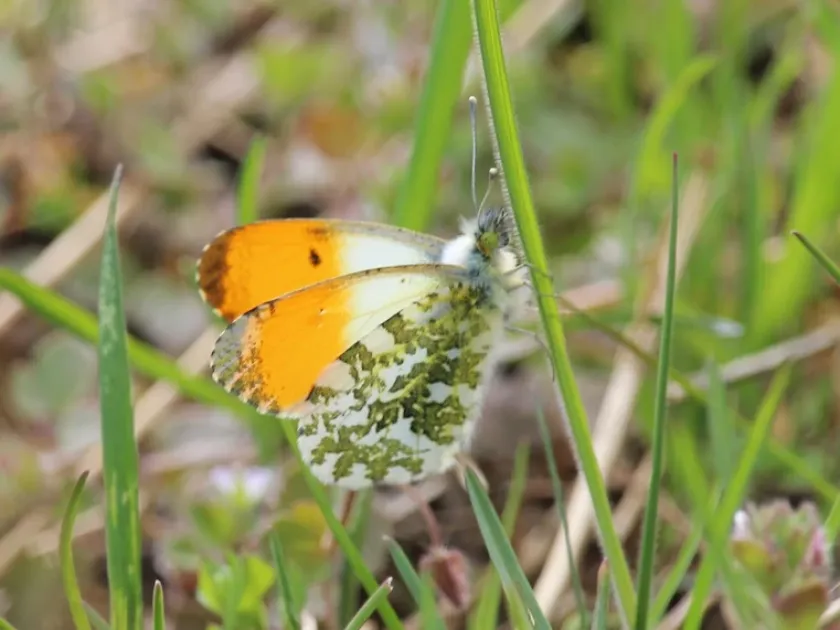
The Orange tip (Anthocharis cardamines) is a butterfly belonging to the Pieridae family. Adults typically have a wingspan of 40–50 mm. Males are distinguished by bright orange tips on their forewings, while females lack this coloration.
The larvae are cylindrical and possess a vibrant green body with a white lateral stripe, providing excellent camouflage against the stems of host plants. Their appearance allows them to blend perfectly with the vegetation.
The species undergoes a complete metamorphosis, typically completing one generation per year. They overwinter as chrysalides, which are often attached to plant stems, mimicking the appearance of a thorn.
Eggs are laid individually by the female, primarily on the flower stalks of host plants. These eggs transition from white to orange as they develop toward the hatching stage.
Pupation occurs in late spring or early summer, where the chrysalis remains in a state of diapause through the autumn and winter months until the following spring season.
What it damages
The larvae primarily feed on members of the Brassicaceae family. In agricultural settings, they favor wild cruciferous weeds such as hedge mustard, garlic mustard, and bittercress that thrive in field margins.
While they do not usually reach epidemic levels, they can occasionally impact cultivated crops like mustard or radish if wild hosts are scarce or if the fields are located near primary habitats.
Signs of infestation
Signs of infestation include visible feeding damage on flower buds and developing seed pods. The larvae consume the inner reproductive tissues, often hollowing out the buds completely.
Damage results in the abortion of flowers and a subsequent reduction in seed yield. Heavily infested plants may show stunted growth and irregular development of the inflorescence.
Control measures
Effective management focuses on cultural practices, specifically the removal of wild cruciferous weeds from field borders to minimize natural breeding sites for the butterfly.
Chemical control is rarely necessary given the limited impact of this species on commercial crop yields. Integrated pest management strategies should rely on maintaining ecological balance and crop hygiene.
Taxonomy
- Latin name
- Anthocharis cardamines
- Order
- Lepidoptera (butterflies)
- Family
- Pieridae
- EPPO code
- ANTQCA
Discussion
No discussions yet — be the first.