
Green-veined white
Artogeia napi
Description
How to identify
The green-veined white (Artogeia napi) is a butterfly belonging to the Pieridae family. It is a common insect found in gardens, meadows, and agricultural fields.
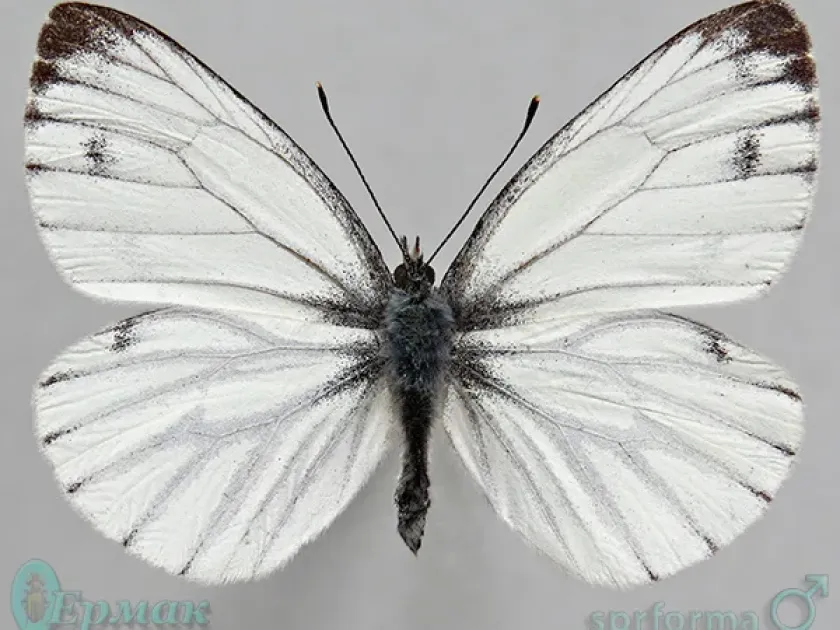
Adult butterflies have a wingspan of 40–50 mm. The wings are predominantly white with dark spots on the forewings and a distinct pattern of greenish-grey veins on the underside of the hindwings.
The larvae are velvet-green in color, adorned with numerous small black dots and faint yellow longitudinal stripes along their bodies.
Pupae of the green-veined white are typically green or greyish, providing excellent camouflage against stems or stone walls where they overwinter.
This species is visually distinguishable from the large white butterfly by its smaller size and the diagnostic green-veined underside of its hindwings.
What it damages
The larvae primarily feed on plants within the Brassicaceae family, often causing significant damage to vegetable crops.
Common host plants include various types of cabbage, turnips, radishes, horseradish, and oilseed rape, as well as wild cruciferous weeds.
Young larvae feed by scraping the leaf epidermis, while older caterpillars consume large portions of the leaf, often leaving only the thickest veins behind.
Heavy infestations lead to stunted growth of the host plant, reduced photosynthesis, and an increased risk of secondary bacterial or fungal infections.
The economic damage is particularly high for leafy greens and root crops where the foliage is essential for plant development and final yield quality.
When it appears
The green-veined white typically completes two to three generations per year, depending on the climatic conditions of the area.
The first adult generation usually emerges in April or May, coinciding with the early stages of spring planting for many cruciferous crops.
Subsequent generations appear in mid-to-late summer, when host plants are most actively developing their leaves or heads.
The entire life cycle is highly temperature-dependent, allowing for faster development during warm, humid summer months.
The species overwinters in the pupal stage, strategically positioning itself in sheltered locations to ensure survival through the winter months.
Signs of infestation
Observation of adult butterflies flying in a zigzag pattern over vegetable patches is a primary indicator of their presence.
Yellow, spindle-shaped eggs laid in small clusters on the underside of leaves are a definitive sign of an upcoming infestation.
Small irregular holes in the leaves are clear evidence of caterpillar feeding activity, usually seen on the younger, more tender leaves.
Accumulated green-black frass (feces) found on leaf surfaces or within the hearts of cabbage plants indicates the presence of actively feeding larvae.
Complete defoliation or the presence of only leaf veins suggests a large-scale larval colony that requires immediate intervention.
Control measures
Cultural practices, such as removing wild cruciferous weeds from the garden perimeter, significantly reduce alternative food sources for the larvae.
Physical barriers like fine mesh or row covers are highly recommended to prevent egg-laying by adult butterflies on susceptible vegetable crops.
Hand-picking caterpillars is a viable and environmentally friendly solution for smaller gardens and vegetable plots.
Biological insecticides based on Bacillus thuringiensis provide effective control while remaining safe for beneficial insects and human consumption.
- Regular monitoring of crop leaves during the growing season allows for early detection of egg clusters.
- Autumn soil cultivation can disrupt the overwintering sites of the pupae, reducing the local population for the next spring.
Taxonomy
- Latin name
- Artogeia napi
- Order
- Lepidoptera (butterflies)
- Family
- Pieridae
- EPPO code
- PIERNA
Discussion
No discussions yet — be the first.