
Description
How to identify
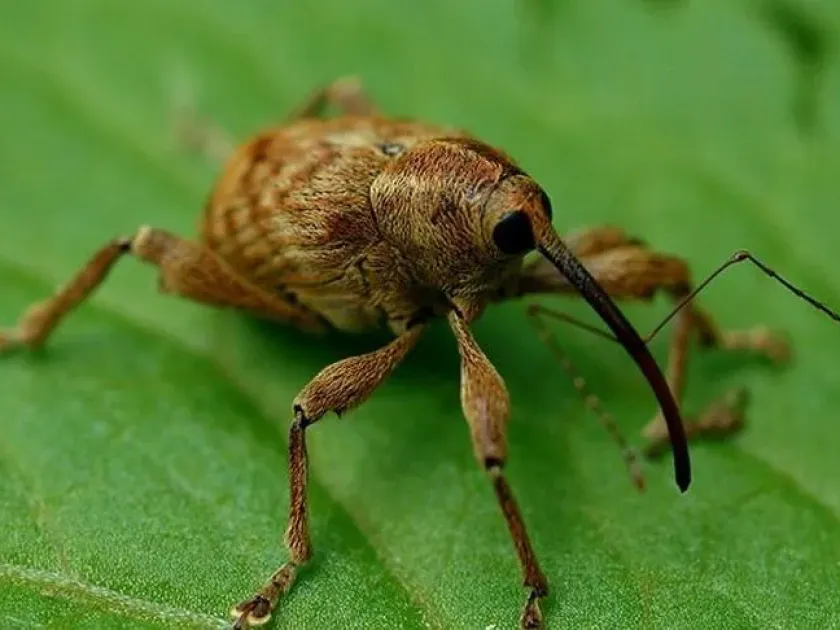
The nut weevil, scientifically known as Curculio nucum, is a member of the Curculionidae family within the order Coleoptera. This small beetle, typically measuring 7–9 mm in length, is easily recognized by its exceptionally long, slender snout, which is almost as long as its entire body.
The beetle's body is covered with dense, brownish-gray scales, allowing it to blend perfectly with tree bark and foliage. This camouflage makes the adult weevil remarkably difficult to spot during routine garden inspections.
The larvae are fleshy, legless, cream-colored grubs with a brown head, typically reaching up to 12 mm in length. They spend their entire developmental phase feeding inside the nut, which keeps them hidden from view until they are ready to emerge.
Adult weevils have fully developed wings and are capable of flying between trees to find the best conditions for breeding. They are most active in the spring when they gather on nut-bearing trees to feed and mate.
The snout is a crucial tool for the female weevil, used not only for feeding but also for drilling precise, deep holes into the developing fruit, where she will eventually deposit her eggs.
What it damages
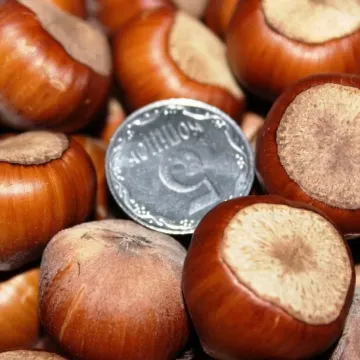
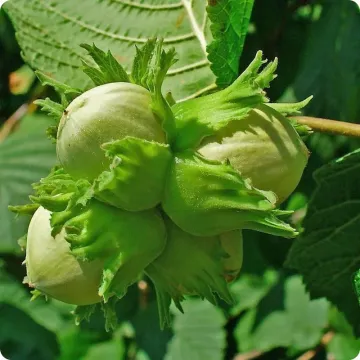
The primary host of the nut weevil is the hazelnut (Corylus avellana). While it may infest other species, its preference for hazelnuts makes it a significant economic pest in commercial orchards and home gardens alike.
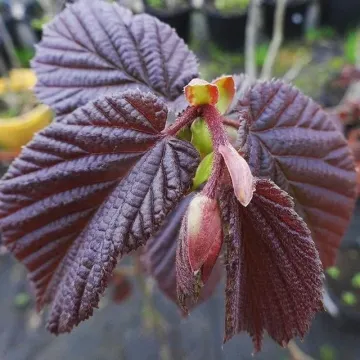
Adult weevils damage trees by feeding on young buds and leaves, which can cause leaf deformation. However, the most severe damage occurs when adults feed on the developing ovaries of the nuts, leading to the premature shedding of young fruit.
The most catastrophic damage is caused by the larvae, which burrow into the nut and consume the kernel entirely. By the time they have finished feeding, the inside of the nut is completely hollowed out and filled with frass, rendering it worthless.
Infested nuts are often bitter, prone to fungal infections, and have no market value. Even if the nuts remain on the tree, the internal damage is usually irreversible, resulting in heavy crop losses for the grower.
In years with favorable weather conditions for the pest, infestation levels can skyrocket, potentially destroying the vast majority of the harvest if adequate control measures are not implemented on time.
When it appears
The life cycle begins in spring when overwintering adults emerge from the soil. This emergence typically coincides with the flowering of hazel trees and the initial formation of young fruit, providing the insects with abundant food resources.
Mating occurs soon after emergence, and females begin searching for suitable nuts for oviposition. A single female can deposit dozens of eggs throughout the season, selecting one nut per egg to ensure optimal development for her offspring.
The larval stage lasts approximately 4–5 weeks. During this time, the weevil develops inside the shell, protected from external threats and predators. The physical appearance of the nut often remains unchanged during this period, misleading growers.
Once the larva has completed its development, it bores a characteristic round hole through the hard shell, emerges, and drops to the ground. It then burrows into the soil to pupate and remain in a dormant state until the next spring.
The life cycle is often completed in one year, but some individuals may remain in the soil as pupae for two or more years, a phenomenon known as diapause, which makes total eradication of the pest extremely difficult.
Signs of infestation
The most recognizable sign of an infestation is the presence of perfectly round, small exit holes in the shells of harvested nuts. These indicate that the larvae have already completed their life cycle and left the fruit.
Widespread premature nut drop is another clear indicator of infestation. If nuts fall from the tree before they are mature and show signs of being empty, it is a strong signal of larval presence inside.
Small, regular punctures on the surface of young leaves and flower buds in early spring suggest that the adult population is actively feeding. This is the optimal time to monitor the orchard for incoming weevils.
During morning hours, adult beetles can be caught by shaking branches over a white sheet. They are known for their "death-feigning" behavior, where they drop to the ground and play dead when disturbed, making them easier to count.
- Round exit holes in the nut shells.
- Premature fruit drop in early summer.
- Deformed leaves and bud damage.
- Internal remains and frass inside split nuts.
Control measures
The most effective cultural control is the daily collection and destruction of fallen nuts. By removing the fruit before the larvae exit, you prevent them from entering the soil to pupate, significantly reducing next year's population.
Tilling the soil under the tree canopy in the autumn and early spring helps disturb the overwintering pupae and larvae. This process exposes them to frost and predators, which can significantly decrease their survival rates.
Chemical control is most effective when applied at the exact time adult beetles emerge and before they start laying eggs. Using systemic or contact-stomach insecticides is recommended based on the monitoring results.
Using pheromone traps or sticky barriers helps determine the timing of the adult flight. This allows for precise application of pesticides, reducing the environmental impact and ensuring better protection for the fruit.
Biological control methods, such as the use of entomopathogenic nematodes applied to the soil, can target larvae and pupae during their dormant stage in the ground, providing an eco-friendly way to manage the pest population.
Content graph
Connections · Nut weevil
Most often together:
Marketplace
Products · 14






Biology
Taxonomy
- Latin name
- Balanogastris
- Order
- Coleoptera (beetles)
- Family
- Curculionidae
- EPPO code
- BALNSP
Community
Discussion
No discussions yet — be the first.