
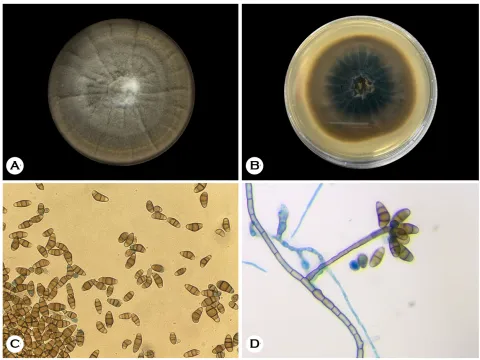
Curvularia clavata
Curvularia clavata
Curvularia clavata is a filamentous fungus belonging to the order Pleosporales. It is widely recognized as a plant pathogen capable of causing significant yield losses in various economically important crops, particularly cereals.
What the section contains
Curvularia clavata
The fungus is characterized by the production of dark, multicelled conidia with a distinct club-like shape, from which its species name is derived. Its mycelium is septate and typically presents a dark brown to black pigmentation.
As a facultative parasite, Curvularia clavata can exist as a saprophyte on dead plant debris, surviving under harsh environmental conditions for extended periods by forming robust resting structures.
The pathogen reproduces primarily via asexual conidia, which are efficiently dispersed by wind currents, splashing rain, and agricultural machinery, facilitating rapid colonization of host fields.
Taxonomically, it is classified within the family Pleosporaceae, and it shares many morphological similarities with other species in the genus, necessitating detailed microscopic analysis for definitive identification.
The primary hosts for Curvularia clavata include major cereal crops such as rice, wheat, corn, and sorghum. It is particularly destructive in tropical and subtropical agricultural regions.
The fungus infects various parts of the plant, including leaves, stems, and grains. Infection impairs the photosynthetic efficiency of the plant, leading to reduced metabolic activity and stunted growth.
Grain infection is a critical issue as it leads to discolored, shriveled, and lightweight kernels. This significantly reduces the marketable value of the harvest and the potential germination rate of the seeds.
In cases of severe infestation, the pathogen can cause significant lodging of plants, especially when the structural integrity of the stems is compromised by fungal lesions.
Yield losses can vary widely, but under conducive environmental conditions, total yield reductions of 10–25% have been documented in susceptible varieties of rice and wheat.
The fungus is most active during warm and humid weather conditions, with temperatures ranging from 25°C to 30°C. High humidity levels are essential for conidial germination and host tissue invasion.
Primary infection often occurs when conidia are deposited on susceptible plant surfaces by wind or rain. Once established, the fungus can produce secondary inocula, enabling rapid spread throughout the growing season.
Extended periods of dew or frequent rain showers during the grain-filling stage create an ideal microclimate for the fungus to complete its life cycle and cause extensive damage.
The fungus thrives in dense crop canopies where air circulation is limited, which increases the duration of leaf wetness and provides a favorable environment for infection.
During the off-season, the pathogen survives in plant debris, infested seeds, and the top layer of the soil, waiting for the return of favorable temperatures to resume its life cycle.
The initial symptoms are characterized by the appearance of small, chlorotic flecks on the foliage. As the disease progresses, these lesions expand and develop into brown or dark-colored spots, often with a yellow halo.
A distinctive feature of Curvularia infection is the presence of dark, olive-black velvety mycelial growth on the surface of the lesions, which consists of masses of conidiophores and conidia.
Infected stems often show elongated dark brown to black streaks. In mature plants, the infection can cause the upper leaves to curl and dry prematurely, a condition often confused with drought stress.
- Small necrotic lesions on leaf surfaces.
- Blackening of the panicles or grain heads.
- Reduced vigor and stunted plant growth.
- Increased occurrence of seed-borne rot under moist storage.
Microscopic examination of the lesions is essential to confirm the presence of Curvularia clavata, as its symptoms often overlap with those caused by other fungal pathogens.
Implementing a robust crop rotation strategy is the primary method for managing this pathogen. Avoiding susceptible crops in the same field for several seasons helps break the infection cycle.
Seed treatment with systemic fungicides is highly recommended to protect germinating seedlings from soil-borne inoculum and to ensure a healthy stand from the onset of the growing season.
Good agricultural practices, including the deep plowing of crop residues, help reduce the primary inoculum load in the soil. Proper weed management is also crucial to eliminate alternative hosts.
During the growing season, if environmental conditions favor disease development, the application of foliar fungicides, such as those in the triazole or strobilurin classes, can effectively limit spread.
Balanced fertilization, particularly adequate potassium and phosphorus levels, enhances the innate plant defenses and improves the overall resilience of the crop against fungal attacks.