
Curvularia leaf spot
Curvularia geniculata
Curvularia geniculata is a filamentous fungus belonging to the phylum Ascomycota. It is recognized as a significant phytopathogen that exhibits both saprophytic and pathogenic behavior, capable of infecting a wide range of monocotyledonous and dicotyledonous plants.
What the section contains
Curvularia leaf spot
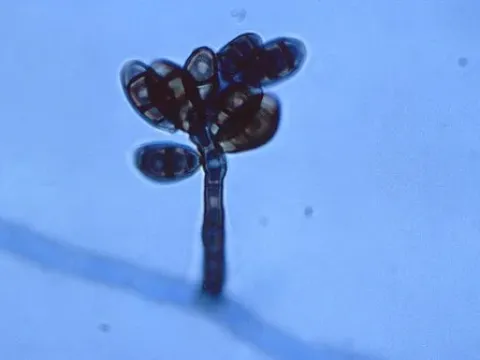
The fungus is characterized by its dark, septate hyphae and distinctive bent, multi-celled conidia. These reproductive structures are typically curved at the third cell, which is a diagnostic feature used by mycologists for identification in laboratory settings.
This pathogen causes severe damage to essential crops such as maize, rice, sorghum, and wheat. It is responsible for various diseases, including seedling blight, leaf spots, and grain mold, which can lead to significant yield reductions in field conditions.
The damage often starts at the root or crown level, impairing water and nutrient uptake. Infected grain often exhibits discoloration and reduced germination rates, posing a serious risk to the agricultural production value and storage quality of harvested produce.
The development of Curvularia geniculata is highly favored by warm temperatures and high humidity, typically prevailing during the active growing season. Rainfall facilitates the spread of conidia from soil and debris to the aerial parts of the plants.
The pathogen survives unfavorable periods as dormant mycelium or spores within plant tissues, infected seeds, or in the soil. Once conditions become optimal (high moisture and moderate to high heat), the fungus initiates rapid germination and infection cycles.
Initial infection signs appear as small, chlorotic or light brown lesions on leaves, which gradually expand into larger, darker brown to black necrotic spots. These spots may be surrounded by a distinct yellow halo, indicating the action of fungal metabolites.
In humid conditions, a dark, velvety mycelial mat develops over the necrotic areas, signaling the production of conidia. Severe cases often lead to blighting of entire leaves, lodging of seedlings, and discoloration of the seed coat in matured plants.
Effective management requires an integrated approach starting with the use of certified, disease-free seed lots. Seed treatment with appropriate fungicides is essential to provide early-stage protection against soil-borne inoculum.
Cultural practices are also critical, including rotation with non-host crops, deep plowing to bury infected plant residues, and maintaining proper plant density. These actions reduce the primary inoculum load and create an unfavorable environment for the rapid spread of the pathogen.