
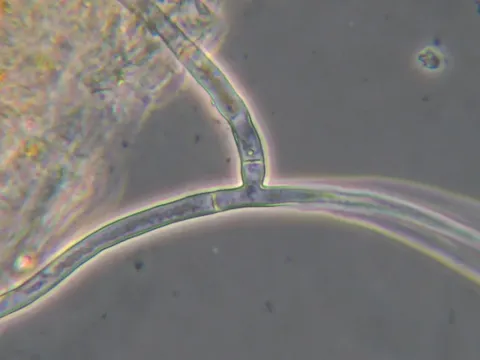
Waitea circinata
Waitea circinata
Waitea circinata is a soil-borne fungal pathogen classified within the Basidiomycota phylum, specifically within the Ceratobasidiaceae family.
What the section contains
Waitea circinata
The fungus is widely recognized as the teleomorph stage of certain Rhizoctonia species, which are notorious for causing various root and stem rot diseases in a diverse range of plant hosts.
In its life cycle, the fungus primarily survives in the soil as mycelium or as resilient sclerotia, which are capable of persisting in the environment for extended periods.
Although it can produce sexual fruiting bodies, these are rarely observed in typical field conditions, making identification based on morphological traits of the fungus alone quite difficult.
Genetic analysis is often necessary to distinguish this pathogen from other closely related Rhizoctonia species, which may share similar symptoms and ecological niches.
The primary hosts of Waitea circinata include essential cereal crops such as wheat, barley, and oats, as well as several species of turfgrass used in landscaping and sports fields.
By attacking the root system, the fungus significantly disrupts the plant's ability to uptake water and essential mineral nutrients, particularly during the critical early growth stages.
Crop yield reductions are common, as the pathogen weakens the root architecture, making the plants more susceptible to lodging and secondary environmental stresses.
In turf management, the pathogen causes thinning and the formation of distinct patch-like areas, which severely degrade the aesthetic and functional quality of the turf surface.
The cumulative damage often leads to stunted growth, reduced biomass, and in severe cases, the complete death of the affected plant populations.
The pathogen thrives during periods characterized by moderate soil temperatures and high moisture levels, which are typical during the spring and early autumn seasons.
Rainy weather promotes the movement of the fungus through the soil profile, facilitating its spread to previously healthy roots and adjacent plant populations.
During the peak of summer, when soil temperatures rise and moisture decreases, the fungus tends to enter a survival mode by forming resting structures.
Inoculum density in the soil is a primary factor in disease development, often accumulating over several seasons if susceptible crops are repeatedly grown on the same field.
Dispersal is primarily local, occurring through water runoff, movement of contaminated soil by machinery, or the use of infected plant materials in new areas.
Infected plants typically exhibit symptoms such as root browning, necrotic lesion development on the lower stems, and general yellowing of the foliage.
Weakened root systems often result in plants that appear shorter and less vigorous compared to healthy specimens in the same field or lawn.
When examined closely, the roots may appear brittle and decayed, often with localized areas where the tissue has completely collapsed due to fungal invasion.
- Dark brown necrosis on the root system.
- Reduced plant height and stunted overall growth.
- Chlorosis and premature yellowing of lower leaves.
- Localized patches of dead or thinning vegetation.
Secondary colonization by other bacteria and fungi is frequent, which can mask the specific symptoms of Waitea circinata and complicate diagnosis in the field.
Effective management requires an integrated approach starting with the implementation of well-planned crop rotation cycles to disrupt the pathogen's life cycle.
Seed treatment with professional-grade systemic fungicides is a crucial protective measure to safeguard young seedlings from early-season soil-borne infections.
Improving soil drainage and optimizing planting density can significantly reduce the moisture levels that the fungus requires for rapid growth and colonization.
Regular monitoring of field conditions and sanitation measures, such as cleaning agricultural equipment, are essential to prevent the spread of the pathogen to clean areas.
In cases of severe outbreaks, particularly in turfgrass settings, the application of registered fungicides targeting Rhizoctonia-like pathogens may be necessary to manage the disease.