
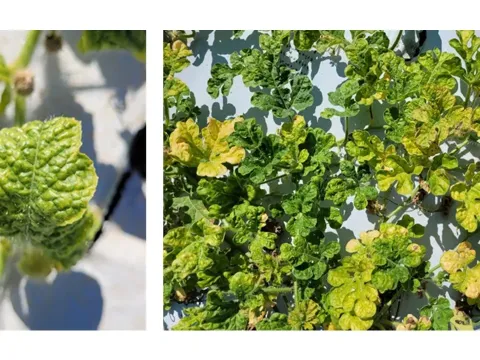
Watermelon chlorotic stunt
Watermelon chlorotic
Watermelon chlorotic stunt virus (WmCSV) is a plant-pathogenic virus belonging to the family Geminiviridae and the genus Begomovirus.
What the section contains
Watermelon chlorotic stunt
The virus contains a single-stranded DNA genome and is transmitted in a persistent, circulative manner by the whitefly Bemisia tabaci.
It is a highly destructive pathogen that causes severe stunt and leaf discoloration in various cucurbit species worldwide.
The identification process requires molecular techniques such as PCR to differentiate it from other viruses that cause similar yellowing symptoms.
It is not transmissible via seed, which emphasizes the critical role of vector control in managing the spread of the disease.
The virus has a wide host range within the Cucurbitaceae family, predominantly affecting watermelon, melon, cucumber, and squash crops.
By disrupting the host's vascular system, the virus severely hinders nutrient translocation, leading to stunted plant development.
Yield loss can be catastrophic, as infected plants often fail to produce marketable fruit due to physiological stress and resource depletion.
Late-season infections may result in lower yield reductions, but early-stage infestations are devastating for agricultural production.
The economic impact is exacerbated by the difficulty in early detection, as symptoms can be masked by environmental stress or nutrient deficiencies.
The primary symptom is severe chlorotic mottle and yellowing of the foliage, which is often accompanied by significant leaf curling.
Internode shortening is a hallmark of the disease, leading to a stunted, rosette-like growth habit in younger plants.
Infected plants show reduced vigor and flower abortion, which prevents successful fruit set and development.
Fruit symptoms may include mottled skin patterns, surface deformities, and overall size reduction compared to healthy fruits.
The visual impact of the virus makes heavily infected fields appear yellowed and uniformly stunted from a distance.
Effective management focuses primarily on the control of the vector, Bemisia tabaci, using integrated pest management (IPM) practices.
The application of systemic insecticides at the early growth stages is vital to prevent initial colonization by whiteflies.
Cultural practices, such as removing weed reservoirs and maintaining proper spatial isolation between fields, significantly reduce disease pressure.
Breeding and utilizing resistant or tolerant cultivars is the most sustainable approach to mitigate the damage caused by WmCSV.
- Deployment of physical barriers like mesh nets in greenhouse environments.
- Monitoring insect populations using yellow sticky traps.
- Roguing of infected plants to remove the inoculum source from the field.